HUL Says Risk Of Recession Real As It Preps For Business After Covid-19
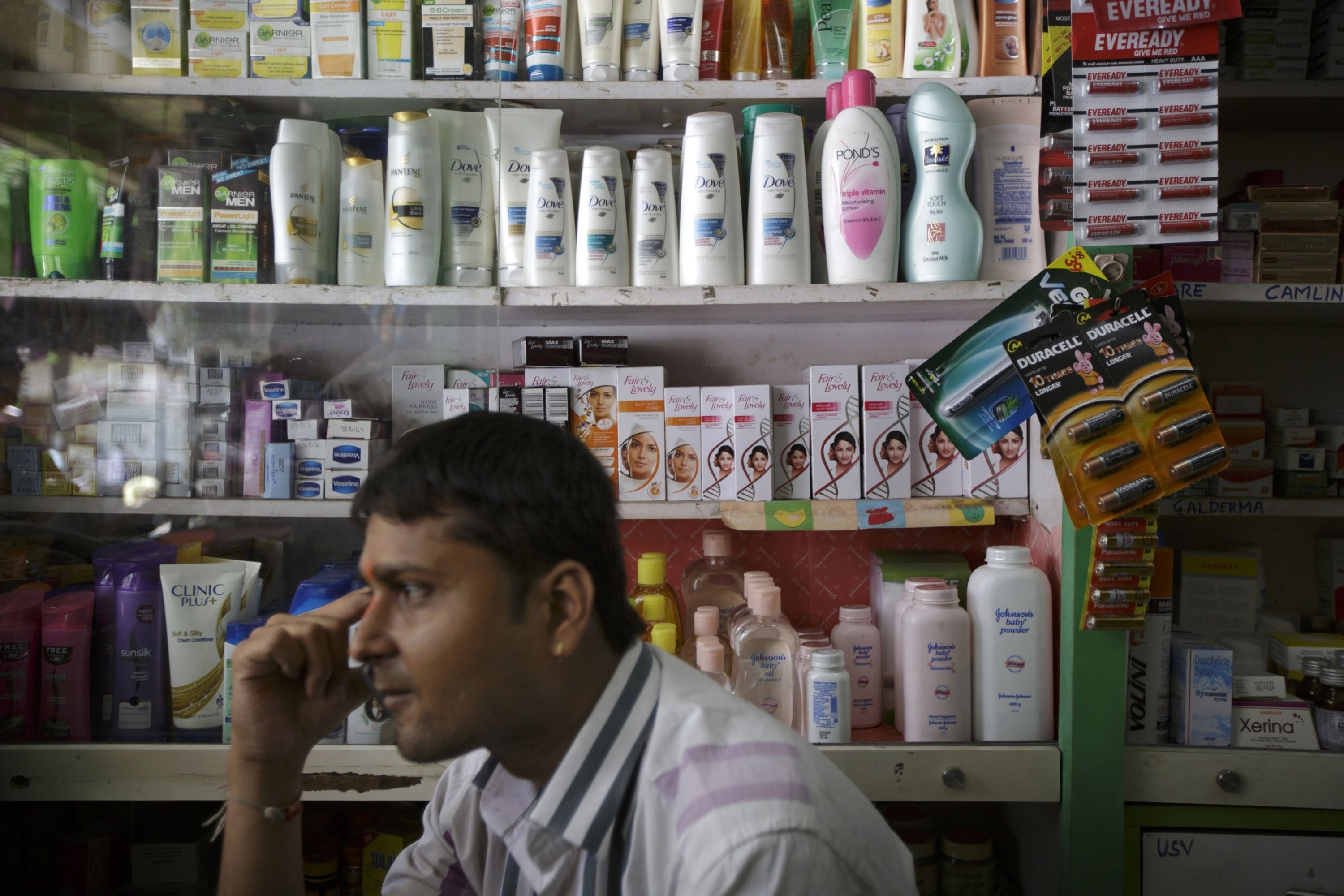
As a national lockdown was getting enforced across India following the Covid-19 outbreak, the country's largest consumer goods maker saw its food solutions and water purifier businesses getting affected the most.
These two businesses, Hindustan Unilever Ltd. said at its 87th annual general meeting on Tuesday, contribute nearly 5% of its total revenue. The company sells water purifiers under the brand Pureit; its food solutions business markets ready mixes to restaurants.
Other units were also impacted, Sanjiv Mehta, chairman and managing director of the company told shareholders, over video conference. Its beauty business—under which it sells make-up products—and its ice-cream unit were impacted. The skin care and hair care businesses were affected in April and May, he said.
“The risk of recession remains real, but we mustn't take it as a foregone conclusion,” Mehta said. The government, he said, should keep a close watch on the demand situation and step in if it doesn't revive in the next few months.
HUL's capacity utilisation at present stands at 90-100%. That compares with around 80-90% at the start of June and 70% in April. Manufacturing had ground to a complete halt in the last week of March, it said, when the government first announced the lockdown.
The maker of Dove soap and Lipton tea said it has increased its trucking capacity to nearly twice the national trucking recovery rate to eliminate bottlenecks in its logistics.
It has launched over 50 “innovations” in the hygiene and sanitisation segment like Lifebuoy alcohol-based sanitiser (gels, liquids and sprays), Surf excel laundry powders with enhanced germ kill and Domex sodium hypochlorite-based spray for use in home and offices.
Mehta said the broader e-commerce and online grocery stores have done good business with the ability to scale up, at a time when large modern trade stores inside malls remain closed. This has forced modern trade to increase their omni-channel initiatives and neighbourhood grocery stores have become more popular owing to their proximity, he said.
The company is also leveraging on its in-house capabilities like ‘TrendsWatch' and ‘People Data Centre'—which are internal data trackers—to decipher and identify trends. This, the company said, would help it to understand shift in demands, rejig innovation plans and adjust to channel shifts.
When a shareholder asked about the company's dependence on imports from China, Mehta said HUL sources packaging and raw material to the tune of Rs 429 crore from Asia's largest economy and during the lockdown it has started working on possible alternatives and localisations. HUL's exports to China are very small, he said.
The company announced last week that it's dropping the word “fair” from its skin care brand Fair & Lovely and is awaiting regulatory approval for the new name. The company had already relaunched the skin care cream last year, Mehta said, adding: “After this relaunch, we had a fabulous year. Our penetration went up, our market share went up and these were record numbers and 2019, post the relaunch, we had one of the best years.”
The maker of Ponds cream had said that it has started replacing words like “fairness”, “whitening” and “skin-lightening” with “glow”, “even tone”, “skin clarity” and “radiance”. Fair & Lovely also stopped advertising showing transformation in skin and shade guides.

-
The Economic Imperative: Analysing The Material Driving Force Behind India-Canada Strategic Reset

This economic complementarity is further reinforced by deep institutional investment ties and talent mobility, which form the bedrock of the bilateral framework.
-
Medicine Pricing: Where Must Profit Stop?
India must confront excessive margins, hidden incentives and regulatory gaps that threaten the integrity of medicine.
-
Why Amazon And Flipkart Are Struggling To Beat Meesho In India's Smaller Cities
With 274 million users and lowest-cost logistics, Meesho is defending its value commerce crown against giants like Amazon and Flipkart.
-
High US Salaries, No Green Card Certainty: The Financial Calculation Facing Indian H-1B Families
The suspension of PERM processing at eight technology employers does not cancel existing H-1B visas. What it does is force a question many Indian families have been avoiding: is the US salary worth tying your career and family plans to one employer?
-
Swiggy vs Eternal: Food Delivery's Two Rivals Are No Longer In The Same Race
Eternal is building a private AI assistant, dark.ai. Swiggy is still working out how to make Instamart pay, with an operating loss of Rs 895 crore in the July-September quarter while Blinkit stayed profitable.
-
Where You Live Shapes How You Get To Work | The Reason Why
Two-wheelers are the most popular way to get to work in India, accounting for nearly 43% of workplace commutes.
-
Unhedged Position: Can India See An Indonesia-Style Time Correction?
The Nifty is trading below levels it first clocked in 2024. Is there, then, as I have suggested in the headline, potential that the current time correction drags on painfully for the next three-five, even ten years?
-
Navigating Friction And Energy Realities: An Analysis Of Marco Rubio's October Visit To India
Occurring at a critical juncture marked by stalled trade negotiations and escalating geopolitical pressures over global energy supplies, the visit offers a profound window into modern US-India relations.
-
India Exports Capital. Why Not Export Trusteeship?
The big question, then, is whether India can build an institution that global borrowers, investors, banks, and lawyers can trust, even without an Indian connection.
-
France's Economy & Politics Are In Crisis | The Reason Why
Let's look at how the French economy and politics evolved under Nicolas Sarkozy, Franois Hollande and Emmanuel Macron.










