HSBC Sells $12.5-Billion Swiss Assets to Liechtenstein's LGT Bank
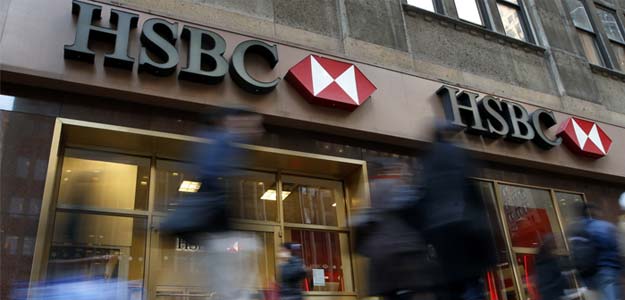
In a multi-billion dollar deal that could have bearing on India's fight against black money, global giant HSBC on Tuesday sold its Swiss private banking assets worth $12.5 billion to Liechtenstein's LGT Bank.
India is probing cases of alleged black money stashed by Indians abroad through these two banks - HSBC Geneva in Switzerland and LGT Bank.
However, lists of Indian account holders in both the places were received by India through indirect channels. HSBC's list came from France while that of LGT from Germany.
Swiss authorities have been refusing to provide any assistance or share further information in these cases.
Switzerland says that it cannot provide any help to Indian authorities as their requests are based on 'stolen data' as Germany and France got the secret lists of account holders after certain bank employees had stolen the data.
The lists were later shared by Germany and France, with India and other nations whose citizens figured on those lists.
The announcement of the HSBC-LGT deal comes at a time when there is a renewed debate on Indian government's attempts to trace alleged black money stashed by Indians abroad.
UK-based HSBC Holdings Plc said in statement its wholly-owned subsidiary HSBC Private Bank (Suisse) SA has entered into an agreement to sell a portfolio of its private banking assets in Switzerland (with assets under management of $12.5 billion as at December 31, 2013) to LGT Bank (Switzerland) Ltd, a wholly-owned subsidiary of LGT Group Foundation of Liechtenstein.
"The transaction, which is subject to regulatory and other approvals, is expected to complete in the last quarter of 2014 and it represents further progress in the execution of HSBC's strategy," HSBC said, while adding that it remains fully committed to Switzerland as a key international centre for its global private banking business and a priority market.
In a separate statement, LGT said, "It has reached an agreement with HSBC Private Bank (Suisse) to acquire a sizable private banking franchise."
The scope of the transaction includes over 10 billion Swiss francs in assets under management and around 70 staff.
Upon closing, the acquired business will be integrated into LGT Bank (Switzerland) which had AUM of 21 billion Swiss francs billion ($23.5 billion) at the end of 2013.
LGT further said the assets being acquired from HSBC is "a profitable business evenly distributed amongst various teams, each focusing on High Net Worth and Ultra High Net Worth clients from a specific geographic region that is key to LGT's growth strategy, notably Central and Eastern Europe, Latin America and Western Europe".
"A smaller part of the portfolio relates to clients advised by Swiss-based external asset managers."
The Liechtenstein bank further said the opportunity to acquire this portfolio rose after a strategic business review by HSBC to concentrate its growth on a focused group of markets.
"The assets to be acquired have undergone rigorous tax and general compliance procedures," it added.
Upon closing, LGT Bank Switzerland's assets under management will rise to over 30 billion Swiss francs and the LGT Group its overall AUM to increase to about 120 billion Swiss franc and staff strength to almost 2,000.
The so-called HSBC list reportedly contains names of about 700 Indians, but the details about their accounts have not been forthcoming despite repeated requests from India to Swiss authorities.
The list of about 3,000 secret bank account holders was stolen by a French employee of HSBC Geneva in 2008-09 and later found its way to the government in France.
Later in 2011, French government shared the names with other countries, including about 700 names with India.
The LGT list was received by India in 2008 from German government.
Later in 2010, the Income Tax department also slapped penalties on some persons figuring in this list, while names from this list were also submitted to the Supreme Court earlier this year.

-
Getting To Work Costs Women More | The Reason Why

It is not just about women paying more than men. It is about women paying much more in cities than in villages.
-
AI Bias In Investing Cannot Be Eliminated, But It Can Be Governed
Framing is a particularly important example as identical financial information presented in terms of gains rather than losses can lead an LLM to reach a different assessment.
-
Joining The Dots | Dark Skies, Steady Diya: Why Hope Holds This Diwali
With war, a weak rupee and foreign outflows weighing on sentiment, policymakers at the NDTV World Summit and market veterans at NDTV Profit Ignite: Diwali Edition offered the same advice: stay invested and filter out the noise.
-
The Curious Case of Equitas Small Finance Bank And A CEO Who Quit For Stock
PN Vasudevan believes persistent investor concerns over a perceived conflict of interest had become a governance overhang on Equitas Small Finance Bank's stock, even as the lender improved profitability and asset quality.
-
Talking Points This Week: AI Cash Burn, A Tiger Comeback And An India That Still Finds Its Own Path
India is not immune to higher oil or tighter global liquidity, yet its earnings base is broader, its domestic policy levers are still available.
-
Foreign Investors Own Half Of HDFC Bank and ICICI Bank. An LTCG Cut Could Matter Most Here
Foreign portfolio investors have US$115 billion parked in HDFC Bank, ICICI Bank. If the government cuts long-term capital gains tax, Jefferies says returning foreign money could land here first.
-
'Never Seen This Level Of Negativity': Sandeep Tandon Says The Next Rally May Be Closer Than You Think
Veteran investor Sandeep Tandon says foreign selling is easing, large-caps are due a comeback and mid-caps are crowded, while he turns positive on gold, power and pharma this Diwali.
-
Indians Stay With Family, Not In Hotels | The Reason Why
India still lacks enough clean, reliable and affordable hotels for budget-conscious travellers.
-
The Economic Imperative: Analysing The Material Driving Force Behind India-Canada Strategic Reset
This economic complementarity is further reinforced by deep institutional investment ties and talent mobility, which form the bedrock of the bilateral framework.
-
Medicine Pricing: Where Must Profit Stop?
India must confront excessive margins, hidden incentives and regulatory gaps that threaten the integrity of medicine.










