How Walmart Decided To Oust Flipkart's Binny Bansal, A Tech Icon
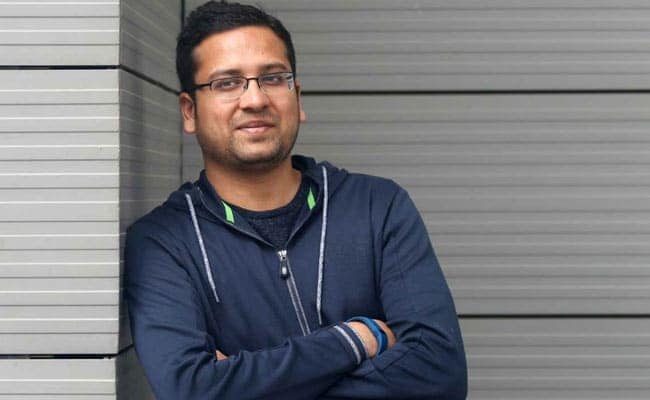
For Binny Bansal, the end of his long run as co-founder of India's most successful startup came Saturday when he began calling colleagues to say he was done. The 37-year-old was stunned that officials from Walmart Inc., his startup's new owner, were probing details of an affair years earlier. An investigation found no evidence of wrongdoing. Nevertheless, a decade after he created e-commerce leader Flipkart, he was calling to say goodbye.
His ouster, announced Tuesday from Walmart's hometown of Bentonville, Ark., left workers at Flipkart, half a world away in Bangalore, stunned and struggling to make sense of the cryptic explanation. They worried about Walmart's motivations and wondered if other Flipkart leaders would exit.
In its announcement, Walmart said it had initiated an independent investigation into an allegation of "serious personal misconduct." The probe didn't uncover evidence to support the charge. However, company said, "it did reveal other lapses in judgment, particularly a lack of transparency, related to how Binny responded to the situation. Because of this, we have accepted his decision to resign."
The explanation satisfied almost no one. Flipkart employees and workers at other startups wondered whether Walmart was using the episode to push Bansal aside. His co-founder left after the deal was completed, and several Flipkart employees saw the timing of his resignation as suspicious. Walmart's handling of the situation raises more questions than answers, said Kannan Ramaswamy, a professor at the Thunderbird School of Global Management at Arizona State University.
"Like it or not, Bansal is one of the very successful entrepreneurs in the country and India likes to claim such heroes as its own, so I don't think this issue will disappear," said Ramaswamy, who specializes in management strategy in the country. "There has to be more information forthcoming."
Walmart declined to comment for this story and Bansal did not respond to questions.
This account of what led to Bansal's departure was pieced together from interviews with two dozen people directly involved in the events or associated with the company. It doesn't answer all the questions swirling around the e-commerce giant long heralded as the leading example of India's rise. But it clarifies some of the key details that led to the ouster of one of the country's most celebrated entrepreneurs.
The allegations against Bansal arose just after Flipkart agreed to sell a controlling stake to Walmart, the American retailing giant. The deal came after months of negotiations during which Walmart archrival Amazon.com Inc. pressed hard to win the deal. In May, Walmart agreed to pay $16 billion for a 77 percent stake.
The woman who had been involved with Bansal contacted executives at Walmart in July, as they were working to close the U.S. company's biggest deal ever. She alleged that Bansal had sexually assaulted her in 2016.
Walmart took the allegations seriously enough that it appointed a global law firm to investigate the charges. The independent probe found that he'd had a consensual, extramarital relationship with the woman and that she was not an employee at the time of their involvement, though she had previously worked at Flipkart, according to people with knowledge of the investigation.
But Walmart's senior executives still had questions. They wanted Bansal to explain why he hadn't disclosed the allegations during the signing of the deal, particularly while answering mandatory questions about litigation risk, according to the people. They also wanted to know about alleged payments Bansal had made to the woman, perhaps to encourage her silence, one of the people said.
The co-founder insisted he didn't have any obligation to disclose the relationship, especially because there was no evidence of assault. He also didn't think he should have to answer more questions after the investigation. The questioning was particularly galling because Bansal had led formulation of policies for sexual harassment and whistle-blower complaints. Eventually, Bansal announced he'd had enough, the people said.
It's unusual to hold an executive responsible for relationships outside of the workplace, according to legal experts, but they do have to answer questions honestly.
"I don't think he had an obligation to report to a new owner a previous intimate relationship," said Alan Exelrod, an attorney in San Francisco at Rudy, Exelrod, Zieff & Lowe. "The flip side is that if he's asked and he doesn't tell the truth, then he's in trouble."
The decision most likely turned on executives' ability to trust Bansal and their desire to avoid a public relations disaster, said David A. Tauster, an associate attorney in Nixon Peabody's labor and employment practice group.
"You could see how Walmart would read between the lines and think, 'You know what? The harassment is not the only thing at issue here,'" Tauster said. "The risks of keeping this executive on are not going to outweigh the benefits of just using this as an opportunity for a somewhat clean break."
With Flipkart, Walmart has a lot at stake in India's growing online retail market. The 1.3 billion country's retail market projected to grow to $1 trillion by 2020. Without a single dominant local retailer and booming mobile internet access rates, Walmart and Amazon are in fierce competition to emerge as the market's leader. With Bansal's departure, Kalyan Krishnamurthy, who has led the Flipkart online retail business, will take on additional responsibilities.
Grabbing control of Flipkart has become critical for Walmart, which has also strengthened its own ethics and compliance practices in the wake of a six-year international corruption investigation. The company cultures were completely different in this way, according to people familiar with both firms. At Flipkart, a extramarital affair would be considered personal; Walmart executives thought it was worth disclosing.
In a statement that announced the news internally, Walmart said it had full confidence in the strength and depth of leadership at Flipkart and would support the subsidiary's "desire to evolve into a publicly-traded company."
While echoing many of the words in Walmart's communique, Bansal's email explicitly described the events as personal. He was stepping away from the operating role but would continue on the Flipkart board and as a large shareholder.
"Thank you for all the goodwill that you've shown towards me over the years," he ended, in an emotional sign off. "I'm grateful to have had the opportunity to help get us to where we are today."
(Except for the headline, this story has not been edited by NDTV staff and is published from a syndicated feed.)

-
Getting To Work Costs Women More | The Reason Why

It is not just about women paying more than men. It is about women paying much more in cities than in villages.
-
AI Bias In Investing Cannot Be Eliminated, But It Can Be Governed
Framing is a particularly important example as identical financial information presented in terms of gains rather than losses can lead an LLM to reach a different assessment.
-
Joining The Dots | Dark Skies, Steady Diya: Why Hope Holds This Diwali
With war, a weak rupee and foreign outflows weighing on sentiment, policymakers at the NDTV World Summit and market veterans at NDTV Profit Ignite: Diwali Edition offered the same advice: stay invested and filter out the noise.
-
The Curious Case of Equitas Small Finance Bank And A CEO Who Quit For Stock
PN Vasudevan believes persistent investor concerns over a perceived conflict of interest had become a governance overhang on Equitas Small Finance Bank's stock, even as the lender improved profitability and asset quality.
-
Talking Points This Week: AI Cash Burn, A Tiger Comeback And An India That Still Finds Its Own Path
India is not immune to higher oil or tighter global liquidity, yet its earnings base is broader, its domestic policy levers are still available.
-
Foreign Investors Own Half Of HDFC Bank and ICICI Bank. An LTCG Cut Could Matter Most Here
Foreign portfolio investors have US$115 billion parked in HDFC Bank, ICICI Bank. If the government cuts long-term capital gains tax, Jefferies says returning foreign money could land here first.
-
'Never Seen This Level Of Negativity': Sandeep Tandon Says The Next Rally May Be Closer Than You Think
Veteran investor Sandeep Tandon says foreign selling is easing, large-caps are due a comeback and mid-caps are crowded, while he turns positive on gold, power and pharma this Diwali.
-
Indians Stay With Family, Not In Hotels | The Reason Why
India still lacks enough clean, reliable and affordable hotels for budget-conscious travellers.
-
The Economic Imperative: Analysing The Material Driving Force Behind India-Canada Strategic Reset
This economic complementarity is further reinforced by deep institutional investment ties and talent mobility, which form the bedrock of the bilateral framework.
-
Medicine Pricing: Where Must Profit Stop?
India must confront excessive margins, hidden incentives and regulatory gaps that threaten the integrity of medicine.










