How Much Will Houses In India Cost? Delhi Prices Worst Hit
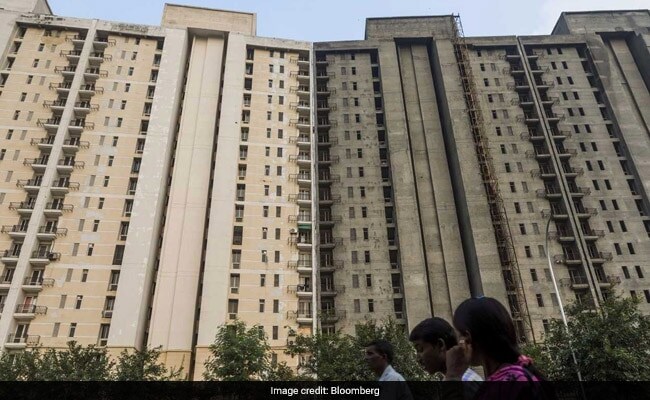
House prices will rise at half the rate of consumer price inflation next year, hit by dwindling credit supply, according to a Reuters poll of housing market experts who said Delhi, the national capital, will be hit hardest.
House prices have risen at almost double-digit rates for over a decade in a country of 130 crore people, where for many, owning a home is still a dream. Major cities have become some of the most densely populated in the world.
Asia's third-largest economy is also grappling with a liquidity crunch after a large lending firm, Infrastructure Leasing and Financial Services (IL&FS), defaulted on a short-term debt payment in June.
The Reserve Bank of India (RBI) and the government have since tussled over tight liquidity. The government has blamed the central bank and has asked it to ease lending regulations for banks and financial firms.
Rising bad debts and non-performing assets have made major banks and other large financial institutions cautious on lending, leading to a slowdown in the property market, which relies heavily on borrowing for both home building and buying.
"The liquidity crunch is likely to continue in 2019 and push (house) price growth to an all-time low. It will also lead to a scarcity in funds, pushing home loan interest rates higher," said Anuj Puri, chairman of ANAROCK property consultants.
"And thus, NBFCs (non-banking financial companies) and other commercial banks will be alert over further loan disbursements until normalcy returns to the market. This has created a deep-rooted problem. Only the fittest can survive," he said.
Puri also added the lack of credit "will be worse" for the housing market and smaller real-estate firms than the impact from the high-value currency ban two years ago and the hasty implementation of a goods and services tax last year.
House prices rose at an average annual rate of 8.5 per cent last year, according to Reuters calculations based on the RBI's NHB Residex (National Housing Bank Residential index) measure.
The Reuters poll of 14 property market experts, conducted October 29-November 14, showed they expected national house prices to rise 2.8 per cent this year and 2.0 per cent next, around half the rate of the current and expected rate of consumer price inflation.
While the consensus is based on different measures, a majority in the poll provided their forecasts based on NHB Residex. The common theme across forecasts irrespective of the methodology clearly shows a sluggish pace of house price growth over the next year.
If the prediction for house price growth for this year is realised, it will be the lowest in at least a decade and likely the first time since the financial crisis house price growth has not outpaced inflation.
A regional breakdown shows a much worse picture for Delhi.
House prices in Delhi, including the National Capital Region, home to 2 crore people, are forecast to fall 2.0 per cent this year and 2.5 per cent next.
"Frankly speaking, Delhi's real estate is highly overvalued; there are no fundamental (reasons) to prevailing prices and dynamics. Fifty-five per cent of properties built in the last decade were in unattractive locations, which simply had no takers," said Pankaj Kapoor, managing director of realty consultancy Liases Foras.
"Apart from that, the increasing pollution really suggests doom for the market in Delhi. Water scarcity, pollution and floods are major factors which will impact prices and valuations over the coming years."
Property prices in Mumbai, country's financial capital, were expected to stagnate this year and next. For Bengaluru and Chennai, the median forecast was for house prices to gain between 1 per cent and a little over 2 per cent in the next year.
High prices are deterring new buyers across most cities, on top of rising interest rates and an economy that is now cooling.
When asked to rate the real estate market nationally, 11 of 14 analysts said it was "overvalued" relative to economic fundamentals.
Delhi and Mumbai were either "overvalued" or "extremely overvalued", according to a majority of respondents. But 10 of 13 analysts said homes in Bengaluru and Chennai were "fairly priced".
"Most markets, except Bengaluru, have seen a pronounced fall in demand due to lower affordability," said Arvind Nandan, executive director of research at Knight Frank India.

-
Indians Are Travelling, But Not Every Journey Is A Holiday | The Week In Whys

Pilgrims, patients and working women are the real travellers, and the system hasn't quite caught up with them.
-
Getting To Work Costs Women More | The Reason Why
It is not just about women paying more than men. It is about women paying much more in cities than in villages.
-
AI Bias In Investing Cannot Be Eliminated, But It Can Be Governed
Framing is a particularly important example as identical financial information presented in terms of gains rather than losses can lead an LLM to reach a different assessment.
-
Joining The Dots | Dark Skies, Steady Diya: Why Hope Holds This Diwali
With war, a weak rupee and foreign outflows weighing on sentiment, policymakers at the NDTV World Summit and market veterans at NDTV Profit Ignite: Diwali Edition offered the same advice: stay invested and filter out the noise.
-
The Curious Case of Equitas Small Finance Bank And A CEO Who Quit For Stock
PN Vasudevan believes persistent investor concerns over a perceived conflict of interest had become a governance overhang on Equitas Small Finance Bank's stock, even as the lender improved profitability and asset quality.
-
Talking Points This Week: AI Cash Burn, A Tiger Comeback And An India That Still Finds Its Own Path
India is not immune to higher oil or tighter global liquidity, yet its earnings base is broader, its domestic policy levers are still available.
-
Foreign Investors Own Half Of HDFC Bank and ICICI Bank. An LTCG Cut Could Matter Most Here
Foreign portfolio investors have US$115 billion parked in HDFC Bank, ICICI Bank. If the government cuts long-term capital gains tax, Jefferies says returning foreign money could land here first.
-
'Never Seen This Level Of Negativity': Sandeep Tandon Says The Next Rally May Be Closer Than You Think
Veteran investor Sandeep Tandon says foreign selling is easing, large-caps are due a comeback and mid-caps are crowded, while he turns positive on gold, power and pharma this Diwali.
-
Indians Stay With Family, Not In Hotels | The Reason Why
India still lacks enough clean, reliable and affordable hotels for budget-conscious travellers.
-
The Economic Imperative: Analysing The Material Driving Force Behind India-Canada Strategic Reset
This economic complementarity is further reinforced by deep institutional investment ties and talent mobility, which form the bedrock of the bilateral framework.










