Housing For All: A Demand Booster, But Supply And Funding Challenges Likely
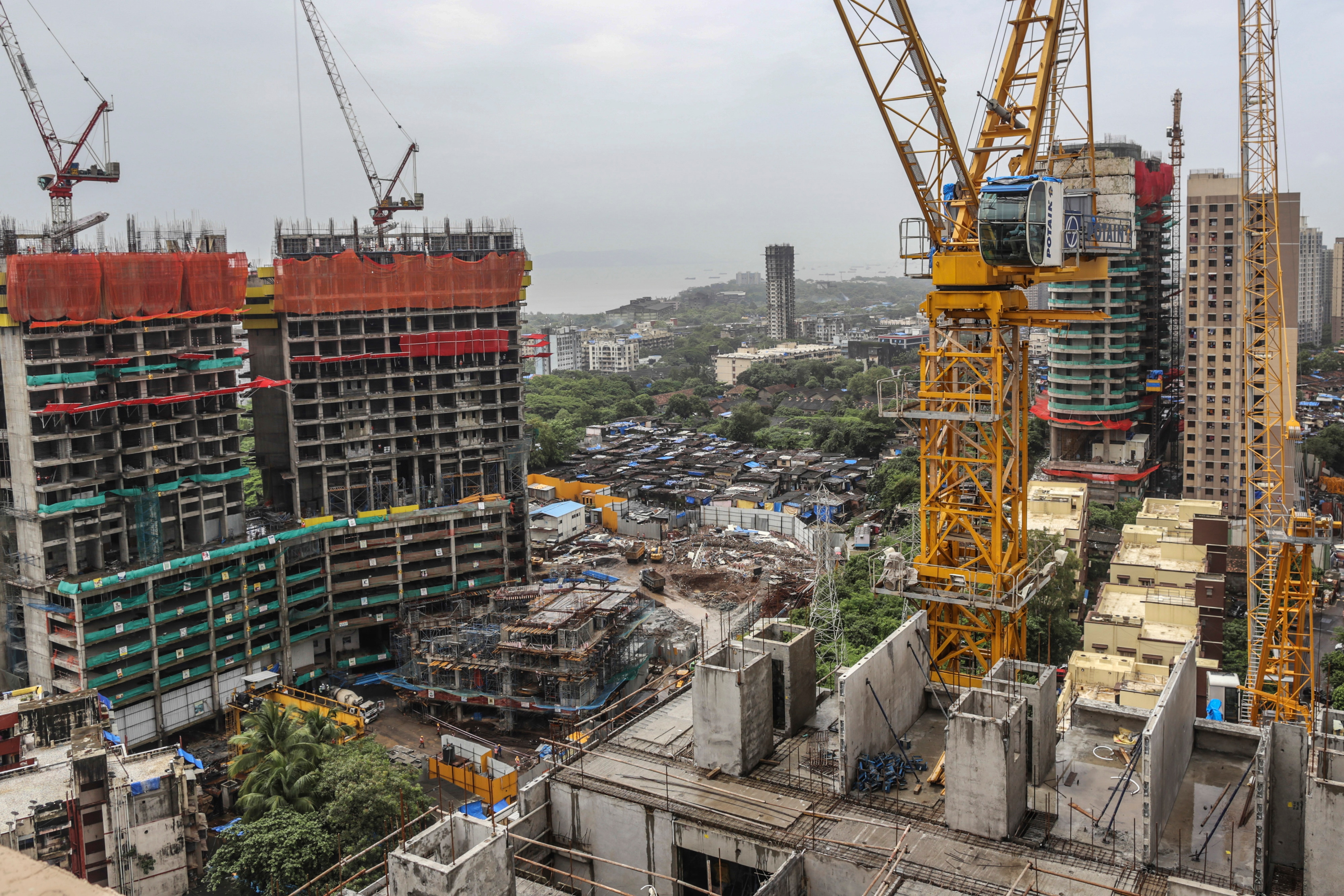
The Housing for All (HFA) project will give the Indian economy a much needed boost. However, its success will depend on ramping up existing urban infrastructure, fast tracking approval processes and targeting the actual beneficiary, says India Rating and Research.
Funding of the investment of Rs 15 lakh crore through public-private partnerships and ramping up the supply of raw materials for construction namely steel and cement are big challenges for the execution of the HFA scheme.
Municipal services such as supplying piped water, sewerage, sanitation and municipal solid waste management are also far from being equipped to take on a project of this magnitude in the next seven years.
Apart from providing impetus to the construction sector, the scheme will increase employment opportunities and help grow the services sector. Sectors supplying crucial inputs to the construction sector, such as cement, iron and steel, will also grow. The growth of other sectors will depend on the strength of the forward and backward linkages of the construction sector with the rest of the economy.
As the output of sectors supplying inputs to the construction sector increases, it will increase the demand for goods and services in the economy due to higher income generation. The economic impact of the scheme will also be felt at the state level. The biggest beneficiary of this will be Uttar Pradesh, followed by Maharashtra and West Bengal. These are the top three states in terms of housing shortages and increased construction activities will help these states' economies to grow.
The scheme to provide 20 million houses in three phases over FY16-FY22 has a central grant component (Rs 1 lakh per slum household) going to the state government, and central assistance (Rs 1.50 lakh other households) is likely to go directly to households.
Also, the central government will provide interest subvention to households at 6.5 percent for loans up to a 15- year tenor through two nodal agencies – Housing and Urban Development Corporation Ltd. and National Housing Bank. The government will have to find more resources to finance this, so as to adhere to its fiscal deficit target.
India Ratings expects the demand for cement for the scheme alone to be closer to FY15 production levels and steel demand to be higher than the production levels of bars and rods. Local bodies will face challenges in supplying piped water, sewerage, sanitation and municipal solid waste management. Also, the present quality of municipal services is far from satisfactory.
This will lead to a wide gap between demand and supply, when we compare the current levels of supply with the current demand plus the additional demand from this scheme. An increase in capacity may lead to redundancy post this project and the reliance on imported materials will push up their cost to that extent.
This article has been published in arrangement with India Ratings.
India Ratings and Research, a wholly owned subsidiary of Fitch Group, is a SEBI and RBI accredited credit rating agency operating in the Indian credit market.

-
Signature Play: The Classic Cocktail Is Dead. Or Is It?

Classic cocktails are disappearing from India's cocktail menus. But they're still being ordered, taught to bartenders and borrowed from. So, who's really having the last drink?
-
A New Samvat Wishlist: Inclusive Prosperity And Human Development
India has strengthened its economic foundations through infrastructure, digital access and enterprise. Its next growth chapter must deepen productivity, create better livelihoods and widen participation in prosperity.
-
Love, Sex Aur Dhokha: The Audacious Plot To Spy On Jensen Huang
A Taipei dinner, a Singapore chip buyer and a suspected Chinese asset: inside the alleged spy operation that got close to NVIDIA's Jensen Huang.
-
Ten Things I Learnt This Samvat
Patience can be a trap. Cheap stocks can stay cheap. Leverage can wipe you out. What did Samvat 2082 teach us? Niraj Shah writes on 10 lessons from the year gone by.
-
Talking Points This Week: Tech Nerves, FII Buying, And A Faraway Banking Shock
The global markets are not shining this Diwali. The exception in the large markets is, India.
-
Midterm Rally Lasted A Day. The Hard Reality Of A Divided US May Last Two Years | Opinion
Between a contested AI boom, a debt ceiling that arrives in 2027 and a president with every incentive to act alone, the next two years may prove more volatile than the first day's rally suggests.
-
Blue Wave Will Derail the AI Trade but Won't Dismantle the AI Era | Unhedged Position
The Democrats' sweep of the US Congress will see politics collide with economic forces both over the long and short term.
-
It's Time To Take The GST Council's Bet On Trust Global
Payment records can prove India's services exports, and clear, proportionate rules can bring foreign digital sellers into the tax net.
-
Opinion | India at 38: From Innovation Overperformer to Innovation Powerhouse
India now has 453 VC-backed deep science startups, 18 of them late-stage, after 117 percent growth since 2020. Laurus Labs, at USD 9.3 billion, is the most valuable deep science company in any middle-income economy outside China.









