Hospital Chain Aster to Fuel India Expansion Through Buyouts

(Bloomberg) -- Hospital and pharmacy chain Aster DM Healthcare Ltd. said it would look to acquire private operators to fuel expansion in India after hiving off its Gulf business for $1 billion.
Aster plans to add an additional 1,500 beds to the current 4,800 capacity in the world's most populous country over the next three years and “look at companies that are not listed, but which have good performance,” Azad Moopen, Aster's chairman and managing director, said in an interview on Bloomberg Television Thursday.
“We will have firepower,” he said.
Last month, Aster — founded in 1987 from a single clinic in Dubai — announced that it had agreed to sell 65% of its Gulf operations to a group led by Fajr Capital and would use the funds for a dividend payout and expansion.
Aster operates 34 hospitals as well as hundreds of clinics and pharmacies across both India and the Gulf. The firm had been working with advisers for years on a plan to split off its two regional businesses.
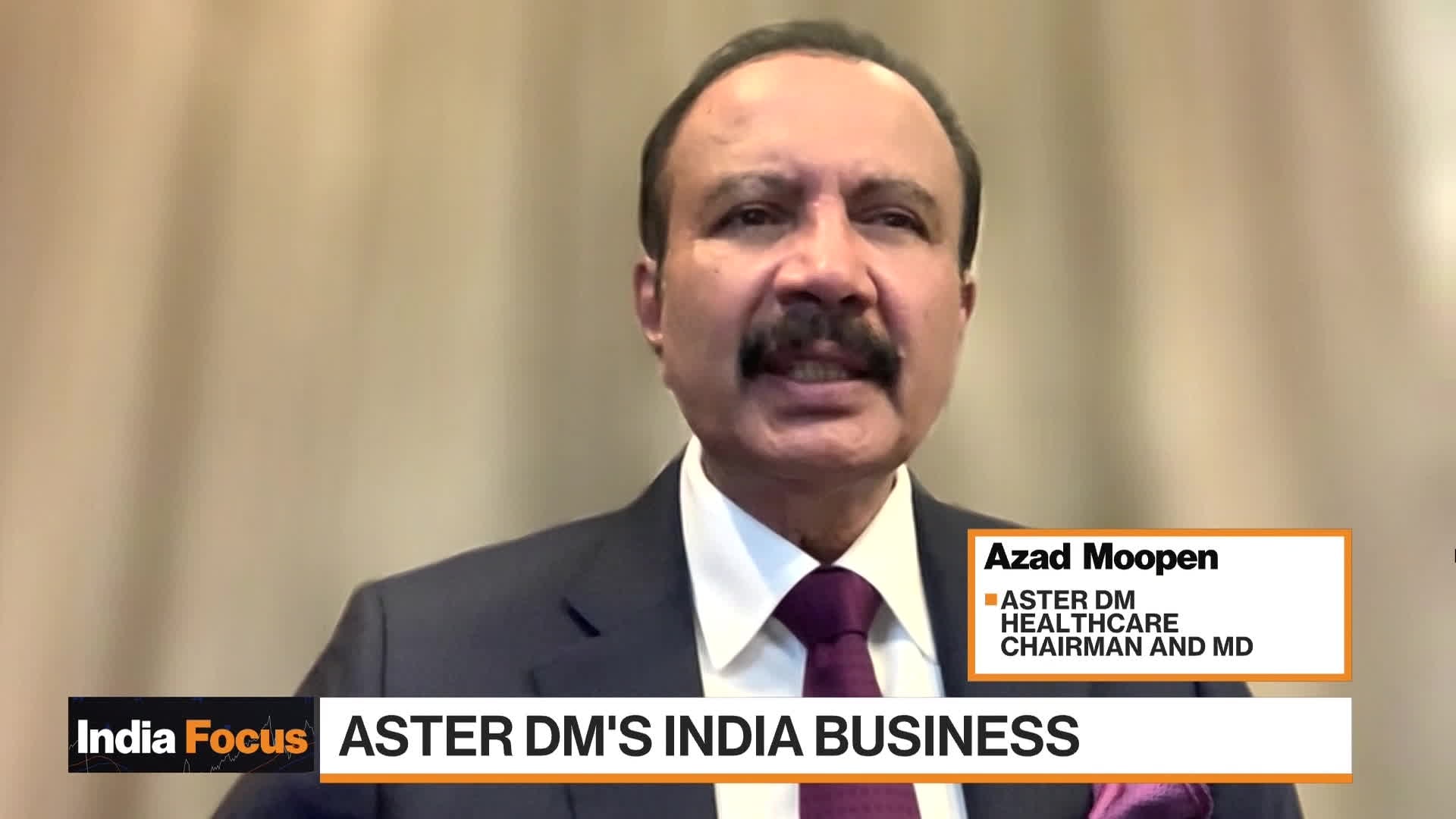
The company is now focused on expanding rapidly in India, eyeing a market where more than one-third of India's 1.4 billion people can afford private healthcare, Moopen said.
India's hospital industry is witnessing a flood of investor interest and the sector is estimated to have more than doubled in size to $132 billion since 2017, according to a government investment agency.
More than half of Aster's hospitals are in India, which only accounted for just over a quarter of its revenue. Still, Aster's compounded annualized growth between 20-25% in the country over the last five years has been “at least three times” more than its Gulf business, said Moopen.
“The Indian market was not valuing the GCC business in the way we thought it would value,” Moopen said. “We had to look at something very drastic.”
Pointing to the company's Indian listed shares, which have jumped 20% since the deal was announced, Moopen said “the decision was right.”
While Aster's sale unlocked value as its focus shifts to India, the quantum of a dividend payout from the proceeds as well as a potential shareholder's exit remain key uncertainties, Mumbai-based JM Financial analyst Jainil Shah said last week.
More stories like this are available on bloomberg.com
©2023 Bloomberg L.P.

-
Indians Stay With Family, Not In Hotels | The Reason Why

India still lacks enough clean, reliable and affordable hotels for budget-conscious travellers.
-
The Economic Imperative: Analysing The Material Driving Force Behind India-Canada Strategic Reset
This economic complementarity is further reinforced by deep institutional investment ties and talent mobility, which form the bedrock of the bilateral framework.
-
Medicine Pricing: Where Must Profit Stop?
India must confront excessive margins, hidden incentives and regulatory gaps that threaten the integrity of medicine.
-
Why Amazon And Flipkart Are Struggling To Beat Meesho In India's Smaller Cities
With 274 million users and lowest-cost logistics, Meesho is defending its value commerce crown against giants like Amazon and Flipkart.
-
High US Salaries, No Green Card Certainty: The Financial Calculation Facing Indian H-1B Families
The suspension of PERM processing at eight technology employers does not cancel existing H-1B visas. What it does is force a question many Indian families have been avoiding: is the US salary worth tying your career and family plans to one employer?
-
Swiggy vs Eternal: Food Delivery's Two Rivals Are No Longer In The Same Race
Eternal is building a private AI assistant, dark.ai. Swiggy is still working out how to make Instamart pay, with an operating loss of Rs 895 crore in the July-September quarter while Blinkit stayed profitable.
-
Where You Live Shapes How You Get To Work | The Reason Why
Two-wheelers are the most popular way to get to work in India, accounting for nearly 43% of workplace commutes.
-
Unhedged Position: Can India See An Indonesia-Style Time Correction?
The Nifty is trading below levels it first clocked in 2024. Is there, then, as I have suggested in the headline, potential that the current time correction drags on painfully for the next three-five, even ten years?
-
Navigating Friction And Energy Realities: An Analysis Of Marco Rubio's October Visit To India
Occurring at a critical juncture marked by stalled trade negotiations and escalating geopolitical pressures over global energy supplies, the visit offers a profound window into modern US-India relations.
-
India Exports Capital. Why Not Export Trusteeship?
The big question, then, is whether India can build an institution that global borrowers, investors, banks, and lawyers can trust, even without an Indian connection.










