Hong Kong Plunges Below Singapore in World Press Freedom Ranking
(Bloomberg) -- Hong Kong's press freedom ranking has plummeted amid a crackdown on free speech by authorities.
The Asian financial center ranked 148 in the Reporters Without Borders 2022 World Press Freedom Index, representing a fall of 68 places from last year. Twenty years ago the city sat in 18th place.
Elsewhere on the list, China sat in 175th position, Singapore ranked 139th -- up from 160 last year -- and India stood in 150th place. Norway, Denmark and Sweden took the top three spots, while the U.K. rose to 24 from 33 last year, and the U.S. edged up take 42nd place.

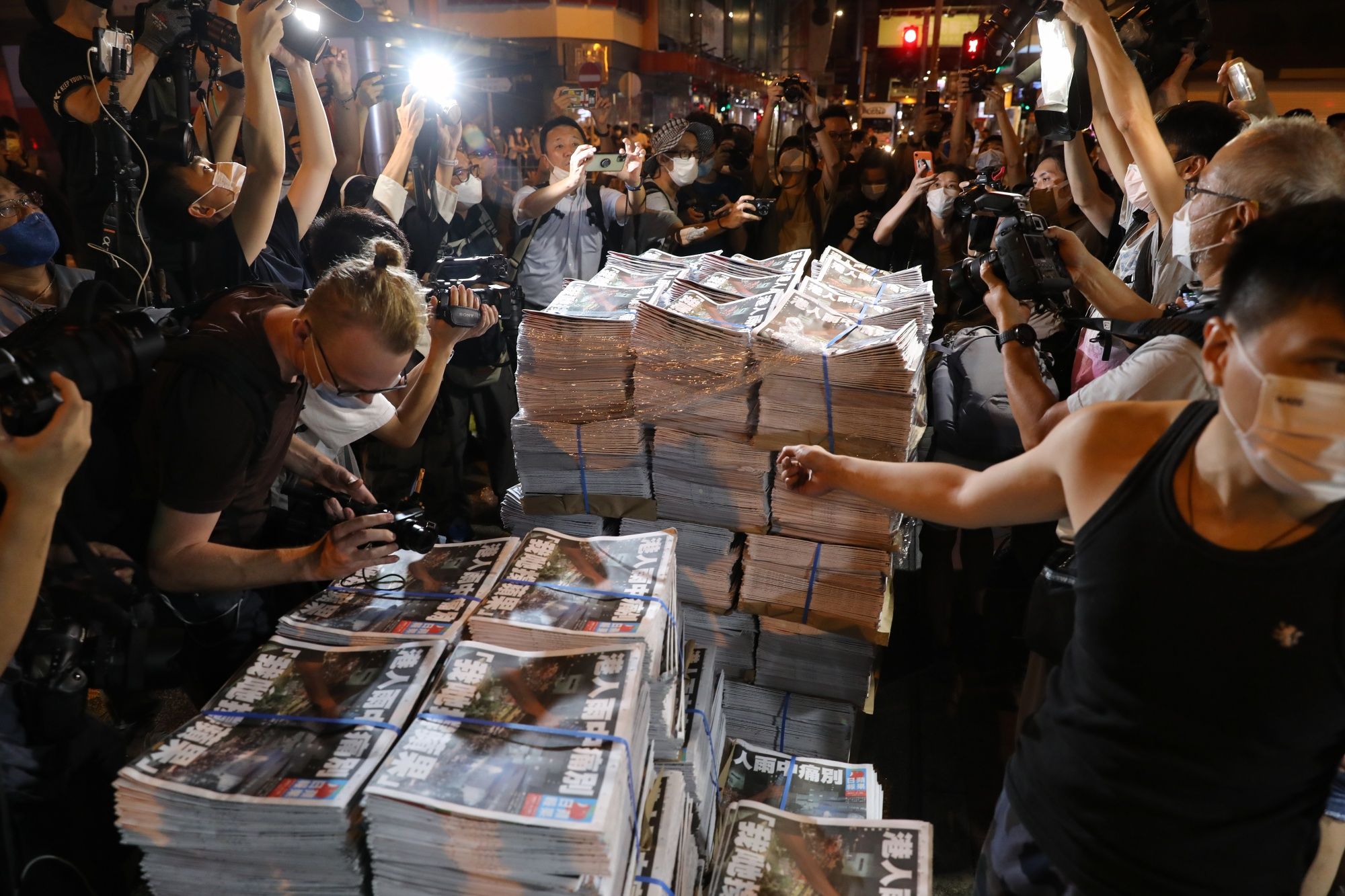
Hong Kong's fall in the ranking came after police raids, the seizure of assets and the subsequent closure of two major independent news organizations -- Apple Daily and Stand News -- in 2021. Thirteen journalists were in prison at the time of the report, according to Reporters Without Borders.
The former British colony's fall in press freedom reflects a widening clampdown on free speech in the city, following the Beijing-imposed introduction of a national security law in 2020, enacted to quell anti-government protests.
Hong Kong Chief Executive Carrie Lam rejected claims that the city's press freedom had deteriorated. “Our media organizations are as vibrant as ever,” Lam told a regular news briefing Tuesday, adding that journalists and media organizations weren't above the law, including legislation regarding national security.

Reporters Without Borders compiled the ranking of 180 countries and territories with a new methodology this year, taking five indicators into account: political context, legal framework, economic context, sociocultural context and security.
While the report described Hong Kong's media landscape as having a “vibrant media environment with hundreds of publications and over 15 TV stations,” it went on to say: “Since the 1997 handover to China, most media have fallen under the control of the government or pro-China groups.”
It added: “The Hong Kong government takes orders directly from Beijing and openly supports its attempts to impose censorship and spread propaganda.”
More stories like this are available on bloomberg.com
©2022 Bloomberg L.P.

-
Signature Play: The Classic Cocktail Is Dead. Or Is It?

Classic cocktails are disappearing from India's cocktail menus. But they're still being ordered, taught to bartenders and borrowed from. So, who's really having the last drink?
-
A New Samvat Wishlist: Inclusive Prosperity And Human Development
India has strengthened its economic foundations through infrastructure, digital access and enterprise. Its next growth chapter must deepen productivity, create better livelihoods and widen participation in prosperity.
-
Love, Sex Aur Dhokha: The Audacious Plot To Spy On Jensen Huang
A Taipei dinner, a Singapore chip buyer and a suspected Chinese asset: inside the alleged spy operation that got close to NVIDIA's Jensen Huang.
-
Ten Things I Learnt This Samvat
Patience can be a trap. Cheap stocks can stay cheap. Leverage can wipe you out. What did Samvat 2082 teach us? Niraj Shah writes on 10 lessons from the year gone by.
-
Talking Points This Week: Tech Nerves, FII Buying, And A Faraway Banking Shock
The global markets are not shining this Diwali. The exception in the large markets is, India.
-
Midterm Rally Lasted A Day. The Hard Reality Of A Divided US May Last Two Years | Opinion
Between a contested AI boom, a debt ceiling that arrives in 2027 and a president with every incentive to act alone, the next two years may prove more volatile than the first day's rally suggests.
-
Blue Wave Will Derail the AI Trade but Won't Dismantle the AI Era | Unhedged Position
The Democrats' sweep of the US Congress will see politics collide with economic forces both over the long and short term.
-
It's Time To Take The GST Council's Bet On Trust Global
Payment records can prove India's services exports, and clear, proportionate rules can bring foreign digital sellers into the tax net.
-
Opinion | India at 38: From Innovation Overperformer to Innovation Powerhouse
India now has 453 VC-backed deep science startups, 18 of them late-stage, after 117 percent growth since 2020. Laurus Labs, at USD 9.3 billion, is the most valuable deep science company in any middle-income economy outside China.









