Hong Kong-Based Airline Cathay Pacific Unveils $5-Billion Bailout Plan
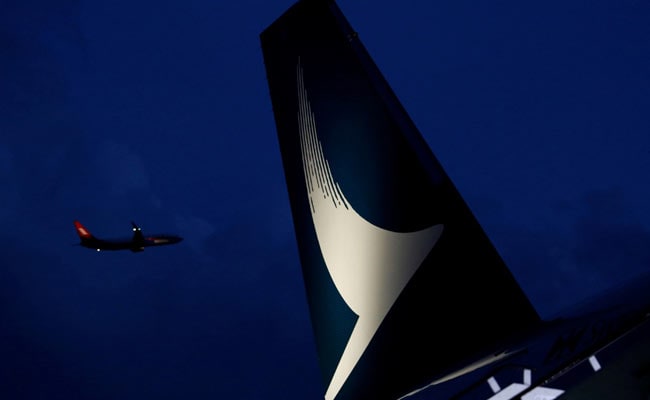
Troubled Hong Kong airline Cathay Pacific announced a HK$39 billion ($5 billion) government-led bailout plan on Tuesday as it battles a crippling downturn caused by the coronavirus. Like many carriers hammered by the crisis, the company has seen passenger numbers evaporate in recent months, leaving most of its fleet sitting on the tarmac and the firm haemorrhaging cash. The airline was already under pressure after taking a hit from months of sometimes violent protests in Hong Kong last year that saw tourism battered.
On Tuesday, the carrier announced a sweeping proposal to inject liquidity and keep it afloat with the help of Hong Kong's government, which will take a small stake in the firm. "Quite frankly, without this plan the alternative would have been a collapse of the company," Cathay chairman Patrick Healy told reporters.
The bulk of the capital will come from new shares issued to Aviation 2020, a company owned by the government, as well as a HK$7.8 billion bridge loan also from the government.
Under the proposal, Cathay will raise about HK$11.7 billion in a rights issue on the basis of seven rights shares for every 11 existing shares held, while preference shares will be sold to the government for HK$19.5 billion and warrants for HK$1.95 billion, subject to adjustment.
Share trading in Cathay Pacific -- and its two biggest shareholders Air China and Swire -- was suspended in Hong Kong on Tuesday morning ahead of the announcement. They will resume trading on Wednesday, Cathay said.
Swire, a Hong Kong and British conglomerate with colonial-era roots, has a 45 percent stake in Cathay while Air China owns 30 percent. Once the recapitalisation plan is complete, Aviation 2020 will take a six percent stake, while Swire's shares will be reduced to 42 percent and Air China's to 28 percent.
Aviation 2020 will also be allowed to send two "observers" to attend board meetings.
The South China Morning Post newspaper reported it is the first time Hong Kong's government has directly injected money into a private company. Finance Secretary Paul Chan said the government acted to protect Hong Kong's status as an international transport hub after Cathay approached them for help.
"We expect the investment to last three or more years as we at least need to wait for the pandemic to pass," he told reporters, adding he expected a reasonable return for taxpayers.
"The government will not take part in the company's daily operations," he said, with the two observer board members having no voting rights.
Cathay said it executives had also agreed to pay cuts, while all staff would be asked to take three weeks unpaid leave over the next six months -- a second time they have been asked to do so.
Before the pandemic struck, Cathay was one of Asia's largest international airlines and the fifth largest air cargo carrier globally. The virus has caused a collapse in passenger numbers, and while its cargo business has kept going, Cathay has no domestic demand to fall back on -- unlike many other big airlines.
Healy said Cathay went into the year with some $20 billion in reserves, but the company was now burning through $2.5-3 billion a month. Cathay also found itself punished by Beijing last year when some of its 33,000 employees expressed support for Hong Kong's pro-democracy protests.
The crisis led to the replacement of both the airline's CEO and chairman as Cathay scrambled to placate Beijing, while unions complained some staff were sacked for their political views.
Many other major airlines have scrambled to secure loans, raise capital or seek bailouts in recent weeks including Singapore Airlines, Korean Air, the three big US airlines and Lufthansa.

-
We May Need Another Tukaram Mundhe To Fight Air Pollution | The Reason Why

Developers may install basic measures such as sprinklers and green nets, resume work, and continue violating rules when this equipment stops working.
-
Extracting Value From Battery Scrap Could Be Challenging For India | The Reason Why
A discarded lithium-ion battery still contains valuable materials such as lithium, nickel and cobalt. These can be recovered and reused. When such batteries are crushed and shredded, they produce a dark powder called black mass.
-
One El Nino, India Can Handle. Two Could Break The Granary
India's grain stocks can absorb one bad year, but a second El Nino could drain the buffer in two to three years, economists say.
-
India's Troika Of Good Luck | Joining The Dots
As Jensen Huang's exit drags Nvidia down, a cooling AI trade and resilient earnings have revived investor interest in India. A likely RBI rate hike looms.
-
Talking Points This Week: Leadership Shock At Nvidia, Earnings Strength, And The Fog Over Hormuz
The Anthropic IPO pricing and first trading day, Nvidia's upcoming earnings, and any fresh signals from Iran will set the tone for the following week.
-
Signature Play: The Classic Cocktail Is Dead. Or Is It?
Classic cocktails are disappearing from India's cocktail menus. But they're still being ordered, taught to bartenders and borrowed from. So, who's really having the last drink?
-
A New Samvat Wishlist: Inclusive Prosperity And Human Development
India has strengthened its economic foundations through infrastructure, digital access and enterprise. Its next growth chapter must deepen productivity, create better livelihoods and widen participation in prosperity.
-
Love, Sex Aur Dhokha: The Audacious Plot To Spy On Jensen Huang
A Taipei dinner, a Singapore chip buyer and a suspected Chinese asset: inside the alleged spy operation that got close to NVIDIA's Jensen Huang.
-
Ten Things I Learnt This Samvat
Patience can be a trap. Cheap stocks can stay cheap. Leverage can wipe you out. What did Samvat 2082 teach us? Niraj Shah writes on 10 lessons from the year gone by.
-
Talking Points This Week: Tech Nerves, FII Buying, And A Faraway Banking Shock
The global markets are not shining this Diwali. The exception in the large markets is, India.









