Historic Boom For India Tech As Six Startups Become Unicorns In Four Days
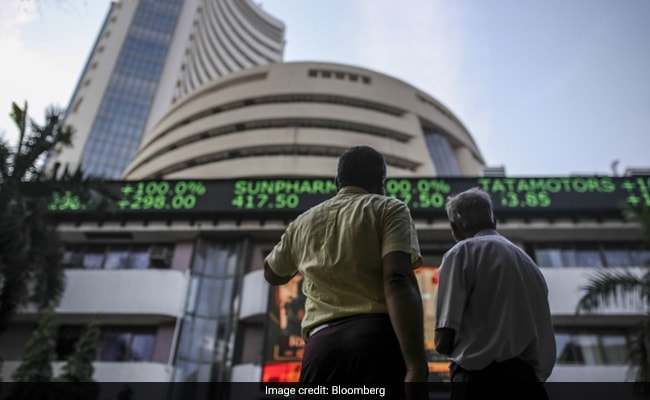
It was an historic week for India's technology industry. In the space of four days, the country minted at least six new startups with a valuation of $1 billion or more -- what techies call unicorns because they're supposed to be such rarities.
In rough order of size: The investment platform Groww raised money at a valuation of more than $1 billion, messaging bots startup Gupshup hit $1.4 billion, digital pharmacy API Holdings Pvt. was valued at close to $1.5 billion, app developer Mohalla Tech surpassed $2.1 billion, social commerce startup Meesho Inc. also reached $2.1 billion and financial-technology provider Cred rounded out the blessing of unicorns at $2.2 billion.
For context, India had a total of seven new unicorns in all of 2020, according to market researcher CB Insights. In 2019, it had six.
Global investors such as Japan's SoftBank Group Corp. and South Africa's Naspers Ltd. see growing opportunity in the country's startup scene. The nation of 1.3 billion people has seen the rapid adoption of smartphones in recent years, explosive growth of inexpensive internet services and a new generation of ambitious entrepreneurs.
"Large funds such as Naspers, SoftBank and Tiger Global have significant amounts of capital to invest and these startups are now on top of their list," said P.N. Sudarshan, a partner at Deloitte.
India has long trailed well behind the U.S. and China in the amount of venture capital money invested in startups. The total value of deals in 2020 was $11.8 billion, compared with $143 billion in the U.S. and $83 billion in China, according to researcher Preqin.
But several startups have emerged recently to signal the potential in the South Asian country. Digital payments giant Paytm reached a valuation of $16 billion, making it the most valuable in the country, according to CB Insights. Online-education startup Byju's is rasing money at a $15 billion valuation, Bloomberg News reported last week.
Flipkart, the e-commerce giant acquired by Walmart Inc. in 2018, is targeting an initial public offering in the fourth quarter that could value the company at more than $35 billion.
The venture investments are helping to diversify India's industry, long best known for tech services companies such as Tata Consultancy Services Ltd. and Infosys Ltd. A Credit Suisse Group AG report last month found there are about 100 unicorns in India with a combined market value of $240 billion, in sectors from e-commerce and fintech to education, logistics and food-delivery.
"India's corporate landscape is undergoing a radical change due to a remarkable confluence of changes in the funding, regulatory and business environment in the country over the past two decades," the report said. "An unprecedented pace of new-company formation and innovation in a variety of sectors has meant a surge in the number of highly-valued, as-yet unlisted companies."
The Covid-19 pandemic has accelerated the adoption of online technologies in India, perhaps even more than in other countries. During the coronavirus pandemic and the stringent lockdowns of last year, more than 1,600 new startups were founded, taking the total in the country to over 12,500, according to a January report by Nasscom, the country's technology industry trade body.
More than 55 of these are potential unicorns, the report said, what the venture industry refers to as "soonicorns." Like in Silicon Valley, executives who got experience at leading startups such as Flipkart and Paytm are breaking out to set up their own companies, and entrepreneurs who have had successful exits are turning to their second or third startups.
"The surge of funding and the breeding of unicorns is not a surprise because India has the third-largest startup ecosystem in the world and the third-largest market for such startups," said Pranav Pai, managing partner at 3one4 Capital Advisors LLP.
Pai said he knows of at least six new unicorns that will be minted in the next few months. While $20 million rounds were notable five years ago, startups are scaling very quickly and raising $100 million to $200 million rounds nowadays, he said.
The investor checks out a few hundred startups each month on average.
"The difference is, instead of encountering just one high-quality startup among those, we now see eight to 10 every month," said the venture capitalist whose earlier fund Arin Capital backed edtech startup Byju's and the newly-minted e-pharmacy unicorn, PharmEasy.
Many investors will see their earlier bets come full circle as a dozen Indian startups prepare to head to the public markets later this year or early next.
"Such exits will further boost investor confidence, increase liquidity and fuel a new frenzy of funding," said Sudarshan.
(Except for the headline, this story has not been edited by NDTV staff and is published from a syndicated feed.)

-
We May Need Another Tukaram Mundhe To Fight Air Pollution | The Reason Why

Developers may install basic measures such as sprinklers and green nets, resume work, and continue violating rules when this equipment stops working.
-
Extracting Value From Battery Scrap Could Be Challenging For India | The Reason Why
A discarded lithium-ion battery still contains valuable materials such as lithium, nickel and cobalt. These can be recovered and reused. When such batteries are crushed and shredded, they produce a dark powder called black mass.
-
One El Nino, India Can Handle. Two Could Break The Granary
India's grain stocks can absorb one bad year, but a second El Nino could drain the buffer in two to three years, economists say.
-
India's Troika Of Good Luck | Joining The Dots
As Jensen Huang's exit drags Nvidia down, a cooling AI trade and resilient earnings have revived investor interest in India. A likely RBI rate hike looms.
-
Talking Points This Week: Leadership Shock At Nvidia, Earnings Strength, And The Fog Over Hormuz
The Anthropic IPO pricing and first trading day, Nvidia's upcoming earnings, and any fresh signals from Iran will set the tone for the following week.
-
Signature Play: The Classic Cocktail Is Dead. Or Is It?
Classic cocktails are disappearing from India's cocktail menus. But they're still being ordered, taught to bartenders and borrowed from. So, who's really having the last drink?
-
A New Samvat Wishlist: Inclusive Prosperity And Human Development
India has strengthened its economic foundations through infrastructure, digital access and enterprise. Its next growth chapter must deepen productivity, create better livelihoods and widen participation in prosperity.
-
Love, Sex Aur Dhokha: The Audacious Plot To Spy On Jensen Huang
A Taipei dinner, a Singapore chip buyer and a suspected Chinese asset: inside the alleged spy operation that got close to NVIDIA's Jensen Huang.
-
Ten Things I Learnt This Samvat
Patience can be a trap. Cheap stocks can stay cheap. Leverage can wipe you out. What did Samvat 2082 teach us? Niraj Shah writes on 10 lessons from the year gone by.
-
Talking Points This Week: Tech Nerves, FII Buying, And A Faraway Banking Shock
The global markets are not shining this Diwali. The exception in the large markets is, India.









