Here's How To Use National Common Mobility Card On Delhi Metro Airport Express Line
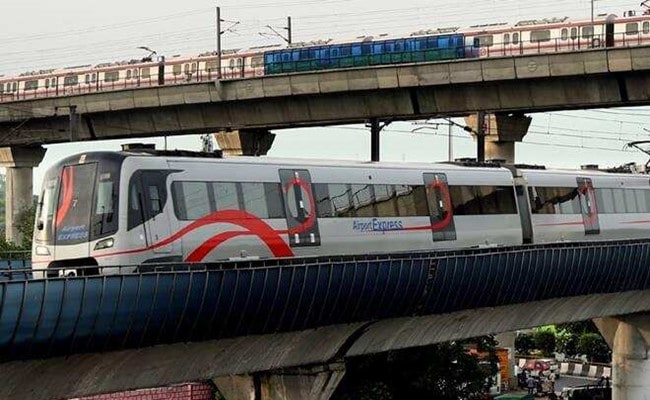
National Common Mobility Card: The fully operational National Common Mobility Card (NCMC) service was inaugurated on the 23 km long Delhi Metro Airport Express Line connecting New Delhi to Dwarka Sector 21 on Monday, December 28. Prime Minister Narendra Modi inaugurated the services to be operational for commuters on the Delhi Metro Airport Express Line, via video conferencing yesterday. The National Common Mobility Card (NCMC) is an inter-operable transport card and allows passengers from any part of the country to utilize their NCMC-compliant RuPay debit card for traveling on the Delhi Metro's Airport Express Line. (Also Read: Here's All You Need To Know About India's First Driverless Train For Delhi Metro )
Here's how the National Common Mobility Card will ease travel across the Delhi Metro network and facilitate payment systems for citizens:
- In simple words, anyone having a RuPay-debit card issued by any of the 23 banks in the last 18 months, from any part of the country, will be able to travel on the Delhi Metro Airport Express line using the same card. According to the metro operator Delhi Metro Rail Corporation (DMRC), the same card can also be used for shopping, banking transactions, etc. across the country.
- The Delhi Metro Rail Corporation will be able to accept transactions from the 23 banks, which are NCMC-compliant as per directions of the central government's department of financial services, through the RuPay debit card issued by them.
- Durga Shanker Mishra, Secretary, Ministry of Housing and Urban Affairs said that the automatic fare collection system in Delhi Metro Airport Express Line has now been made fully ‘open loop', as it accepts any RuPay debit card compliant with the National Common Mobility Card.
- He added that RuPay debit cards will work on urban transport systems, retail or bank ATM's, saving people from acquiring different cards for various purposes when traveling in different cities.
National Common Mobility Card - Top Features:
- The National Common Mobility Card is basically an indigenous automatic fare collection system. Apart from Delhi Metro travel on Airport Express Line, it will also allow people or commuters to pay for toll taxes, bus services, parking, retail shopping, and accessing the ATM to withdraw money.
- A first of its kind in the country, the One Nation One Card model- NCMC was launched by Prime Minister Narendra Modi last year. According to the central government, they are bank-issued cards on debit/credit/prepaid card product platform. Users can utilize this for payments across all segments including metro, bus, railways, suburban, parking, smart city, toll, retail.
- The card's stored value supports the transactions on offline mode across all travel requirements with minimal financial risk to the involved stakeholders. The card's service area feature supports operator-specific applications like monthly passes, season tickets, etc.
The Delhi Metro network authorities are planning to upgrade its entire existing network by 2022 to facilitate travel by the NCMC-compliant RuPay Debit card. The existing Delhi Metro tokens (presently not in use due to COVID-19 pandemic restrictions), smart cards, QR Codes, etc., will also continue to remain in use for commuters. All the upcoming corridors of Delhi Metro Phase-IV will also be built with NCMC-compliant automatic fare collection system at the metro stations.

-
We May Need Another Tukaram Mundhe To Fight Air Pollution | The Reason Why

Developers may install basic measures such as sprinklers and green nets, resume work, and continue violating rules when this equipment stops working.
-
Extracting Value From Battery Scrap Could Be Challenging For India | The Reason Why
A discarded lithium-ion battery still contains valuable materials such as lithium, nickel and cobalt. These can be recovered and reused. When such batteries are crushed and shredded, they produce a dark powder called black mass.
-
One El Nino, India Can Handle. Two Could Break The Granary
India's grain stocks can absorb one bad year, but a second El Nino could drain the buffer in two to three years, economists say.
-
India's Troika Of Good Luck | Joining The Dots
As Jensen Huang's exit drags Nvidia down, a cooling AI trade and resilient earnings have revived investor interest in India. A likely RBI rate hike looms.
-
Talking Points This Week: Leadership Shock At Nvidia, Earnings Strength, And The Fog Over Hormuz
The Anthropic IPO pricing and first trading day, Nvidia's upcoming earnings, and any fresh signals from Iran will set the tone for the following week.
-
Signature Play: The Classic Cocktail Is Dead. Or Is It?
Classic cocktails are disappearing from India's cocktail menus. But they're still being ordered, taught to bartenders and borrowed from. So, who's really having the last drink?
-
A New Samvat Wishlist: Inclusive Prosperity And Human Development
India has strengthened its economic foundations through infrastructure, digital access and enterprise. Its next growth chapter must deepen productivity, create better livelihoods and widen participation in prosperity.
-
Love, Sex Aur Dhokha: The Audacious Plot To Spy On Jensen Huang
A Taipei dinner, a Singapore chip buyer and a suspected Chinese asset: inside the alleged spy operation that got close to NVIDIA's Jensen Huang.
-
Ten Things I Learnt This Samvat
Patience can be a trap. Cheap stocks can stay cheap. Leverage can wipe you out. What did Samvat 2082 teach us? Niraj Shah writes on 10 lessons from the year gone by.
-
Talking Points This Week: Tech Nerves, FII Buying, And A Faraway Banking Shock
The global markets are not shining this Diwali. The exception in the large markets is, India.









