Axis Bank Appoints Amitabh Chaudhry As MD & CEO
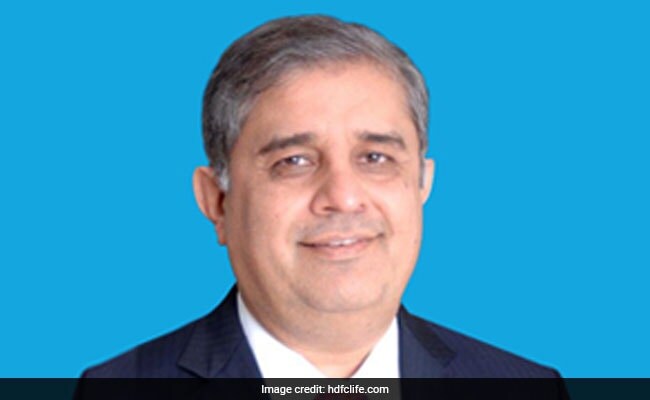
New Delhi: The country's third largest private sector lender Axis Bank Saturday appointed Amitabh Chaudhry as Managing Director & CEO from January 1, after incumbent Shikha Sharma steps down at the end of this year. Chaudhry, currently the MD & CEO of HDFC Standard Life Insurance Company, has been appointed as MD and CEO for a period of 3 years, with effect from January 1, 2019 up to December 31, 2021. "The Board of Directors of the bank at its meeting held today has taken on record the approval granted by the Reserve Bank of India (RBI) to the appointment of Amitabh Chaudhry as the Managing Director & CEO of the Bank, for a period of 3 years, with effect from January 1, 2019 up to December 31, 2021 (both days inclusive)," Axis Bank said in a regulatory filing.
Chaudhry will take over from Shikha Sharma after she demits office on December 31, 2018. The bank had selected three candidates to succeed Sharma at its board meeting held in July and had recommended their names for the approval of RBI.
"I would like to thank the RBI and the Axis Bank Board for the privilege and honour given to me to lead this great institution. Axis Bank is among the leading private sector banks in the country. Together, with the support of the Board and the Axis team, I am confident of continuing the bank's remarkable journey these past 25 years and to contribute to its future growth," Chaudhry said.
Chaudhry, 54, has been associated with HDFC Life since January 2010. Chaudhry started his career in the Corporate Banking with Bank of America in 1987, where he worked in diverse roles.
In July 2017, the board of Axis Bank had approved re-appointment of Sharma, to be her fourth term as MD & CEO begun from June 2018. However in April this year, Sharma had wanted her new term to be reduced to seven months from a three-year tenure without citing reasons, which was accepted by the board of Axis Bank subsequently.
It was learnt that the RBI had asked Axis Bank's board to reconsider the decision to re-appoint Sharma as its CEO for the fourth term amid concerns over rising bad loans on the bank's books. She had completed her third term as the bank's head on May 31.
"I have spent over nine years with the bank and I shall always look back at my journey with a deep sense of satisfaction and pride. I have particularly enjoyed the opportunity to work with the Axis team in leveraging the myriad opportunities in the financial sector over the last decade. I am sure that under the leadership of Amitabh the bank would soar to greater heights," Sharma said on Chaudhry's appointment.
Axis Bank Chairman Sanjiv Misra said, "After an extensive search, my fellow directors and I are pleased to welcome Amitabh as the Bank's MD & CEO. Amitabh has a proven track record and is well-equipped to lead Axis Bank in pursuing its growth ambitions balanced with a strong management."
Meanwhile, HDFC Standard Life informed bourses that Chaudhry has tendered his resignation. Its board will meet on September 12 to consider appointment of new MD & CEO, the insurer said.
Chaudhry is a B. Tech in (Electronic & Electricals) from the Birla Institute of Technology & Science, Pilani and is an alumnus of lndian Institute of Management, Ahmedabad.
Axis Bank reported a 46 per cent drop in net profit to Rs 701.09 crore for the April-June quarter of the current fiscal due to increase in provisioning for bad loans. The bank had registered a net profit of Rs 1,306 crore in the June quarter of 2017-18. The bank's asset quality worsened as gross non-performing assets (NPAs) rose to 6.52 per cent as on June 30 this year, from 5.03 per cent on June 30, 2017. In absolute terms, gross NPAs rose at Rs 32,662.40 crore as on June 30, 2018 compared to Rs 22,030.87 crore a year earlier.

-
Indians Are Travelling, But Not Every Journey Is A Holiday | The Week In Whys

Pilgrims, patients and working women are the real travellers, and the system hasn't quite caught up with them.
-
Getting To Work Costs Women More | The Reason Why
It is not just about women paying more than men. It is about women paying much more in cities than in villages.
-
AI Bias In Investing Cannot Be Eliminated, But It Can Be Governed
Framing is a particularly important example as identical financial information presented in terms of gains rather than losses can lead an LLM to reach a different assessment.
-
Joining The Dots | Dark Skies, Steady Diya: Why Hope Holds This Diwali
With war, a weak rupee and foreign outflows weighing on sentiment, policymakers at the NDTV World Summit and market veterans at NDTV Profit Ignite: Diwali Edition offered the same advice: stay invested and filter out the noise.
-
The Curious Case of Equitas Small Finance Bank And A CEO Who Quit For Stock
PN Vasudevan believes persistent investor concerns over a perceived conflict of interest had become a governance overhang on Equitas Small Finance Bank's stock, even as the lender improved profitability and asset quality.
-
Talking Points This Week: AI Cash Burn, A Tiger Comeback And An India That Still Finds Its Own Path
India is not immune to higher oil or tighter global liquidity, yet its earnings base is broader, its domestic policy levers are still available.
-
Foreign Investors Own Half Of HDFC Bank and ICICI Bank. An LTCG Cut Could Matter Most Here
Foreign portfolio investors have US$115 billion parked in HDFC Bank, ICICI Bank. If the government cuts long-term capital gains tax, Jefferies says returning foreign money could land here first.
-
'Never Seen This Level Of Negativity': Sandeep Tandon Says The Next Rally May Be Closer Than You Think
Veteran investor Sandeep Tandon says foreign selling is easing, large-caps are due a comeback and mid-caps are crowded, while he turns positive on gold, power and pharma this Diwali.
-
Indians Stay With Family, Not In Hotels | The Reason Why
India still lacks enough clean, reliable and affordable hotels for budget-conscious travellers.
-
The Economic Imperative: Analysing The Material Driving Force Behind India-Canada Strategic Reset
This economic complementarity is further reinforced by deep institutional investment ties and talent mobility, which form the bedrock of the bilateral framework.










