Harsh Mariwala On India’s BQ: The Way Forward

This is a series of articles by leaders on how India can raise its Business Quotient.
Today, India is at a very crucial juncture in its journey to become an economic superpower in the world. With a nominal gross domestic product of more than $2 trillion, it is already the third largest economy in purchasing power parity terms. With healthy foreign exchange reserves of approximately $370 billion, manageable fiscal deficit, moderate inflation, the growth prospects are palpable. The journey from “good to great ” has begun. However, we still have “miles to go before we sleep!”
Like a phoenix that rises from its ashes, the Indian economy came back from the brink of total collapse when, in 1991, it was rebooted with progressive regulations and was opened up. Since then, the country and its people haven't looked back. India successfully survived the global economic shocks and continues to be the only emerging market economy that continues to grow consistently at rates more than 5 percent year-on-year.
We need different approaches and policy measures.
The most important catalysts in this journey are going to be:
- Ease of doing business
- Resource mobilisation
- Infrastructure
- Manufacturing and agriculture
- Social infrastructure
Ease Of Doing Business
India's Ease of Doing Business quotient has remained static and low – at the 130th rank. This dissuades foreign capital inflow. To correct this, the government, over the last two-three years, has moved at a brisk pace to enact a few enabling regulations such as the Goods and Services Tax, land acquisition, bankruptcy law etc. However, there are still a few key enablers that need to be activated – policy simplification, procedural ease, digital approvals that reduce corruption, land and power availability. Another major reform that is now required is labour law reforms and simplification.
This is a tight rope to walk. We cannot be oblivious to the founding principles of this nation – for the people, of the people, by the people.
The capitalist and socialist principles of governance and commerce need to mesh well in this fabric of socioeconomic coexistence.
Mobilising Resources
The ambition of accelerated growth will need funds. A consistent legal and tax framework and improved ease of doing business will boost the foreign direct investment. Just as a comparison, FDI into India for the last five years at $230 billion is just a little over a third of what China attracted during the same period.
Privatisation of public sector enterprises can be a vital source of funds. When the country was born in 1947, the public sector was probably the need of the hour to kick start the economic engine. Government enterprises played an important role. Since then we have come a long way.
In this journey, it's imperative that it divests its stake in public enterprises. The constitution of a high-level committee of cabinet ministers is the right move in that direction. A successful divestment of the ailing Air India will prove the government's commitment. However, political will coupled with right incentives for the private sector will be essential.
One of the key issues being faced today is banks' inability to fund growth as they are reeling under the pressure of bad loans. Probably the time has come to bite the bullet, clean up the balance sheets, recapitalise the banks and punish the defaulters to set examples. An effective partnership between the Reserve Bank of India and the Finance Ministry can make this happen.
Lastly, the tax revenues as a percentage of GDP need to move up.
At 17 percent of the GDP, we still lag behind emerging economies which have a higher tax-to-GDP ratio of 21 percent. Simplification of tax regulations, better compliance and surveillance systems, reducing corruption in the revenue department, swift action against non-compliance will enable this. Demonetisation, followed by GST have already started this process. The number of tax payers has gone up. A close monitoring will help the cause further.
Modernising Tangible Infrastructure
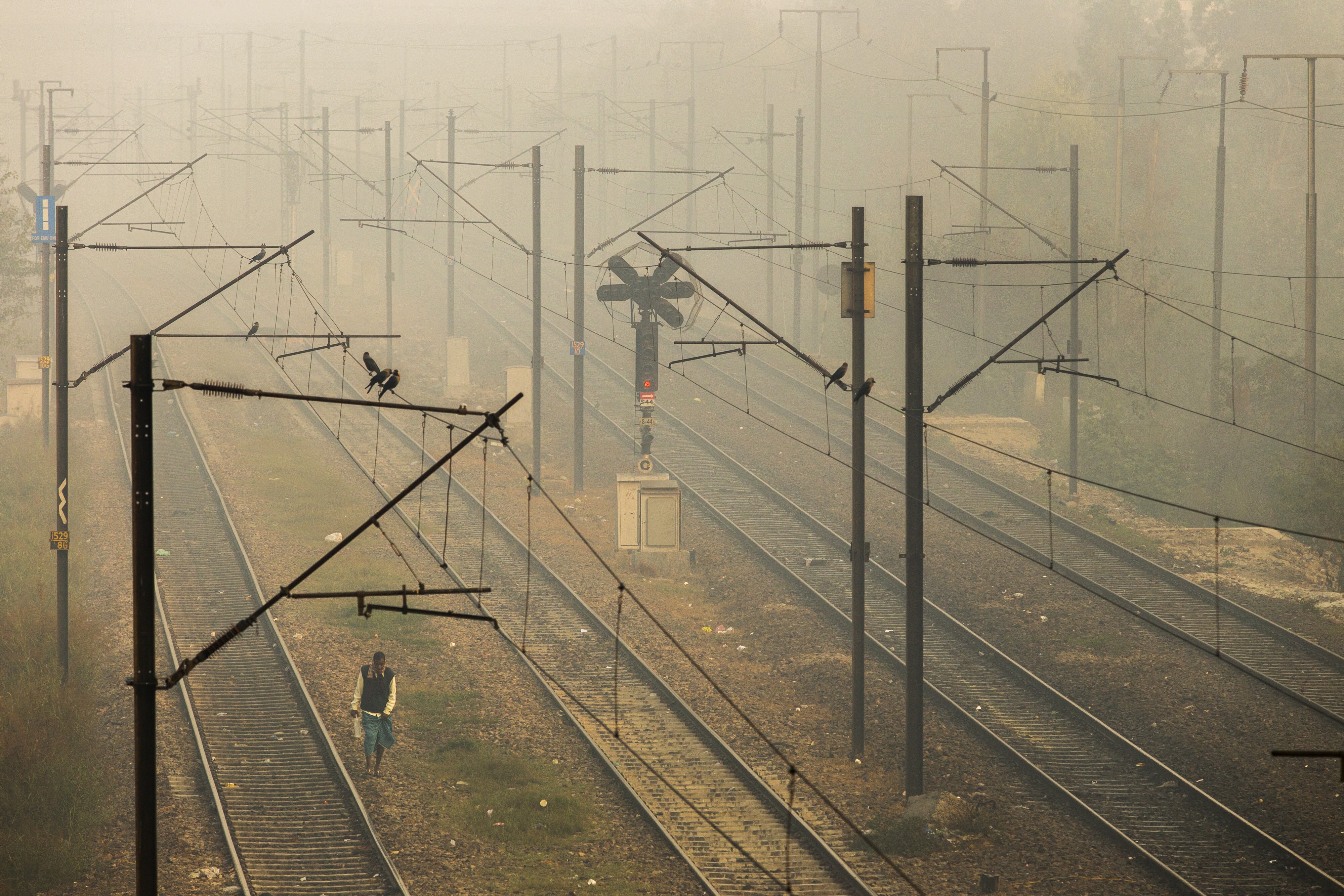
Very intricately linked to ease of doing business is the infrastructure sector – ports, roads, railways, power. This has been the Achilles heel for India Inc. for years together. We are grossly under-invested here. While we are making the right moves over the last 2-3 years in terms of quicker approvals, faster implementation and tighter monitoring; an effective public-private partnership will accelerate the process. Progress on road building has been noteworthy - from 9 kilometres a day in 2013, the completion rate has significantly gone up to 17 kilometres per day in 2016. Much more needs to be done.
Initiatives such as smart cities or the economic corridors between metro cities such as the Delhi-Mumbai corridor need to be expedited with help from the private sector for funding, program management, and operations.
Manufacturing And Agriculture
Much of the GDP growth in the past decade was fuelled by the services sector. It generated jobs and improved the standard of living.
Now manufacturing and agriculture also need to join the party. These are the sectors which can create more jobs.
The Make in India initiative made the government's intentions clear. Ably supported by ease of doing business and better tangible infrastructure, the manufacturing sector can make India self-sufficient in advanced technology, and can even aspire to become the exporting hub for the emerging markets given India's labour arbitrage compared to advanced economies. Enabling capital markets and debt markets will further facilitate capital formation.
Although India's dependence on agriculture has come down over the years, it continues to be the bread-earner for a vast majority of the labour force in India. The government's thrust on social irrigation projects and sponsorship of productivity improvement initiatives such as farm productivity, storage, and logistics are required to generate new jobs and improve the standard of living. In the process, India will strengthen its self-sufficiency in food grains.
Social Infrastructure
No economy can prosper if its basic building blocks of education, health, sanitation and internal law and order are not solid. Historically we have struggled in this area. However, herein also lies a big opportunity to innovate, reboot and reconfigure. Strong political will and economic support will be required to move the needle. The government's initiatives towards the education of the girl child, Swachh Bharat, direct benefit transfer, are steps in the right direction. However, this is a marathon and we cannot tire soon.
The private sector will have to come forward with its financial and managerial resources to uplift the social infrastructure of India.

India has had a glorious past – economically and culturally. The time has come to regain this past glory. Only an effective public-private partnership can achieve this. As Indians, we need to vow to be responsible citizens. Working towards a prosperous and happy nation must be the long-term goal. Growth with governance is the way forward for India.
Harsh Mariwala is Chairman of Marico.
The views expressed here are those of the author's and do not necessarily represent the views of BloombergQuint or its editorial team.

-
Signature Play: The Classic Cocktail Is Dead. Or Is It?

Classic cocktails are disappearing from India's cocktail menus. But they're still being ordered, taught to bartenders and borrowed from. So, who's really having the last drink?
-
A New Samvat Wishlist: Inclusive Prosperity And Human Development
India has strengthened its economic foundations through infrastructure, digital access and enterprise. Its next growth chapter must deepen productivity, create better livelihoods and widen participation in prosperity.
-
Love, Sex Aur Dhokha: The Audacious Plot To Spy On Jensen Huang
A Taipei dinner, a Singapore chip buyer and a suspected Chinese asset: inside the alleged spy operation that got close to NVIDIA's Jensen Huang.
-
Ten Things I Learnt This Samvat
Patience can be a trap. Cheap stocks can stay cheap. Leverage can wipe you out. What did Samvat 2082 teach us? Niraj Shah writes on 10 lessons from the year gone by.
-
Talking Points This Week: Tech Nerves, FII Buying, And A Faraway Banking Shock
The global markets are not shining this Diwali. The exception in the large markets is, India.
-
Midterm Rally Lasted A Day. The Hard Reality Of A Divided US May Last Two Years | Opinion
Between a contested AI boom, a debt ceiling that arrives in 2027 and a president with every incentive to act alone, the next two years may prove more volatile than the first day's rally suggests.
-
Blue Wave Will Derail the AI Trade but Won't Dismantle the AI Era | Unhedged Position
The Democrats' sweep of the US Congress will see politics collide with economic forces both over the long and short term.
-
It's Time To Take The GST Council's Bet On Trust Global
Payment records can prove India's services exports, and clear, proportionate rules can bring foreign digital sellers into the tax net.
-
Opinion | India at 38: From Innovation Overperformer to Innovation Powerhouse
India now has 453 VC-backed deep science startups, 18 of them late-stage, after 117 percent growth since 2020. Laurus Labs, at USD 9.3 billion, is the most valuable deep science company in any middle-income economy outside China.









