Harley-Davidson Deepens Restructuring With India Exit
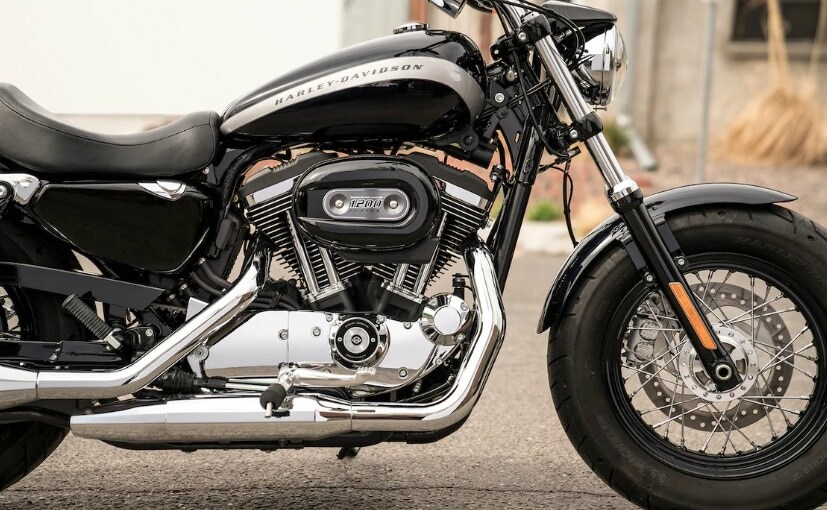
Harley-Davidson Inc said on Thursday it would discontinue its sales and manufacturing operations in India, effectively abandoning the world's biggest motorcycle market after a decade of unsuccessful efforts to gain a foothold.
Harley had spent recent months moving dealerships in the country to cheaper locations, and the announcement followed speculation in Indian media a month ago that executives had played down.
The move involves $75 million in restructuring costs, some 70 redundancies and the closure of its Bawal plant, walking away from a market worth about 17 million bike and scooter sales a year. It will retain only a scaled-down sales office in Gurgaon.
The departure is also the latest setback for Prime Minister Narendra Modi's strategy to encourage domestic manufacturing that would keep more of the fruits of a gigantic home consumer market in India.
Harley has been scrambling for years to grow sales beyond baby boomers in the United States and has not posted retail sales growth there in the past 14 quarters.
Chief Executive Officer Jochen Zeitz, who took the reins at the company in February, unveiled a major "Rewire" in July to boost profits by reducing Harley's product portfolio by 30% and investing in 50 markets with growth potential in North America, Europe and parts of Asia Pacific.
India was one of the markets the company at that point committed to investing in more heavily. Thursday's statement said the move to leave had been pushed through since August 6.
Harley said it now expects total restructuring costs of about $169 million in 2020, but warned that the restructuring program - referred to internally as "The Rewire" - was likely to incur more charges.
India, still far cheaper and poorer than many of the developing economies with which it competes for investment, has proven an inhospitable market for other auto industry players.
Last year, Ford Motor Co pared back its interests and ceased independent operations in India by entering into a joint venture with Indian automaker Mahindra & Mahindra.
General Motors, which stopped domestic sales in 2017, also plans to stop manufacturing and exports from India by the end of this year.
Growth in domestic sales has slowed of late - with sales of cars and motorbikes falling 18 per cent in the last fiscal year to March 31 from a year ago.

-
'Never Seen This Level Of Negativity': Sandeep Tandon Says The Next Rally May Be Closer Than You Think

Veteran investor Sandeep Tandon says foreign selling is easing, large-caps are due a comeback and mid-caps are crowded, while he turns positive on gold, power and pharma this Diwali.
-
Indians Stay With Family, Not In Hotels | The Reason Why
India still lacks enough clean, reliable and affordable hotels for budget-conscious travellers.
-
The Economic Imperative: Analysing The Material Driving Force Behind India-Canada Strategic Reset
This economic complementarity is further reinforced by deep institutional investment ties and talent mobility, which form the bedrock of the bilateral framework.
-
Medicine Pricing: Where Must Profit Stop?
India must confront excessive margins, hidden incentives and regulatory gaps that threaten the integrity of medicine.
-
Why Amazon And Flipkart Are Struggling To Beat Meesho In India's Smaller Cities
With 274 million users and lowest-cost logistics, Meesho is defending its value commerce crown against giants like Amazon and Flipkart.
-
High US Salaries, No Green Card Certainty: The Financial Calculation Facing Indian H-1B Families
The suspension of PERM processing at eight technology employers does not cancel existing H-1B visas. What it does is force a question many Indian families have been avoiding: is the US salary worth tying your career and family plans to one employer?
-
Swiggy vs Eternal: Food Delivery's Two Rivals Are No Longer In The Same Race
Eternal is building a private AI assistant, dark.ai. Swiggy is still working out how to make Instamart pay, with an operating loss of Rs 895 crore in the July-September quarter while Blinkit stayed profitable.
-
Where You Live Shapes How You Get To Work | The Reason Why
Two-wheelers are the most popular way to get to work in India, accounting for nearly 43% of workplace commutes.
-
Unhedged Position: Can India See An Indonesia-Style Time Correction?
The Nifty is trading below levels it first clocked in 2024. Is there, then, as I have suggested in the headline, potential that the current time correction drags on painfully for the next three-five, even ten years?
-
Navigating Friction And Energy Realities: An Analysis Of Marco Rubio's October Visit To India
Occurring at a critical juncture marked by stalled trade negotiations and escalating geopolitical pressures over global energy supplies, the visit offers a profound window into modern US-India relations.










