Government Versus RBI: Dissent At The Podium

Differences of opinion between the government and the central bank are commonplace. Some battles are fought behind closed doors. Others more openly through veiled (or not-so-veiled) barbs in the media. And a few others through public speeches.
In recent years, the third option has been used more and more.
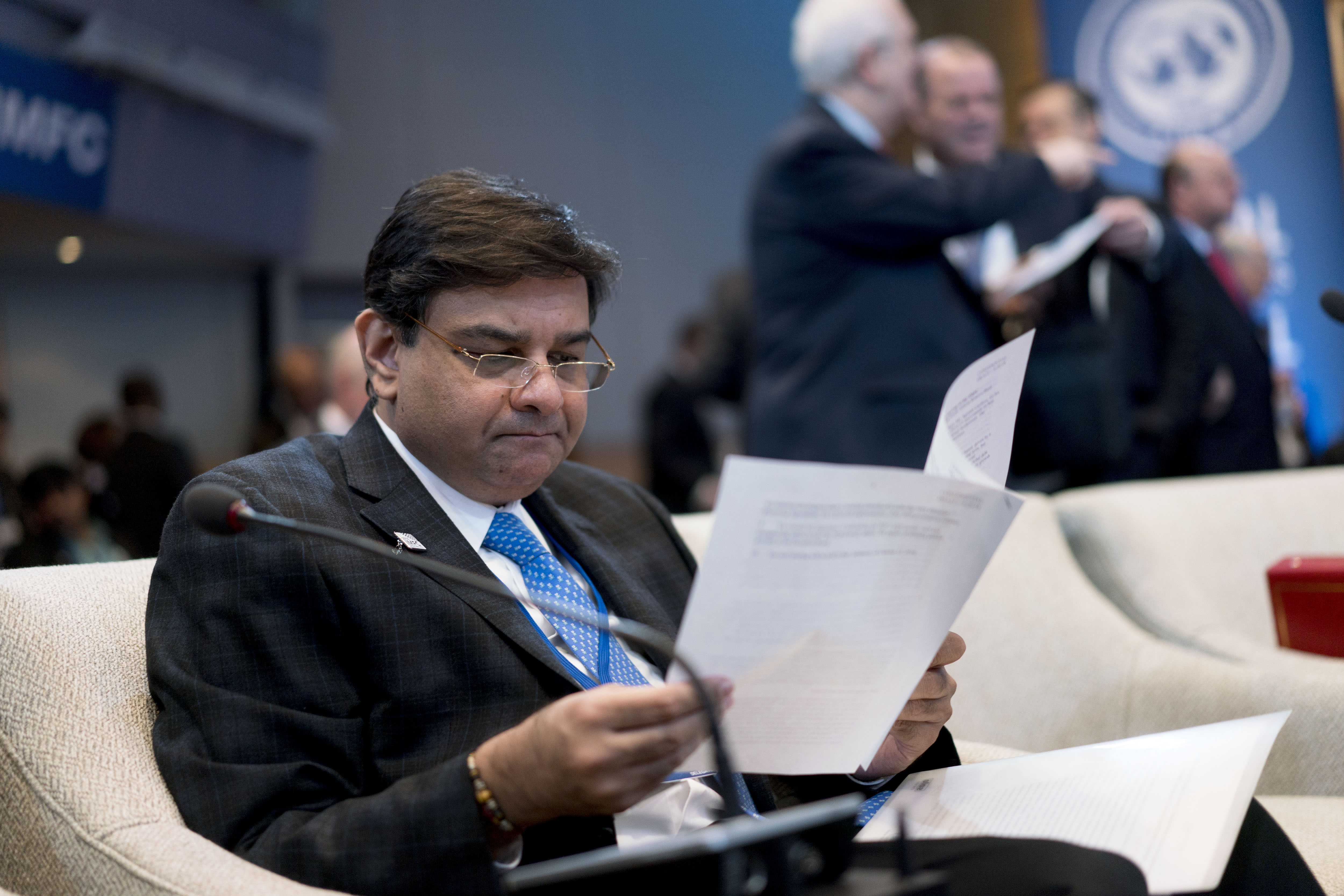
Reserve Bank of India Governor Urjit Patel and his team have now come out at least four times to defend their policies through public speeches. While these speeches have helped explain the viewpoint of an otherwise reticent central bank, they also suggest that more amiable lines of communication between the government and the RBI are jammed.
The ‘PSU Bank Regulation' Speech
This year has seen one of the largest frauds in Indian banking history. Government-owned Punjab National Bank was defrauded of $2 billion by jeweller Nirav Modi and his associated firms in a fraud which came to light in February.
The blame game started immediately. Why didn't the RBI detect the fraud? Or weed out processes that could have allowed such frauds to take place.
The RBI asked how the owner—the government—and the management and board appointed by it, allowed such a large fraud to go unnoticed.
Against that backdrop, Governor Urjit Patel stepped out himself to speak on the imbalance of regulatory powers over public sector banks.
Speaking at the Gujarat Law University in March, Patel said, “This legislative reality has in effect led to a deep fissure in the landscape of banking regulatory terrain: a system of dual regulation, by the finance ministry in addition to RBI.”
Such fissures or fault lines are “bound to lead to tremors such as the most recent fraud”, said Patel, responding to criticism that the regulator had not been alert to detect such cases.
The ‘February 12 Circular' Speech
In February this year, the RBI reworked its stressed asset management framework. This followed a bruising bad loan cycle that the Indian economy is still in the midst of.
The mistake of the past cannot be repeated, the RBI felt. And so, a revised set of rules was put out.
The most contentious part of the circular was the ask that banks take note of even a single-day delay in dues from large borrowers and initiate a resolution plan. If a resolution plan is not arrived at within 180 days, the account must be referred for insolvency.
With the new circular, the risk of insolvency, particularly for large power plants, rose. Bankers knocked on the government's door. The government took the matter up with the RBI. But the regulator stood its ground.
In a speech in April, RBI Deputy Governor NS Vishwanathan took his defence of the rules public. “We don't want to end up in a similar situation a few years down the line,” Vishwanathan said while speaking at the National Institute of Banking Management in Pune.
The matter eventually ended up in court, with banks seeking relief. The RBI, however, told the court that if the government wanted the circular changed, it would have to ask the RBI to do so under a rare provision of the RBI Act. Perhaps reluctant to send the wrong message, the government backed off.
The ‘Prompt Corrective Action' Speech
The government-ownership of nearly 70 percent of the banking sector has led to pressure on the RBI to dilute another of its policies – that of imposing corrective action on weak banks.
As things stand, the weakest banks in the system are government owned.
The framework imposes restrictions of expansion of risk weighted assets in some cases and requires increased provisioning in others. An important part of getting out of the framework is also more capital.
The resource-strapped government, however, is not keen to increase the size of its recapitalisation package. And so, pressure has built up to ease the PCA framework. Regulatory frameworks can't be rigid, a government official was quoted as saying in the media recently.
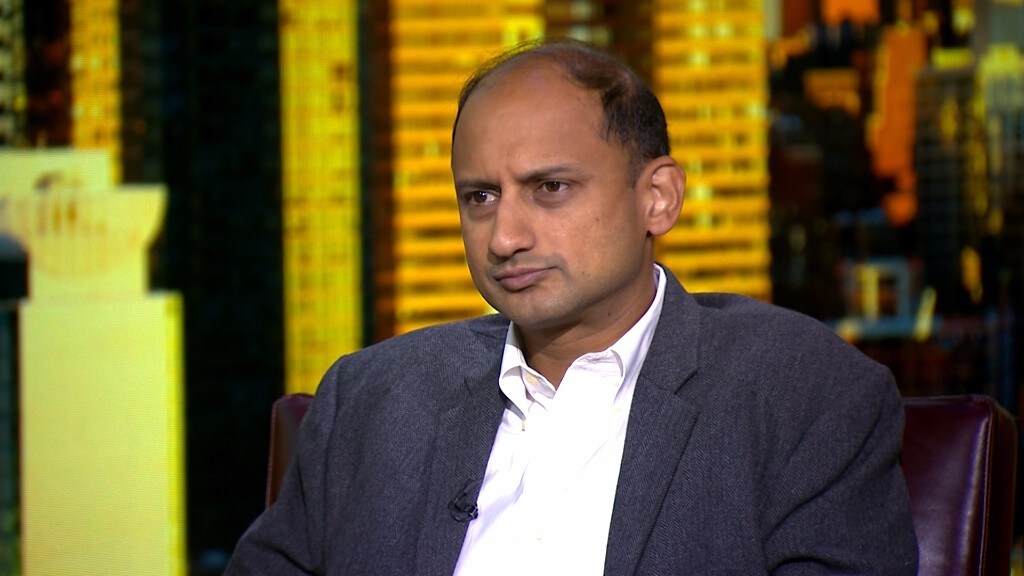
In October, Viral Acharya came out in public to defend the framework. He argued that the framework has helped stall the deterioration at these banks and that it was important to continue with it.
“It's important that the PCA framework to deal with financially weak banks is persisted with. Any slackening of the approach in the midst of required course of action is an all-too-familiar and ultimately harmful habit that we must eschew,” Acharya said in a speech at IIT Bombay.
The ‘Central Bank Independence' Speech
The most significant of the speeches of dissent came on Friday.
Openly highlighting some of the areas where the government is attempting to impinge on central bank independence, Deputy Governor Acharya cautioned on the perils of impinging on central bank independence.
Governments that do not respect central bank independence will sooner or later incur the wrath of financial markets, ignite economic fire, and come to rue the day they undermined an important regulatory institution.Viral Acharya, Deputy Governor, RBI
Apart from concerns over banking regulation, Acharya highlighted the government's attempt to withdraw capital and reserves from the RBI's balance sheet. Citing research from various academics and writings from former RBI Deputy Governor Rakesh Mohan, Acharya noted that having adequate reserves and capital is important for maintaining confidence in the central bank.
He also reiterated the RBI's opposition to an independent payment regulator, which the central bank has openly dissented against.
The speech, while given by Acharya, had the full backing of Governor Patel, suggesting the message was going from one institution (the RBI) to another (the government).
“I am grateful to Governor Dr. Urjit R Patel, Reserve Bank of India (RBI) for his suggestion to explore this theme for a speech, for referring me to the work of the Late Deena Khatkhate (2005), and for his constant encouragement, feedback and guidance,” said one of the footnotes to the speech.
Ira Dugal is Editor - Banking, Finance & Economy at BloombergQuint.

-
AI Bias In Investing Cannot Be Eliminated, But It Can Be Governed

Framing is a particularly important example as identical financial information presented in terms of gains rather than losses can lead an LLM to reach a different assessment.
-
Joining The Dots | Dark Skies, Steady Diya: Why Hope Holds This Diwali
With war, a weak rupee and foreign outflows weighing on sentiment, policymakers at the NDTV World Summit and market veterans at NDTV Profit Ignite: Diwali Edition offered the same advice: stay invested and filter out the noise.
-
The Curious Case of Equitas Small Finance Bank And A CEO Who Quit For Stock
PN Vasudevan believes persistent investor concerns over a perceived conflict of interest had become a governance overhang on Equitas Small Finance Bank's stock, even as the lender improved profitability and asset quality.
-
Talking Points This Week: AI Cash Burn, A Tiger Comeback And An India That Still Finds Its Own Path
India is not immune to higher oil or tighter global liquidity, yet its earnings base is broader, its domestic policy levers are still available.
-
Foreign Investors Own Half Of HDFC Bank and ICICI Bank. An LTCG Cut Could Matter Most Here
Foreign portfolio investors have US$115 billion parked in HDFC Bank, ICICI Bank. If the government cuts long-term capital gains tax, Jefferies says returning foreign money could land here first.
-
'Never Seen This Level Of Negativity': Sandeep Tandon Says The Next Rally May Be Closer Than You Think
Veteran investor Sandeep Tandon says foreign selling is easing, large-caps are due a comeback and mid-caps are crowded, while he turns positive on gold, power and pharma this Diwali.
-
Indians Stay With Family, Not In Hotels | The Reason Why
India still lacks enough clean, reliable and affordable hotels for budget-conscious travellers.
-
The Economic Imperative: Analysing The Material Driving Force Behind India-Canada Strategic Reset
This economic complementarity is further reinforced by deep institutional investment ties and talent mobility, which form the bedrock of the bilateral framework.
-
Medicine Pricing: Where Must Profit Stop?
India must confront excessive margins, hidden incentives and regulatory gaps that threaten the integrity of medicine.
-
Why Amazon And Flipkart Are Struggling To Beat Meesho In India's Smaller Cities
With 274 million users and lowest-cost logistics, Meesho is defending its value commerce crown against giants like Amazon and Flipkart.










