'Government Took Control Of IL&FS To Avert Catastrophic Damage'
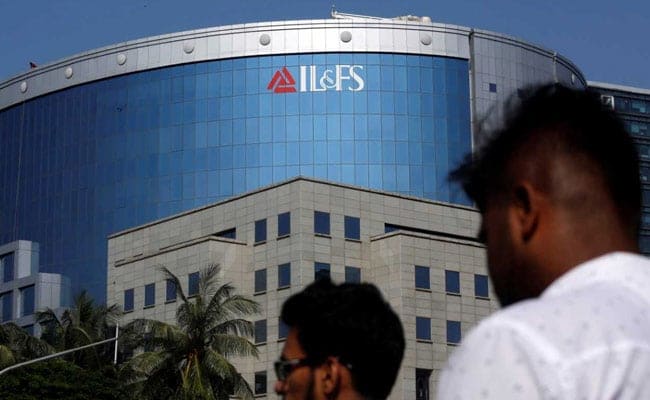
The government said it was forced to take control of ailing shadow banking firm Infrastructure Leasing & Financial Services (IL&FS) as it feared its collapse would cause "catastrophic" damage to the financial markets and the economy, a court filing shows.
In the largest intervention of its kind, government this week replaced the board at IL&FS, a construction and infrastructure firm that had defaulted on a series of repayments to creditors as it struggled under a debt pile of more than $12 billion.
The company's downfall has undermined confidence in country's shadow banking sector, triggered declines in the nation's stock and bond markets, and stoked fears of outflows from the mutual fund industry which has a large exposure to such financing companies.
In a 36-page petition filed by Corporate Affairs Ministry at the company law tribunal, the government does not pull its punches, referring to IL&FS as a "titanic ship" and accusing its board of mismanagement.
The petition, which sought permission for the board takeover and the right to replace executives and was approved by the tribunal, has not been made public, though some media outlets have quoted from parts of it in recent days. Reuters was able to review the entire petition.
Saving IL&FS was critical as nearly two-thirds of the firm's accumulated debt of 910 billion rupees ($12.36 billion) was from public sector banks. Moreover, IL&FS accounts for 16 percent of the total exposure of banks to non-banking financial companies (NBFCs), the government said in the petition.
"The future impact of more defaults in the group may be catastrophic for the (country's) financial stability," it said.
"Any impairment in its ability to finance and support the infrastructure projects would be quite damaging to the overall infrastructure sector, financial markets and the economy," the government added.
Critical timing for PM Modi
IL&FS, whose top shareholders are state-run Life Insurance Corporation, the State Bank of India, Japan's Orix Corp and the Abu Dhabi Investment Authority, is one of the largest of thousands of NBFCs which have mushroomed in recent years.
The NBFCs, that currently manage an aggregate loan book of nearly $300 billion, have played a key role in lending growth as the main banking sector struggled to tackle a bad-debt burden of $150 billion.
It is rare for the government to take control of a private company. In 2009, it took over Satyam Computer Services following an accounting scandal at the firm.
But the rescue was critical for Prime Minister Narendra Modi who can ill afford a financial crisis months before he faces voters at the next election, due by May 2019. His administration is already facing public ire over high fuel prices, a falling rupee currency and farmer protests due to low crop prices.
In a "critical lapse", IL&FS' risk management committee, which was tasked to keep tabs on liquidity, credit and market risks, met just once between 2015 and 2018, the government said.
IL&FS' proposed restructuring plan, announced just days before the government take over, was a "sham" and a "disguised way" to further dupe the stakeholders and misguide the general public, the government said.
The board was "responsible for negligence, incompetencies and putting veil on the misleading intent by presenting rosy financial statements," the petition said.
The "unscrupulous" manner in which public money has been managed and is stuck in projects indicates that the management not only failed but was involved in "operation cover up" till the end and willfully created a financial mess, the government alleged.
IL&FS' former managing director and board member, Hari Sankaran, did not respond to a request for comment. Reuters could not immediately contact the other former board members of IL&FS, who have not commented publicly on the matter.
Major repercussions
IL&FS has 348 entities and has over the years developed marquee road, township and water-treatment projects in the country and abroad. The group's debt levels rose to more than $12 billion this year, from $6.6 billion in 2014.
The government said IL&FS was not making enough profits to take care of its interest expenses, leading to defaults and rating downgrades. The over exposure to loans had been without "prudent commercial practices", it said.
The government has ordered its Serious Fraud Investigation Office to probe the IL&FS matter, and the finance ministry on Sept. 30 drafted an internal note on possible ramifications of an IL&FS collapse.
The ministry warned that mutual funds had an exposure of 28 billion rupees ($381 million) to IL&FS bonds and were likely to face redemption pressure from their corporate clients following the IL&FS episode, according to the petition.
That, the government feared, could trigger an debt market sell-off if mutual funds resorted to selling government securities because of an illiquid corporate debt market.
The collapse of IL&FS could have also sparked a liquidity crunch, hit market sentiment and impacted profitability at NBFCs, the government warned in its petition.
IL&FS' new board is exploring all possible options to revive the company and does not underestimate the size of the challenge, its new non-executive Chairman Uday Kotak said on Thursday.
Government on Friday asked the tribunal to allow the new board to act fearlessly and independently as it looks to revive the firm, government lawyer Sanjay Shorey told Reuters.

-
One El Nino, India Can Handle. Two Could Break The Granary

India's grain stocks can absorb one bad year, but a second El Nino could drain the buffer in two to three years, economists say.
-
India's Troika Of Good Luck | Joining The Dots
As Jensen Huang's exit drags Nvidia down, a cooling AI trade and resilient earnings have revived investor interest in India. A likely RBI rate hike looms.
-
Talking Points This Week: Leadership Shock At Nvidia, Earnings Strength, And The Fog Over Hormuz
The Anthropic IPO pricing and first trading day, Nvidia's upcoming earnings, and any fresh signals from Iran will set the tone for the following week.
-
Signature Play: The Classic Cocktail Is Dead. Or Is It?
Classic cocktails are disappearing from India's cocktail menus. But they're still being ordered, taught to bartenders and borrowed from. So, who's really having the last drink?
-
A New Samvat Wishlist: Inclusive Prosperity And Human Development
India has strengthened its economic foundations through infrastructure, digital access and enterprise. Its next growth chapter must deepen productivity, create better livelihoods and widen participation in prosperity.
-
Love, Sex Aur Dhokha: The Audacious Plot To Spy On Jensen Huang
A Taipei dinner, a Singapore chip buyer and a suspected Chinese asset: inside the alleged spy operation that got close to NVIDIA's Jensen Huang.
-
Ten Things I Learnt This Samvat
Patience can be a trap. Cheap stocks can stay cheap. Leverage can wipe you out. What did Samvat 2082 teach us? Niraj Shah writes on 10 lessons from the year gone by.
-
Talking Points This Week: Tech Nerves, FII Buying, And A Faraway Banking Shock
The global markets are not shining this Diwali. The exception in the large markets is, India.
-
Midterm Rally Lasted A Day. The Hard Reality Of A Divided US May Last Two Years | Opinion
Between a contested AI boom, a debt ceiling that arrives in 2027 and a president with every incentive to act alone, the next two years may prove more volatile than the first day's rally suggests.
-
Blue Wave Will Derail the AI Trade but Won't Dismantle the AI Era | Unhedged Position
The Democrats' sweep of the US Congress will see politics collide with economic forces both over the long and short term.









