Government To Seize Assets Of Future Vijay Mallyas, Nirav Modis As Fugitives Ordinance Cleared
Government authorities such as Central Bureau of Investigation (CBI) will be empowered to seize properties of super-rich fugitives whose economic offences or crimes involve sums over Rs 100 crore ($15 million) as the Union cabinet today approved a proposal to promulgate Fugitive Economic Offenders Ordinance 2018. The move comes as the country reels from a series of banking scandals, including a $2 billion fraud at state-run Punjab National Bank that was uncovered in February.
Mumbai jewellers Nirav Modi and his uncle Mehul Choksi are prime suspects in the case and a special court of the Central Bureau of Investigations (CBI) this month issued non-bailable warrants against them.
The ordinance defines a fugitive economic offender as a person against whom an arrest warrant has been issued for committing offence like counterfeiting government stamps or currency, cheque dishonour for insufficiency of funds, money laundering, and transactions defrauding creditors. A fugitive economic offender is one who has left the country to avoid facing prosecution, or refuses to return to face prosecution.
Also Read: Cabinet Approves Ordinance For Fugitive Economic Offenders
Fugitive Economic Offenders Ordinance 2018. Five Things To Know
1. Following an executive order, or ordinance, issued by the cabinet, investigating agencies will be able to confiscate the properties of fugitives in such cases. "The ordinance is expected to re-establish the rule of law with respect to the fugitive economic offenders as they would be forced to return to India to face trial for scheduled offences," the government document said.
2. A special court set up under anti-money laundering laws will have to declare a suspect fugitive before authorities can go ahead and seize property, the ordinance says.
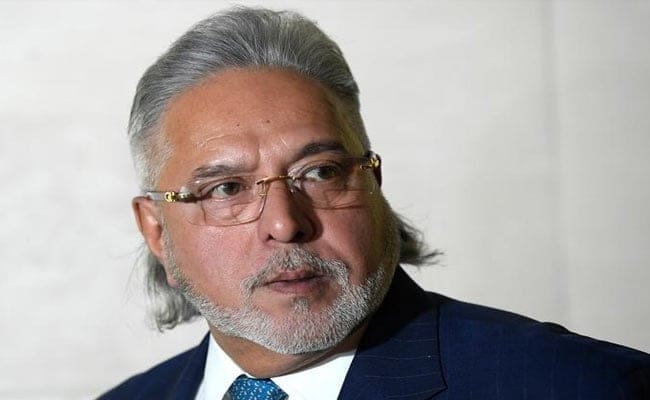
3. Government is currently seeking the extradition of liquor and aviation czar Vijay Mallya over unpaid loans to his defunct Kingfisher Airlines after the businessman, co-owner of the Formula One Force India team, moved to London in March 2017. It's a different matter that his lawyers assert that he is being used as a scapegoat by the politicians in order to deflect public anger at the accumulation of bad debts by state-owned banks.
4. The Fugitive Economic Offenders Bill was introduced in Lok Sabha on March 12 but could not be passed due to logjam in Parliament over various issues. It will come into effect after the assent of the President.
5. The ordinance provides for confiscating assets even without conviction and paying off lenders by selling off the fugitive's properties. Such economic offenders will be tried under Prevention of Money Laundering Act (PMLA). According to the ordinance, a director or deputy director (appointed under the PMLA, 2002) may file an application before a special court (designated under the 2002 Act) to declare a person as a fugitive economic offender.
(With Reuters inputs)

-
Indians Are Travelling, But Not Every Journey Is A Holiday | The Week In Whys

Pilgrims, patients and working women are the real travellers, and the system hasn't quite caught up with them.
-
Getting To Work Costs Women More | The Reason Why
It is not just about women paying more than men. It is about women paying much more in cities than in villages.
-
AI Bias In Investing Cannot Be Eliminated, But It Can Be Governed
Framing is a particularly important example as identical financial information presented in terms of gains rather than losses can lead an LLM to reach a different assessment.
-
Joining The Dots | Dark Skies, Steady Diya: Why Hope Holds This Diwali
With war, a weak rupee and foreign outflows weighing on sentiment, policymakers at the NDTV World Summit and market veterans at NDTV Profit Ignite: Diwali Edition offered the same advice: stay invested and filter out the noise.
-
The Curious Case of Equitas Small Finance Bank And A CEO Who Quit For Stock
PN Vasudevan believes persistent investor concerns over a perceived conflict of interest had become a governance overhang on Equitas Small Finance Bank's stock, even as the lender improved profitability and asset quality.
-
Talking Points This Week: AI Cash Burn, A Tiger Comeback And An India That Still Finds Its Own Path
India is not immune to higher oil or tighter global liquidity, yet its earnings base is broader, its domestic policy levers are still available.
-
Foreign Investors Own Half Of HDFC Bank and ICICI Bank. An LTCG Cut Could Matter Most Here
Foreign portfolio investors have US$115 billion parked in HDFC Bank, ICICI Bank. If the government cuts long-term capital gains tax, Jefferies says returning foreign money could land here first.
-
'Never Seen This Level Of Negativity': Sandeep Tandon Says The Next Rally May Be Closer Than You Think
Veteran investor Sandeep Tandon says foreign selling is easing, large-caps are due a comeback and mid-caps are crowded, while he turns positive on gold, power and pharma this Diwali.
-
Indians Stay With Family, Not In Hotels | The Reason Why
India still lacks enough clean, reliable and affordable hotels for budget-conscious travellers.
-
The Economic Imperative: Analysing The Material Driving Force Behind India-Canada Strategic Reset
This economic complementarity is further reinforced by deep institutional investment ties and talent mobility, which form the bedrock of the bilateral framework.










