Government Says 5G Roll-Out Won't Be A Health Hazard
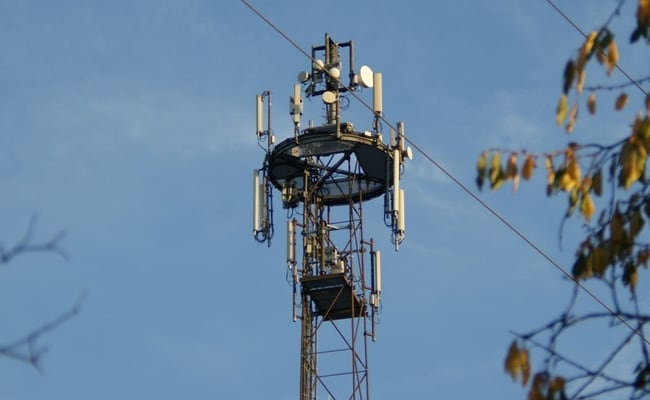
As the country is on the cusp of 5G spectrum roll-out, the Government has said that stricter norms for safety from electric and magnetic fields emissions from mobile towers in India have been adopted. The emission levels have been fixed to be 10 times more stringent than the safety limits prescribed by Interational Commission on Non-Ionizing Radiation Protection (ICNIRP), and which are also recommended by World Health Organisation (WHO), official sources said.
The clarification from the Ministry of Telecommunication regarding emission levels from mobile towers have come amid apprehensions expressed at various platforms about 5G roll-out enhancing risk to human health from magnetic fields emissions.
Top officials from the Department of Telecommunication (DoT) have said that different sources of information available across the world including that from WHO, clearly say that there is no basis to say that radiation from 5G will be harmful to people.
While reiterating that Indian standards are one-tenth of the global standards for magnetic fields emissions, telecom industry stakeholders too have claimed that there is no risk to human health.
Recently representatives from the telecom industry informed a Parliamentary panel on Information Technology headed by Congress MP Shashi Tharoor that the telecom industry is working with the Government and it is made sure that all their towers are visible to all.
"We have a portal called Tarang Sanchar, which anybody can go and see what is the emission taking place from any tower in their neighbourhood. Further, by paying a small amount of Rs 5,000, they can actually have the DoT to go and do a test and give them a certified test report," an industry representative was quoted as saying by the panel in its report on 5G roll-out in India.
The ICNIRP guidelines being adhered to by the Government, are issued from time to time for limiting exposure to electromagnetic fields (100 kHz to 300 GHz) which cover many applications such as 5G technologies, WiFi, Bluetooth, mobile phones, and base stations.
In the year 2008, DoT adopted the ICNIRP guidelines that are recommended by WHO for basic restriction levels of electromagnetic emission from mobile towers.
Later in 2010, amid growing public concerns about emissions from mobile towers harming human health, an Inter-ministerial committee consisting of officers from DoT, Indian Council of Medical Research (Ministry of Health), Department of Biotechnology and Ministry of Environment and Forest was constituted on August 24, 2010 to examine the effect of the radiation from base stations and mobile phones.
The committee in its report, examined the environmental and health related concerns and indicated that most of the laboratory studies were unable to find a direct link between exposure to radio frequency radiation and health; and the scientific studies as yet have not been able to confirm a cause and effect relationship between radio frequency radiation and health.
The effect of emission from cell phone towers on human health is not known yet with certainty. the report concluded, however it was based on its recommendations that the norms for exposure limit for the radio frequency field were further made stringent and reduced to one-tenth of the existing limits prescribed by ICNIRP.
These limits were further reviewed in 2014, based on recommendation of a committee that was setup at the behest of High Court Allahabad, Lucknow bench.
This committee in it report submitted in 2014, noted that there are no conclusive evidence to establish any causal link between the effect of electric magnetic field radiation with biological effects described in cell models, animals or humans, and any possible resulting health effects.
The DoT, sources said, has not received any report about some states halting 5G roll-out until their concerned health authorities have reviewed its impact on environmental and human health.

-
Signature Play: The Classic Cocktail Is Dead. Or Is It?

Classic cocktails are disappearing from India's cocktail menus. But they're still being ordered, taught to bartenders and borrowed from. So, who's really having the last drink?
-
A New Samvat Wishlist: Inclusive Prosperity And Human Development
India has strengthened its economic foundations through infrastructure, digital access and enterprise. Its next growth chapter must deepen productivity, create better livelihoods and widen participation in prosperity.
-
Love, Sex Aur Dhokha: The Audacious Plot To Spy On Jensen Huang
A Taipei dinner, a Singapore chip buyer and a suspected Chinese asset: inside the alleged spy operation that got close to NVIDIA's Jensen Huang.
-
Ten Things I Learnt This Samvat
Patience can be a trap. Cheap stocks can stay cheap. Leverage can wipe you out. What did Samvat 2082 teach us? Niraj Shah writes on 10 lessons from the year gone by.
-
Talking Points This Week: Tech Nerves, FII Buying, And A Faraway Banking Shock
The global markets are not shining this Diwali. The exception in the large markets is, India.
-
Midterm Rally Lasted A Day. The Hard Reality Of A Divided US May Last Two Years | Opinion
Between a contested AI boom, a debt ceiling that arrives in 2027 and a president with every incentive to act alone, the next two years may prove more volatile than the first day's rally suggests.
-
Blue Wave Will Derail the AI Trade but Won't Dismantle the AI Era | Unhedged Position
The Democrats' sweep of the US Congress will see politics collide with economic forces both over the long and short term.
-
It's Time To Take The GST Council's Bet On Trust Global
Payment records can prove India's services exports, and clear, proportionate rules can bring foreign digital sellers into the tax net.
-
Opinion | India at 38: From Innovation Overperformer to Innovation Powerhouse
India now has 453 VC-backed deep science startups, 18 of them late-stage, after 117 percent growth since 2020. Laurus Labs, at USD 9.3 billion, is the most valuable deep science company in any middle-income economy outside China.









