Government, RBI Taking Steps To Lower Digital Transaction Cost: Arun Jaitley
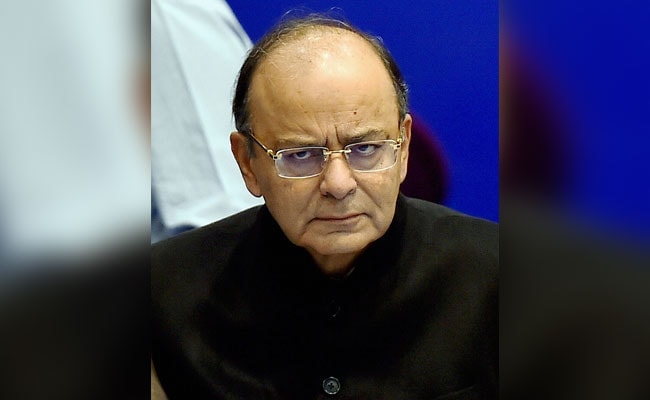
New Delhi: Finance Minister Arun Jaitley on Thursday said the government and the Reserve Bank are taking measures to bring down the digital transaction cost with an aim to move towards a less-cash economy.
Chairing the 5th Meeting of the Consultative Committee attached to his ministry, Mr Jaitley said digital transactions are a parallel mechanism, not a substitute, for cash transactions and "cashless economy is actually a less cash economy as no economy can be fully cashless".
He told the participating Members of Parliament (MPs) that the government is trying to encourage digitisation as much as possible because an excessive cash economy has its own social and economic costs and consequences.
Less cash, he said, can be gradually substituted to the possible extent through digital transactions.
According to an official release, Mr Jaitley said the Centre has announced various incentives to attract people to shift to digital mode of payment and the response is quite positive so far in this regard.
Mr Jaitley further said the government and the RBI have taken various steps to bring down the cost of digital transactions and specifically mentioned about MDR charges.
The Finance Minister added that 55 per cent petrol pumps in the country are accepting payment through digital means and with the government providing incentives, more people are switching to this mode.
Mr Jaitley further said the government is conscious of the need of cyber security of high level to secure digital payments.
He told the MPs that the government and RBI are fully aware of cyber security challenges and ensuring strong firewalls around the systems.
As part of efforts to promote e-payments, the Finance Minister said the government is providing various incentives for digital transactions including on debit card use.
Regarding the availability of POS machines, he said POS machines are manufactured by two companies in China and the government has waived duties on them so that these machines become cheaper and reach the shopkeepers easily.
Expressing views, one MP cited the example of Bangladesh Bank heist and expressed the concern about cyber security if digitisation is done at such a fast pace.
The issue of virtual currency, bitcoins was also raised as they are believed to be used by black money hoarders.
Regarding connectivity and infrastructure issue in rural India, suggestions were made to strengthen the institution of business correspondents. Some members raised the concern that Aadhaar alone should not be basis for bank transactions and banks should keep their KYC norms strict along with Aadhaar.
Some members also requested the Finance Minister to relax conditions for Tamil Nadu in view of recent cyclone that caused major disruptions in supply of electricity and internet connectivity.
Suggestions regarding infrastructure for having internet facility on continuous/permanent basis, without disruption, has to be ensured for making digital payments successful especially in sub-urban and rural areas were also made.
Some of them suggested that security measures are required both in case of hardware and software in order to secure the data and transactions made through digital mode.
Mr Jaitley assured the members of the Committee about cyber security measures being taken by the banks under RBI supervision. He said the government was trying its best to minimise common man's pain.
MPs who attended the meeting include Baijayanta Jai Panda, Dilip Kumar Mansukhlal Gandhi, Ram Charitra Nishad, Subhash Chandra Baheria, Supriya Sadanand Sule, Poonam Mahajan, Sharadkumar Maruti Bansode and Shri Suresh Chanabassappa Angadi (all Members of Lok Sabha).
Digvijaya Singh, Rajeev Chandrasekhar, Ranvijay Singh Judev, Sanjay Seth, Satish Chandra Mishra and Kumari Selja were among the Rajya Sabha MPs.
(This story has not been edited by NDTV staff and is auto-generated from a syndicated feed.)

-
Getting To Work Costs Women More | The Reason Why

It is not just about women paying more than men. It is about women paying much more in cities than in villages.
-
AI Bias In Investing Cannot Be Eliminated, But It Can Be Governed
Framing is a particularly important example as identical financial information presented in terms of gains rather than losses can lead an LLM to reach a different assessment.
-
Joining The Dots | Dark Skies, Steady Diya: Why Hope Holds This Diwali
With war, a weak rupee and foreign outflows weighing on sentiment, policymakers at the NDTV World Summit and market veterans at NDTV Profit Ignite: Diwali Edition offered the same advice: stay invested and filter out the noise.
-
The Curious Case of Equitas Small Finance Bank And A CEO Who Quit For Stock
PN Vasudevan believes persistent investor concerns over a perceived conflict of interest had become a governance overhang on Equitas Small Finance Bank's stock, even as the lender improved profitability and asset quality.
-
Talking Points This Week: AI Cash Burn, A Tiger Comeback And An India That Still Finds Its Own Path
India is not immune to higher oil or tighter global liquidity, yet its earnings base is broader, its domestic policy levers are still available.
-
Foreign Investors Own Half Of HDFC Bank and ICICI Bank. An LTCG Cut Could Matter Most Here
Foreign portfolio investors have US$115 billion parked in HDFC Bank, ICICI Bank. If the government cuts long-term capital gains tax, Jefferies says returning foreign money could land here first.
-
'Never Seen This Level Of Negativity': Sandeep Tandon Says The Next Rally May Be Closer Than You Think
Veteran investor Sandeep Tandon says foreign selling is easing, large-caps are due a comeback and mid-caps are crowded, while he turns positive on gold, power and pharma this Diwali.
-
Indians Stay With Family, Not In Hotels | The Reason Why
India still lacks enough clean, reliable and affordable hotels for budget-conscious travellers.
-
The Economic Imperative: Analysing The Material Driving Force Behind India-Canada Strategic Reset
This economic complementarity is further reinforced by deep institutional investment ties and talent mobility, which form the bedrock of the bilateral framework.
-
Medicine Pricing: Where Must Profit Stop?
India must confront excessive margins, hidden incentives and regulatory gaps that threaten the integrity of medicine.










