Government May Lower Employees' Provident Fund Rates Amid Lending Crunch: Report
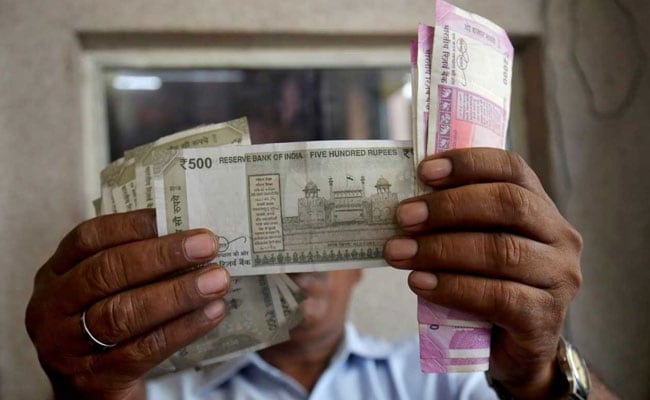
Finance Ministry has demanded the social security and pension fund cuts the 8.65 per cent annual return it was planning to offer about 85 million member workers, according to a ministry memorandum reviewed by Reuters.
The reason is that the yield may not be justified given the fund's performance but two officials with knowledge of the discussions said the bigger factor is concern the high return would hurt the economy by reducing banks' ability to lend at attractive rates.
Employees' Provident Fund Organization (EPFO), which is administered by the labour ministry, announced just before the recent April-May general election that it would pay the rate for the last financial year ending March 31, 2019, up from 8.55 per cent in the previous year.
But with inflation around 3 per cent, the yield is appealing to those who want to save and is forcing banks to keep their savings deposit rates at similar levels, the officials said. There are also fears that banks will lose deposits to the fund, they added.
That is very bad news for borrowers, such as small businesses, who are having to pay double-digit loan rates in an economy that is slowing and where their power to raise prices is constrained.
A senior labour ministry official said that the concerns of the finance ministry would be considered and the issue soon resolved.
A finance ministry spokesman declined to comment.
The high rates on savings are undermining attempts by the Reserve Bank of India to provide stimulus to the economy, which is weakening on a broad number of fronts, through a series of cuts in its benchmark repo rate.
The central bank has in aggregate chopped 75 basis points off the rate since February but only about 10-15 basis points has come off bank lending rates in that time.
In the memorandum, a finance ministry official tells a counterpart at the labour ministry that the proposed rate of return "is not in line" with the fund's rules.
Those rules say that the government needs to make sure it doesn't set an interest rate that is out of kilter with the fund's overall returns.
The memo, dated June 12, also notes that the fund may have suffered some losses from its investments in the Infrastructure Leasing & Financial Services group of companies, a financially troubled Indian infrastructure financing company.
"Ministry of Labour & Employment is therefore advised to consider a rate of interest for FY 2018-19 which does not fully utilise the surplus of the previous year and leaves a reasonably higher surplus in the account undistributed," adding that the memo is issued with the approval of new Finance Minister Nirmala Sitharaman.
The EPFO has so far deferred payment of interest to its members, a labour ministry official said.
"The interest rate paid by the EPFO should move in tandem with their earnings from investment in government securities," said Devendra Pant, chief economist at India Rating & Research, the Indian arm of Fitch rating agency.
He said yields on government securities were falling, and it would not be prudent for the fund to dip into its reserves to pay higher returns.
EPFO, which manages about $190 billion in assets, invested about Rs 575 crore ($83.15 million) in the bonds of financially stressed IL&FS, officials said, less than 0.1 per cent of total assets under its management.
Nearly one-fifth of India's workforce are EPFO's members, contributing every month a part of their salary which is then matched by their employers. The fund invests more than 85 per cent of the contributions in central and state securities and highly rated corporate bonds.

-
Signature Play: The Classic Cocktail Is Dead. Or Is It?

Classic cocktails are disappearing from India's cocktail menus. But they're still being ordered, taught to bartenders and borrowed from. So, who's really having the last drink?
-
A New Samvat Wishlist: Inclusive Prosperity And Human Development
India has strengthened its economic foundations through infrastructure, digital access and enterprise. Its next growth chapter must deepen productivity, create better livelihoods and widen participation in prosperity.
-
Love, Sex Aur Dhokha: The Audacious Plot To Spy On Jensen Huang
A Taipei dinner, a Singapore chip buyer and a suspected Chinese asset: inside the alleged spy operation that got close to NVIDIA's Jensen Huang.
-
Ten Things I Learnt This Samvat
Patience can be a trap. Cheap stocks can stay cheap. Leverage can wipe you out. What did Samvat 2082 teach us? Niraj Shah writes on 10 lessons from the year gone by.
-
Talking Points This Week: Tech Nerves, FII Buying, And A Faraway Banking Shock
The global markets are not shining this Diwali. The exception in the large markets is, India.
-
Midterm Rally Lasted A Day. The Hard Reality Of A Divided US May Last Two Years | Opinion
Between a contested AI boom, a debt ceiling that arrives in 2027 and a president with every incentive to act alone, the next two years may prove more volatile than the first day's rally suggests.
-
Blue Wave Will Derail the AI Trade but Won't Dismantle the AI Era | Unhedged Position
The Democrats' sweep of the US Congress will see politics collide with economic forces both over the long and short term.
-
It's Time To Take The GST Council's Bet On Trust Global
Payment records can prove India's services exports, and clear, proportionate rules can bring foreign digital sellers into the tax net.
-
Opinion | India at 38: From Innovation Overperformer to Innovation Powerhouse
India now has 453 VC-backed deep science startups, 18 of them late-stage, after 117 percent growth since 2020. Laurus Labs, at USD 9.3 billion, is the most valuable deep science company in any middle-income economy outside China.









