Government Looks To Relax Norms For Global Coal Miners; Industry Sceptical: Report
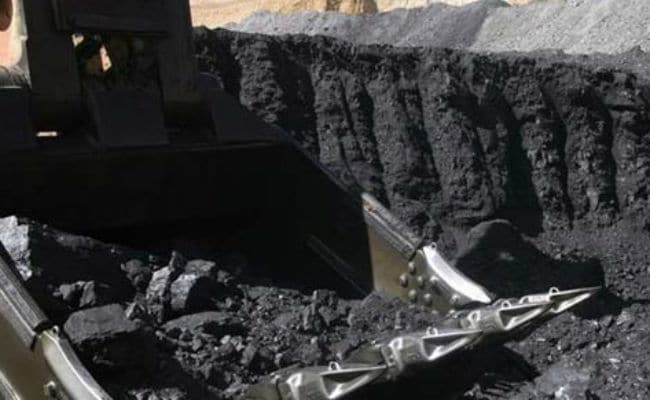
The government is looking to lower advance payments and offer larger mining blocks to attract global companies to invest in its coal sector for the first time, but industry sources say the measures may not be enough to draw in big international miners.
The government plans to float global tenders for the first time for coal mining blocks before end-2019, sources familiar with the matter told Reuters in August, a move that could end Coal India Ltd's near-monopoly on the fuel.
The auctions, to be aimed at paring back the country's coal imports, are intended to attract global miners such as Glencore PLC, BHP Group, Anglo American PLC and Peabody Energy Corp.
Vinod Kumar Tiwari, additional secretary at Ministry of Coal, told Reuters the government was looking to reduce the upfront payments of around 10 per cent of the estimated value of blocks that have been awarded.
"We are thinking of lowering that," Mr Tiwari said, although he was not able to say by how much.
A firm date for the auctions has not been finalized, and a final roadmap will only be ready after a meeting of top government officials, another coal ministry official said, without specifying a date for the meeting.
Coal Minister Pralhad Joshi said in October the government was also looking to make investing in coal more attractive to bidders by carving out bigger blocks, and was readying a policy to attract foreign investors to its coal industry.
October coal mine auctions directed at domestic miners drew a tepid response, with 21 of 27 blocks getting fewer than the required minimum of three bidders. Only six of the coal blocks were awarded contracts.
Part of the problem, industry sources have said, was that the auctions restricted end-use of the fuel, with winners to use mined coal from the blocks only for specific purposes and not allowed to sell it in the open market.
"The low scale participation has been because people are expecting a much more liberalized system. If you are going to offer something better in the future, people will wait," he said.
So far, no foreign miners have expressed interest to participate in the upcoming global auction, said B.K. Bhatia, joint secretary general of the Federation of Indian Mineral Industries (FIMI).
FIMI, the country's biggest mining lobby group, counts Indian units of foreign miners such as Rio Tinto PLC and Vale SA among its members.
"The big mining companies might not be interested as you don't have much flexibility selling this coal outside India," an executive at a large Indian miner told Reuters.
"It will all depend on the tenders. If they make it too rigid and too tight, without giving any margins, then foreign parties won't come," he said.
A Singapore-based coal trader said tie-ups between Indian companies and international mine operators were one possible source of participating bidders.
Russian or Polish contractors might be a "wild card" here, since both have experience in high-ash underground mines, he said.
Mr Tiwari said Russian companies were already showing a lot of interest and were getting "involved aggressively", adding that he also expected Indian coal companies such as Adani Enterprises to participate.
"If Adani can come and work in Australia, then it can come and work on the Indian tenders," he said. Tiwari spoke with Reuters on the sideline of an industry conference in Melbourne.
Adani did not respond to a request seeking comment.
Prime Minister Narendra Modi has been pushing an aggressive plan calling for greater adoption of renewable energy, but coal still accounts for around 75 per cent of India's power.
Globally, investors are shying away from coal assets amid increasing pressure from climate change investors on large international miners and banks.

-
Signature Play: The Classic Cocktail Is Dead. Or Is It?

Classic cocktails are disappearing from India's cocktail menus. But they're still being ordered, taught to bartenders and borrowed from. So, who's really having the last drink?
-
A New Samvat Wishlist: Inclusive Prosperity And Human Development
India has strengthened its economic foundations through infrastructure, digital access and enterprise. Its next growth chapter must deepen productivity, create better livelihoods and widen participation in prosperity.
-
Love, Sex Aur Dhokha: The Audacious Plot To Spy On Jensen Huang
A Taipei dinner, a Singapore chip buyer and a suspected Chinese asset: inside the alleged spy operation that got close to NVIDIA's Jensen Huang.
-
Ten Things I Learnt This Samvat
Patience can be a trap. Cheap stocks can stay cheap. Leverage can wipe you out. What did Samvat 2082 teach us? Niraj Shah writes on 10 lessons from the year gone by.
-
Talking Points This Week: Tech Nerves, FII Buying, And A Faraway Banking Shock
The global markets are not shining this Diwali. The exception in the large markets is, India.
-
Midterm Rally Lasted A Day. The Hard Reality Of A Divided US May Last Two Years | Opinion
Between a contested AI boom, a debt ceiling that arrives in 2027 and a president with every incentive to act alone, the next two years may prove more volatile than the first day's rally suggests.
-
Blue Wave Will Derail the AI Trade but Won't Dismantle the AI Era | Unhedged Position
The Democrats' sweep of the US Congress will see politics collide with economic forces both over the long and short term.
-
It's Time To Take The GST Council's Bet On Trust Global
Payment records can prove India's services exports, and clear, proportionate rules can bring foreign digital sellers into the tax net.
-
Opinion | India at 38: From Innovation Overperformer to Innovation Powerhouse
India now has 453 VC-backed deep science startups, 18 of them late-stage, after 117 percent growth since 2020. Laurus Labs, at USD 9.3 billion, is the most valuable deep science company in any middle-income economy outside China.









