Government Formulating National Policy For Advanced Manufacturing
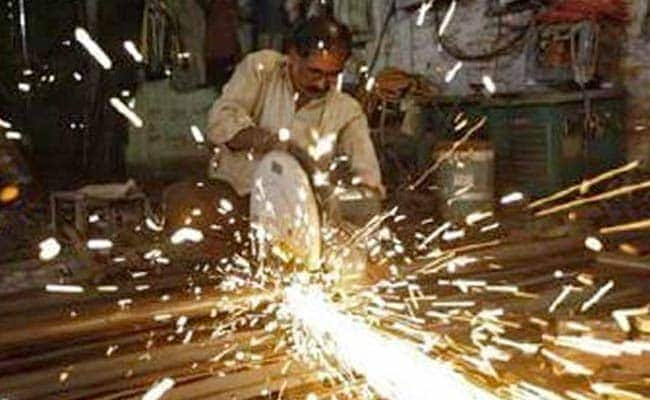
New Delhi: The government is formulating a National Policy for Advanced Manufacturing as one of the key tools to attain its objective of increasing the contribution of manufacturing output to 25 per cent of GDP by 2025 from 16 per cent at present.
The National Policy for Advanced Manufacturing also aims to significantly enhance India's global manufacturing competitiveness. However, the government is mindful of the "threat to jobs" due to adoption of smart manufacturing.
"There are a lot of concerns, lot of opportunities, there are also threats particularly on jobs so how to make our policies, how to tailor our industry, how to get ready for this in a manner that the transition is seamless and our people are skilled enough, may be to relocate to other areas," Department of Industrial Policy & Promotion Secretary Ramesh Abhishek said.
He was addressing a meeting to seek stakeholders' inputs on the policy. The meeting, chaired by Department of Heavy Industry Secretary Girish Shankar, also discussed the framework for introduction of 'Industry 4.0'.
"The National Policy for Advanced Manufacturing which essentially is how to increase technological depth so that we become globally competitive and are not left behind," Mr Shankar said.
However, he pointed out that framing of the policy may take some more time because it needs a lot of consultation, and invited comments from the public.
The capital goods policy envisages formulation of a national policy for advanced manufacturing which would include advanced materials, modern manufacturing like advanced robotics and 3D printing, among others.
The National Capital Goods Policy, approved by the government in May, envisages increasing production of capital goods from Rs 2,30,000 crore in 2014-15 to Rs 7,50,000 crore in 2025 and raising direct and indirect employment from the current 8.4 million to 30 million.
It envisages increasing exports from the current 27 per cent to 40 per cent of production while increasing share of domestic production in India's demand from 60 to 80 per cent, thus making the country a net exporter of capital goods.
The policy also aims to facilitate improvement in technology depth across sub-sectors, increase skill availability, ensure mandatory standards and promote growth and capacity building of MSMEs.

-
Indians Are Travelling, But Not Every Journey Is A Holiday | The Week In Whys

Pilgrims, patients and working women are the real travellers, and the system hasn't quite caught up with them.
-
Getting To Work Costs Women More | The Reason Why
It is not just about women paying more than men. It is about women paying much more in cities than in villages.
-
AI Bias In Investing Cannot Be Eliminated, But It Can Be Governed
Framing is a particularly important example as identical financial information presented in terms of gains rather than losses can lead an LLM to reach a different assessment.
-
Joining The Dots | Dark Skies, Steady Diya: Why Hope Holds This Diwali
With war, a weak rupee and foreign outflows weighing on sentiment, policymakers at the NDTV World Summit and market veterans at NDTV Profit Ignite: Diwali Edition offered the same advice: stay invested and filter out the noise.
-
The Curious Case of Equitas Small Finance Bank And A CEO Who Quit For Stock
PN Vasudevan believes persistent investor concerns over a perceived conflict of interest had become a governance overhang on Equitas Small Finance Bank's stock, even as the lender improved profitability and asset quality.
-
Talking Points This Week: AI Cash Burn, A Tiger Comeback And An India That Still Finds Its Own Path
India is not immune to higher oil or tighter global liquidity, yet its earnings base is broader, its domestic policy levers are still available.
-
Foreign Investors Own Half Of HDFC Bank and ICICI Bank. An LTCG Cut Could Matter Most Here
Foreign portfolio investors have US$115 billion parked in HDFC Bank, ICICI Bank. If the government cuts long-term capital gains tax, Jefferies says returning foreign money could land here first.
-
'Never Seen This Level Of Negativity': Sandeep Tandon Says The Next Rally May Be Closer Than You Think
Veteran investor Sandeep Tandon says foreign selling is easing, large-caps are due a comeback and mid-caps are crowded, while he turns positive on gold, power and pharma this Diwali.
-
Indians Stay With Family, Not In Hotels | The Reason Why
India still lacks enough clean, reliable and affordable hotels for budget-conscious travellers.
-
The Economic Imperative: Analysing The Material Driving Force Behind India-Canada Strategic Reset
This economic complementarity is further reinforced by deep institutional investment ties and talent mobility, which form the bedrock of the bilateral framework.










