Government Details Bank Recapitalisation Plan With Riders
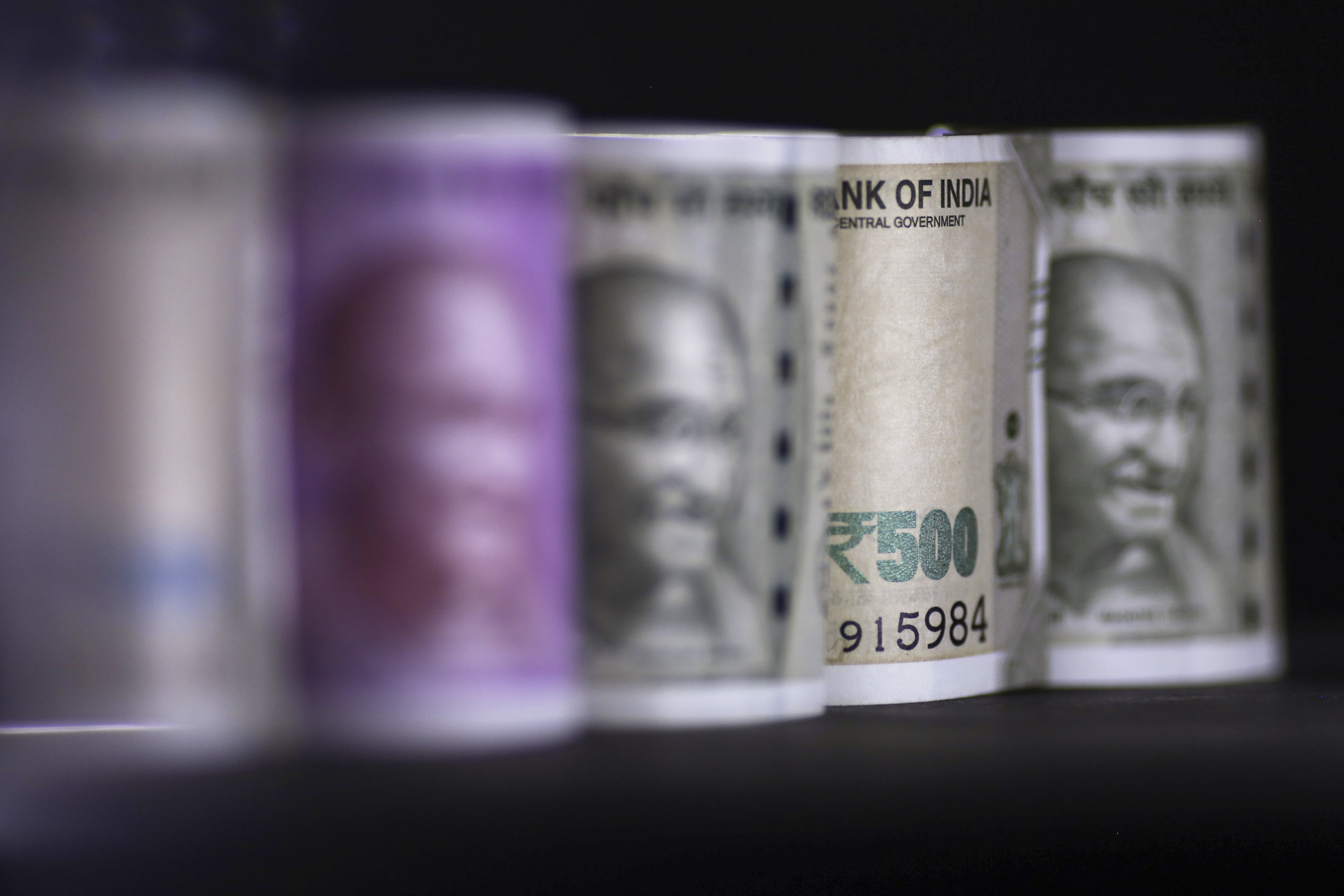
Public sector banks are set to receive Rs 88,139 crore in form of recapitalisation from the government this financial year, according to a presentation made by the finance ministry today. This is the first tranche of the Rs 2.11 lakh crore recapitalisation plan that the government had first announced in October 2017.
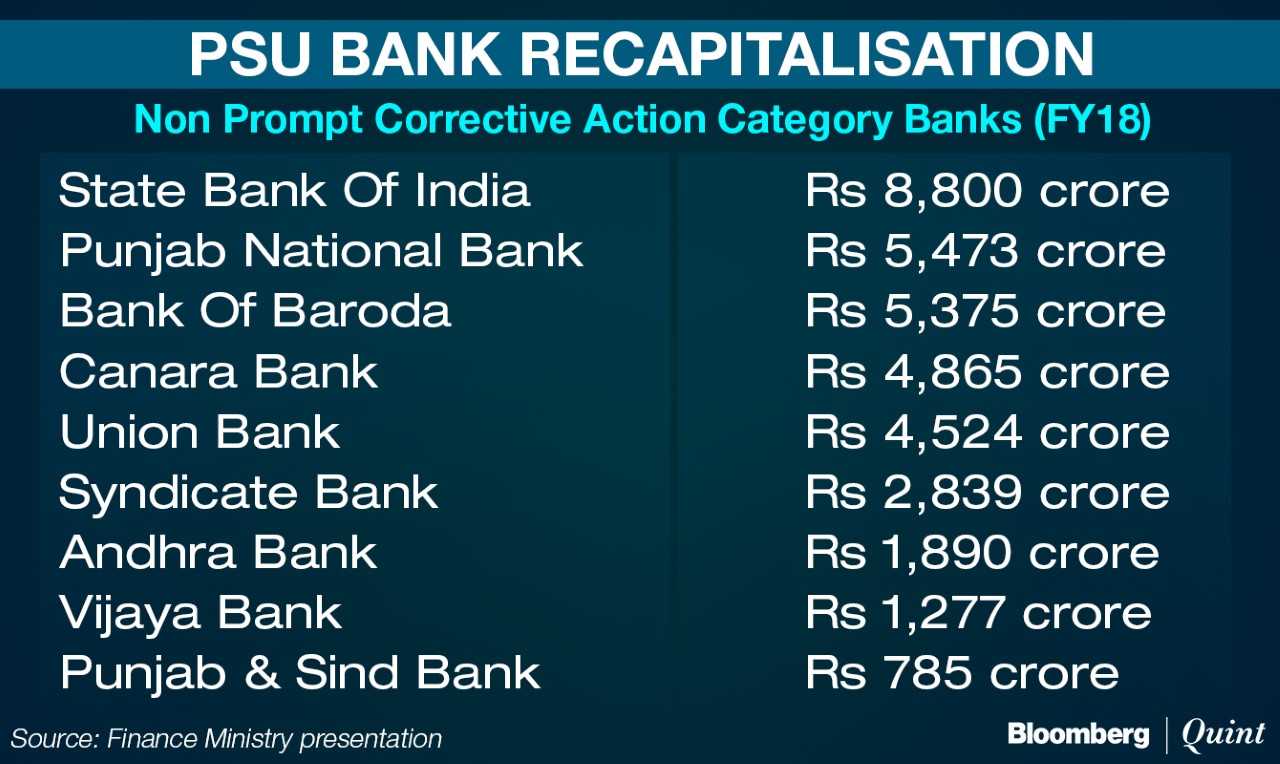
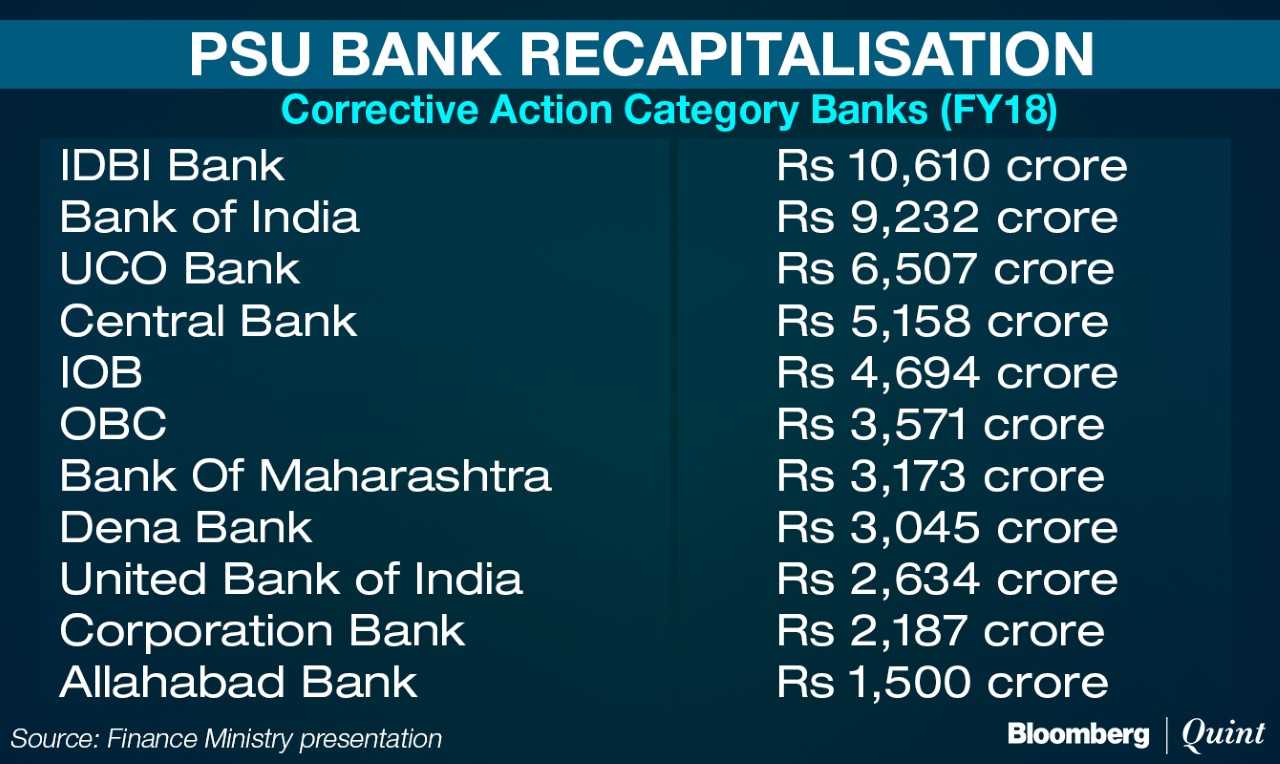
Eleven public sector banks under the prompt corrective action framework of the Reserve Bank of India are set to receive Rs 52,311 crore in form of recapitalisation. The other state-owned banks will receive Rs 35,828 crore. Banks put under the PCA framework are those that have high bad loans and weak capital adequacy levels.
The funds will be infused through a mix of budgetary allocation worth Rs 8,139 crore and recapitalisation bonds worth Rs 80,000 crore, said Rajeev Kumar, secretary for the government's Department of Financial Services. Apart from this, lenders will also be required to raise funds through their own fund raising efforts from the market.
“Government's commitment to recapitalise all public sector banks is credit positive for the weaker public sector banks; corporate governance reforms fall short of addressing structural weaknesses,” Moody's Investors Service said in an emailed statement.
The recapitalisation package is also expected lines, said PK Gupta, managing director at State Bank of India.
The government had already said that part of the money will be given for the purpose of growth capital. As you know, we were adequately capitalised, we didn't need the money immediately, but the government has said that part of the money will come for growth, so that is where the allocation to SBI will be used.PK Gupta, Managing Director, SBI
Also Read: SBI Will Use The Entire Rs 8,800 Crore Recap To Fund Growth
Allocations for individual banks are as follows:
Also Read: Recap Bonds To Be Front-Loaded For Prudent Banks, Says RBI Governor
Towards ‘Responsible' Lending
The regulatory capital of all state-run banks will be maintained and no state-run bank will be allowed to fail, said government officials while addressing the press conference. Banks, however, would need to reposition themselves and move towards ‘responsive and responsible' banking, said Kumar.
In his presentation, Kumar outlined changes that the finance ministry wants state banks to undertake in their loan sanctioning procedures and in lending as part of consortiums. They want each bank to come up with a differentiated banking strategy.
- Not more than 25 percent corporate exposure as per bank's strategy.
- All loans above Rs 250 crore will invite specialised monitoring.
- If any of the covenants decided upon at the time of a loan sanction are breached, that will be considered a red flag and shared across the consortium of lenders.
- There will be a separate stressed asset vertical in each of bank for cleaner and timely recovery.
- To be part of a loan consortium, banks will need to commit atleast 10 percent of the total amount.
The government has also asked all banks to identify non core assets for monetisation and rationalise overseas operation. So far, banks have collectively decided to shut down 41 overseas branches, Kumar said.
In addition, each bank has been asked to identify its core strengths and focus on those rather than becoming ‘me-too' lenders. A re-orientation in lending towards small and medium enterprises is also being encouraged by the government. A large part of the Rs 5 lakh crore in incremental lending capacity created by the recapitalisation package should be utilised to lend to SMEs, said Kumar.
SME is a great opportunity for India. It must be properly assessed and risks should be properly taken care of. Today NBFCs are doing a great job in SME lending. So, if you are doing your homework correct, and you have the risk management system intact, you will definitely get good benefit from SME lending.Dinabandhu Mohapatra, MD & CEO, Bank of India
Also Read: SME Lending Not A Panacea For All Bank Problems, Says Former RBI Deputy Governor Mundra
Structure Of Recap Bonds
The government had announced a plan to infuse Rs 2.11-lakh-crore in public sector banks in October. Of this, Rs 1.35 lakh would come through recapitalisation bonds, the government had said. These recapitalisation bonds would not be counted towards the Statutory Liquidity Ratio requirements, the government clarified. SLR is the mandatory proportion of government bonds that a bank is required to hold.
Recapitalisation bonds would be long term bonds. They would be non-tradable and will carry a coupon rate based on the comparable government security plus a spread, the government spread.
Indian banks' non-performing loans have nearly doubled to Rs 8.4 lakh crore since October 2015 when the central bank initiated an asset quality review. Public sector lenders accounted for about 87 percent of the bad loans as of Sept. 30. The surge in bad loans meant that provisioning needs of banks soared. In addition, banks also need capital to transition towards the full implementation of Basel III norms. The Indradhanush plan to infuse Rs 70,000 crore into state-owned lenders in four years through March 2019 was seen as inadequate to meet the capital requirements.

-
Gold Is Rs 22,000 Cheaper Than A Month Ago. Should You Buy Amid The Wedding Season?

Gold's potential slide to $3,500 could save around Rs 4,700 per 10 grams, but a soft inflation print could just as easily push prices back up. One way to split the risk is to buy in parts, some now and the rest after the Fed's Dec. 9 decision.
-
AI Agents Are Gaining Power. Who Governs Them?
Artificial intelligence agents promise to transform productivity by moving machines from assisting decisions to executing them. But as organisations delegate greater authority to these AI-agents, they must first establish who controls that authority and who remains accountable when things go wrong.
-
Why Swapping Your Old Gold Can Trigger A Rs 5 Lakh Tax Bill, And How You Can Avoid It Legally
Swapping old gold for new is taxed as a sale and a fresh purchase. Getting your own gold remade can cut most of that bill, though it has its own costs.
-
The AI Trade is Done. The Real Opportunity for Investors Starts in 2027 | Unhedged Position
As pureplay AI stocks plunge and circular, capex-led financing unwinds, 2027 is set to be a year of reckoning for AI companies. Yet the bust clears the way for a better opportunity for investors in 2027 -- shifting the spotlight from AI builders to the companies using AI.
-
Leadership As Mission: Why The Age Of AI Demands More Human Leadership
Debjani Ghosh examines how AI is changing leadership, arguing that its success must be measured by its impact on people and the accountability of those guiding its use.
-
We May Need Another Tukaram Mundhe To Fight Air Pollution | The Reason Why
Developers may install basic measures such as sprinklers and green nets, resume work, and continue violating rules when this equipment stops working.
-
Extracting Value From Battery Scrap Could Be Challenging For India | The Reason Why
A discarded lithium-ion battery still contains valuable materials such as lithium, nickel and cobalt. These can be recovered and reused. When such batteries are crushed and shredded, they produce a dark powder called black mass.
-
One El Nino, India Can Handle. Two Could Break The Granary
India's grain stocks can absorb one bad year, but a second El Nino could drain the buffer in two to three years, economists say.
-
India's Troika Of Good Luck | Joining The Dots
As Jensen Huang's exit drags Nvidia down, a cooling AI trade and resilient earnings have revived investor interest in India. A likely RBI rate hike looms.
-
Talking Points This Week: Leadership Shock At Nvidia, Earnings Strength, And The Fog Over Hormuz
The Anthropic IPO pricing and first trading day, Nvidia's upcoming earnings, and any fresh signals from Iran will set the tone for the following week.









