Google’s 2019 ‘Code Yellow’ Blurred Line Between Search, Ads
(Bloomberg) -- The former head of search at Alphabet Inc.'s Google told colleagues in February 2019 that his team was “getting too involved with ads for the good of the product and company,” according to emails shown at the Justice Department's landmark antitrust trial against the search giant.
Google maintains a firewall between its ads and search teams so that its engineers can innovate on Google's search engine, unsullied by the influence of the team whose goal is to maximize advertising revenue. But in February 2019, testimony at the antitrust trial revealed Tuesday, Google internally declared a “Code Yellow” amid concerns the company might not meet its goals for search revenue for the quarter.
As part of the emergency, which lasted for seven weeks, engineers from Google's search and Chrome browser teams were reassigned to figure out why user queries had slowed, according to the documents.
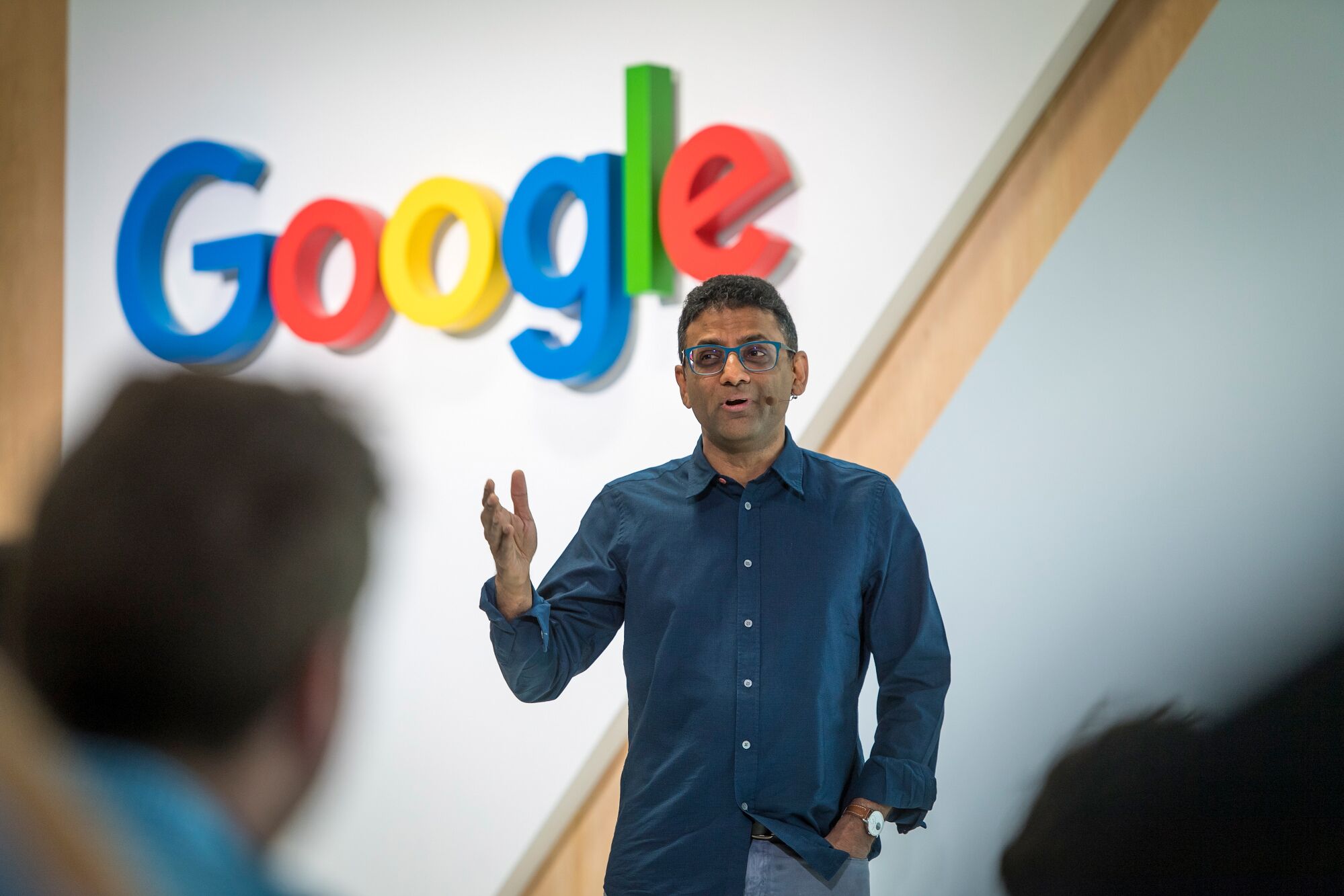
Ben Gomes, Google's former head of search, was called by the company in its defense to show that it had made various advancements in search, particularly in mobile. However, cross examination by Justice Department lawyer David Dahlquist revealed the tensions between Gomes' search team and its advertising counterparts.
The questioning sought to undermine Google's contentions that its search team focuses solely on improving the user experience and has sometimes been pulled into the advertising side, where the Justice Department alleges Google has been able to raise prices without pushback.
The trial, now in its eighth week, focuses on whether Google has illegally maintained its monopoly by spending billions of dollars to stifle competition and preserve its monopoly over online search.
Earlier: Google's Pichai Refutes DOJ Allegations of Deleting Evidence
In a statement, Google pushed back on the idea that search results and innovation were affected by the company's ad revenue goals. “The organic results you see in search are not affected by our ads systems or by the ads we show for a query,” said Peter Schottenfels, a Google spokesperson.
Google argues that it has captured about 90% of the market for search on the merits of a superior product, and that its advancements in internet search have benefited the public. But emails revealed in court on Tuesday showed that there was some concern among key members of the company's search team that Google was focused on growth over innovation.
In a 2019 email, Gomes wrote to other executives that his search team was “getting too close to the money.”
Emails as Evidence
“I think it is good for us to aspire to query growth and to aspire to more users. But I think we are getting too involved with ads for the good of the product and company,” Gomes wrote.
“I am getting concerned that growth is all we are thinking about,” he ended the email.
Query growth is measured by looking at the number of user queries, which the Justice Department argued can translate to increased revenue, since greater queries provide more opportunities for Google to run search ads against them.
Gomes testified in court that he was feeling frustrated and sent the email at 6 a.m. At the time, Google set its metrics on the number of user queries, which Gomes said he believed wasn't a good one since product improvements should help users find answers quickly.
“I did not care for queries as a metric,” he said. “I think this metric of just using queries is not one that optimizes appropriately.”
Google ended the “Code Yellow” emergency in mid-March. Prabhakar Raghavan, then head of Google's advertising, wrote to Gomes at the time, praising the “heroic” engineering that resolved the issue. Back then, Gomes and Raghavan were of equal rank, both reporting to Google Chief Executive Officer Sundar Pichai.
‘Query Softness'
“The core query softness continues without mitigation,” Raghavan said, asking Gomes for a meeting. “At this rate the full year plan is a bad miss and will need drastic steps on the query side.”
Gomes drafted a response to Raghavan that he shared with other executives, acknowledging “feeling annoyed both personally and on behalf of the team.”
“Most headcount (non assistant) for search has gone into projects that are growth oriented. To the point, I worry that we are really not investing in research or speculation adequately,” Gomes wrote. “We could increase queries quite easily in the short term in user negative ways (turn off spell correction, turn off ranking improvement, place refinements all over the page).”
Gomes said in his testimony Tuesday that he believed Raghavan was implying his team hadn't done enough, but he said they would never have taken steps that would negatively impact users.
“I was discussing things we would never do, like turn off spell correction,” he said.
Gomes said he never sent the email to Raghavan, using the draft he shared to get “the annoyance off my chest.” Gomes and Raghavan met and agreed to stop using queries as a metric, instead creating a new metric that measures groups of queries.
Gomes left his position as head of search about a year later. Raghavan has now replaced him as Google's head of both search and advertising.
More stories like this are available on bloomberg.com
©2023 Bloomberg L.P.

-
Talking Points This Week: Leadership Shock At Nvidia, Earnings Strength, And The Fog Over Hormuz

The Anthropic IPO pricing and first trading day, Nvidia's upcoming earnings, and any fresh signals from Iran will set the tone for the following week.
-
Signature Play: The Classic Cocktail Is Dead. Or Is It?
Classic cocktails are disappearing from India's cocktail menus. But they're still being ordered, taught to bartenders and borrowed from. So, who's really having the last drink?
-
A New Samvat Wishlist: Inclusive Prosperity And Human Development
India has strengthened its economic foundations through infrastructure, digital access and enterprise. Its next growth chapter must deepen productivity, create better livelihoods and widen participation in prosperity.
-
Love, Sex Aur Dhokha: The Audacious Plot To Spy On Jensen Huang
A Taipei dinner, a Singapore chip buyer and a suspected Chinese asset: inside the alleged spy operation that got close to NVIDIA's Jensen Huang.
-
Ten Things I Learnt This Samvat
Patience can be a trap. Cheap stocks can stay cheap. Leverage can wipe you out. What did Samvat 2082 teach us? Niraj Shah writes on 10 lessons from the year gone by.
-
Talking Points This Week: Tech Nerves, FII Buying, And A Faraway Banking Shock
The global markets are not shining this Diwali. The exception in the large markets is, India.
-
Midterm Rally Lasted A Day. The Hard Reality Of A Divided US May Last Two Years | Opinion
Between a contested AI boom, a debt ceiling that arrives in 2027 and a president with every incentive to act alone, the next two years may prove more volatile than the first day's rally suggests.
-
Blue Wave Will Derail the AI Trade but Won't Dismantle the AI Era | Unhedged Position
The Democrats' sweep of the US Congress will see politics collide with economic forces both over the long and short term.
-
It's Time To Take The GST Council's Bet On Trust Global
Payment records can prove India's services exports, and clear, proportionate rules can bring foreign digital sellers into the tax net.
-
Opinion | India at 38: From Innovation Overperformer to Innovation Powerhouse
India now has 453 VC-backed deep science startups, 18 of them late-stage, after 117 percent growth since 2020. Laurus Labs, at USD 9.3 billion, is the most valuable deep science company in any middle-income economy outside China.









