Google Parent Alphabet To Buy Cybersecurity Firm Wiz For $32 Billion
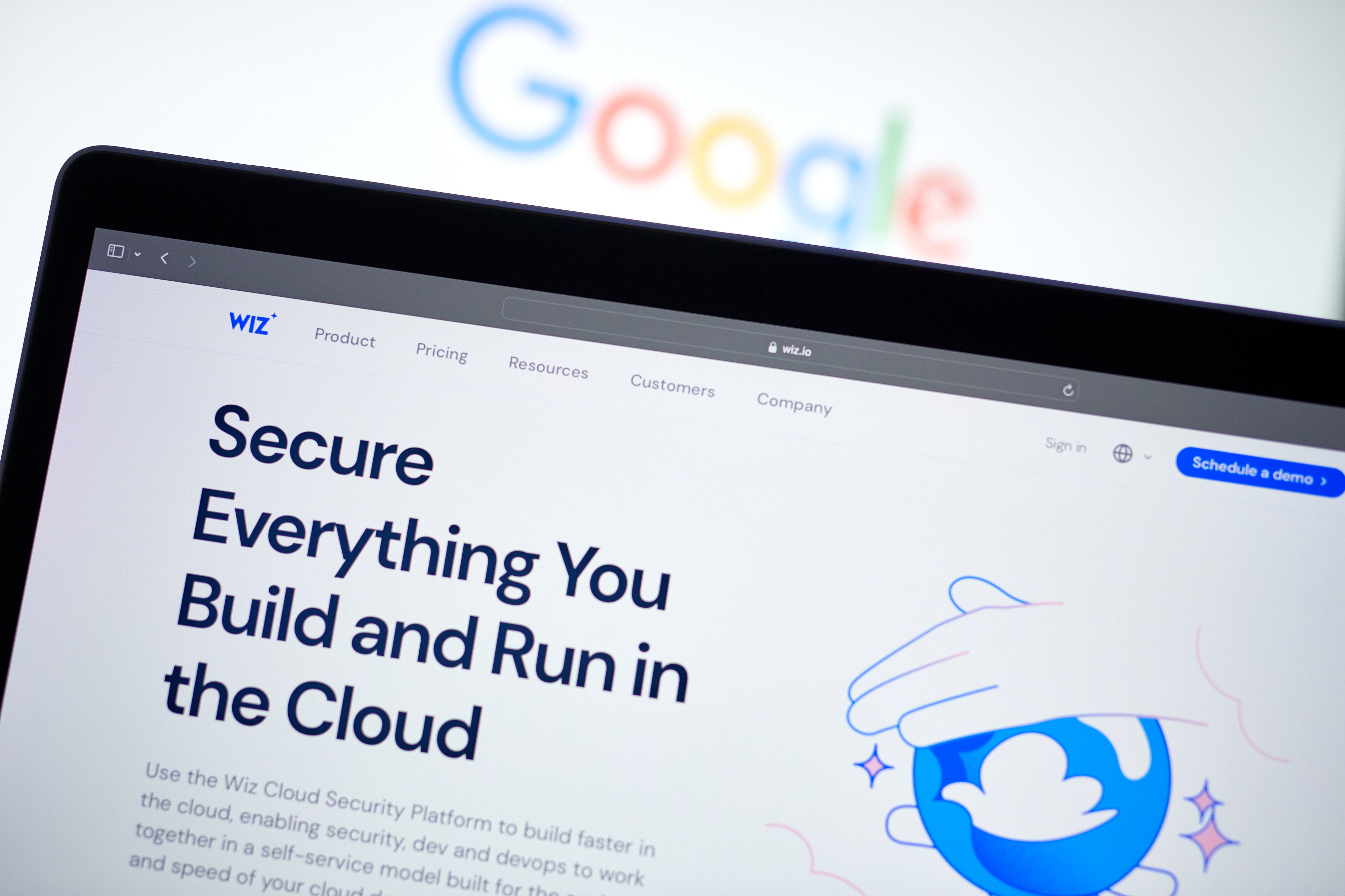
Google parent Alphabet Inc. agreed to acquire cybersecurity firm Wiz Inc. for $32 billion in cash, cementing a deal less than a year after initial negotiations fell apart because the cloud-computing startup wanted to stay independent.
Once the deal is closed, Wiz will join the Google Cloud business, the companies said in a statement on Tuesday.
The deal, which would be Alphabet's largest to date, comes after Wiz turned down a $23 billion bid from the internet search leader last year after several months of discussions. At the time, Wiz walked away after deciding it could ultimately be worth more by pursuing an initial public offering company. Concerns about regulatory challenges also influenced the decision.
Buying Wiz provides Google's cloud-computing business with new security products to offer customers as it works to catch up with Microsoft Corp. and Amazon.com Inc., its larger rivals in the fast-growing, competitive market. Wiz offers cloud-specific cybersecurity tools that work on all platforms, identifying and prioritising threats across organisations' often-complex cloud environments.
“Wiz's products will continue to work and be available across all major clouds, including Amazon Web Services, Microsoft Azure, and Oracle Cloud platforms, and will be offered to customers through an array of partner security solutions,” the companies said in the statement.
Founded in 2020, Wiz has grown quickly, helped by a roster of investors that includes Greenoaks, Sequoia Capital, Index Ventures, Insight Partners and Cyberstarts. The company was valued at $12 billion in a funding round in May 2024.
Wiz Chief Executive Officer Assaf Rappaport described Alphabet's earlier bid as “humbling,” but at the time said he relished the idea of growing Wiz into an independent cybersecurity giant, to compete against the likes of CrowdStrike Holdings Inc. and Palo Alto Networks.

Assaf Rappaport, Co-founder and CEO of Wiz. (Photographer: David Paul Morris/Bloomberg)
The startup and its investors also balked at Google's offer last year in part because of worries of a protracted regulatory approval process, with competition authorities in the US and Europe scrutinizing the technology industry for its economic sway and market power. While US President Donald Trump's administration is likely to offer a more permissible deal environment, Alphabet's offer for Wiz still may draw scrutiny from antitrust regulators.
Google has already been fending off several challenges on that front, including the Department of Justice accusing the company of abusing its dominant position in online search. In that case, a federal judge ruled last year that Google maintained an illegal monopoly in search. The company is facing another antitrust case over its digital advertising tools.

-
'Never Seen This Level Of Negativity': Sandeep Tandon Says The Next Rally May Be Closer Than You Think

Veteran investor Sandeep Tandon says foreign selling is easing, large-caps are due a comeback and mid-caps are crowded, while he turns positive on gold, power and pharma this Diwali.
-
Indians Stay With Family, Not In Hotels | The Reason Why
India still lacks enough clean, reliable and affordable hotels for budget-conscious travellers.
-
The Economic Imperative: Analysing The Material Driving Force Behind India-Canada Strategic Reset
This economic complementarity is further reinforced by deep institutional investment ties and talent mobility, which form the bedrock of the bilateral framework.
-
Medicine Pricing: Where Must Profit Stop?
India must confront excessive margins, hidden incentives and regulatory gaps that threaten the integrity of medicine.
-
Why Amazon And Flipkart Are Struggling To Beat Meesho In India's Smaller Cities
With 274 million users and lowest-cost logistics, Meesho is defending its value commerce crown against giants like Amazon and Flipkart.
-
High US Salaries, No Green Card Certainty: The Financial Calculation Facing Indian H-1B Families
The suspension of PERM processing at eight technology employers does not cancel existing H-1B visas. What it does is force a question many Indian families have been avoiding: is the US salary worth tying your career and family plans to one employer?
-
Swiggy vs Eternal: Food Delivery's Two Rivals Are No Longer In The Same Race
Eternal is building a private AI assistant, dark.ai. Swiggy is still working out how to make Instamart pay, with an operating loss of Rs 895 crore in the July-September quarter while Blinkit stayed profitable.
-
Where You Live Shapes How You Get To Work | The Reason Why
Two-wheelers are the most popular way to get to work in India, accounting for nearly 43% of workplace commutes.
-
Unhedged Position: Can India See An Indonesia-Style Time Correction?
The Nifty is trading below levels it first clocked in 2024. Is there, then, as I have suggested in the headline, potential that the current time correction drags on painfully for the next three-five, even ten years?
-
Navigating Friction And Energy Realities: An Analysis Of Marco Rubio's October Visit To India
Occurring at a critical juncture marked by stalled trade negotiations and escalating geopolitical pressures over global energy supplies, the visit offers a profound window into modern US-India relations.










