Google Co-Founders Step Down, Sundar Pichai New Alphabet CEO
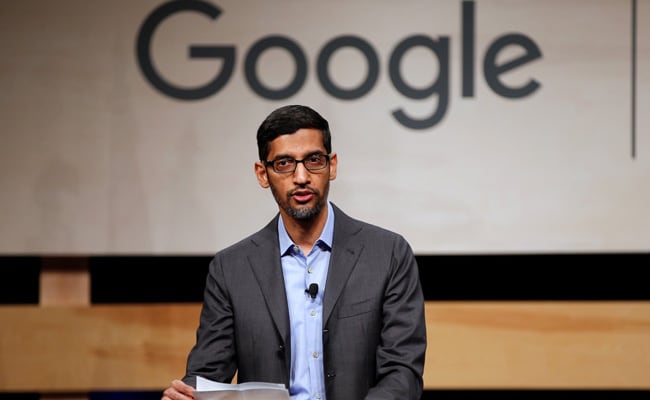
Twenty one years after founding Google in a Menlo Park garage, Larry Page and Sergey Brin, the CEO and President, respectively of parent company Alphabet, have decided to leave these roles, paving the way for India-born Sundar Pichai to become the CEO of both Google and Alphabet.
Larry Page and Sergey Brin will continue their involvement as co-founders, shareholders and members of Alphabet's Board of Directors, the company said on Tuesday.
Mr Pichai, who will remain a member of Alphabet's Board of Directors, will assume the role of managing Alphabet's investment in its portfolio of "Other Bets", or longshot projects.
"It's impossible to overstate Larry and Sergey's contributions over the past 21 years. I'm grateful that they will continue their involvement on the Board," John Hennessy, Chairman of Alphabet Board of Directors, said in a statement.
Larry Page and Sergey Brin founded Google in September 1998. Since then, the company has grown to more than 100,000 employees worldwide, with a wide range of popular products and platforms like Search, Maps, Ads, Gmail, Android, Chrome, Google Cloud and YouTube.
In October 2015, Alphabet became the parent holding company of Google.
"We are deeply humbled to have seen a small research project develop into a source of knowledge and empowerment for billions - a bet we made as two Stanford students that led to a multitude of other technology bets," Mr Page and Mr Brin said in a letter about the transition.
"We could not have imagined, back in 1998 when we moved our servers from a dorm room to a garage, the journey that would follow," the two Google co-founders said.
Talking about the "Other Bets", the two co-founders said that hundreds of Phoenix residents are now being driven around in Waymo cars - many without drivers.
"Wing became the first drone company to make commercial deliveries to consumers in the US. And Verily and Calico are doing important work, through a number of great partnerships with other healthcare companies. Some of our 'Other Bets' have their own boards with independent members, and outside investors," they wrote.
Writing about the new Alphabet CEO, they said that "Sundar brings humility and a deep passion for technology to our users, partners and our employees every day."
"...we plan to continue talking with Sundar regularly, especially on topics we're passionate about," they said.
Mr Pichai joined Google in 2004 and helped lead the development of Google Toolbar and then Google Chrome, which grew to become the world's most popular Internet browser.
In 2014 he was appointed to lead product and engineering for all of Google's products and platforms -- including popular products such as Search, Maps, Play, Android, Chrome, Gmail and Google Apps (now G Suite).
Mr Pichai became Google's CEO in August 2015. He joined the Board of Directors of Alphabet, Google's parent company, in July 2017.
Under his leadership as CEO, Google has been focused on developing products and services, powered by the latest advances in AI, that offer help in moments big and small.
It has invested in new opportunities such as Google Cloud and YouTube and has continued to be a leader in advanced technologies, including machine learning and quantum computing.
Mr Pichai, who grew up in Chennai and studied engineering at the Indian Institute of Technology, Kharagpur holds a master's degree from the Stanford University and an MBA from the Wharton School.
"I'm excited about Alphabet and its long term focus on tackling big challenges through technology. I'm looking forward to continuing to work with Larry and Sergey in our new roles," Mr Pichai said.
"Thanks to them, we have a timeless mission, enduring values, and a culture of collaboration and exploration. It's a strong foundation on which we will continue to build," he added.

-
Indians Are Travelling, But Not Every Journey Is A Holiday | The Week In Whys

Pilgrims, patients and working women are the real travellers, and the system hasn't quite caught up with them.
-
Getting To Work Costs Women More | The Reason Why
It is not just about women paying more than men. It is about women paying much more in cities than in villages.
-
AI Bias In Investing Cannot Be Eliminated, But It Can Be Governed
Framing is a particularly important example as identical financial information presented in terms of gains rather than losses can lead an LLM to reach a different assessment.
-
Joining The Dots | Dark Skies, Steady Diya: Why Hope Holds This Diwali
With war, a weak rupee and foreign outflows weighing on sentiment, policymakers at the NDTV World Summit and market veterans at NDTV Profit Ignite: Diwali Edition offered the same advice: stay invested and filter out the noise.
-
The Curious Case of Equitas Small Finance Bank And A CEO Who Quit For Stock
PN Vasudevan believes persistent investor concerns over a perceived conflict of interest had become a governance overhang on Equitas Small Finance Bank's stock, even as the lender improved profitability and asset quality.
-
Talking Points This Week: AI Cash Burn, A Tiger Comeback And An India That Still Finds Its Own Path
India is not immune to higher oil or tighter global liquidity, yet its earnings base is broader, its domestic policy levers are still available.
-
Foreign Investors Own Half Of HDFC Bank and ICICI Bank. An LTCG Cut Could Matter Most Here
Foreign portfolio investors have US$115 billion parked in HDFC Bank, ICICI Bank. If the government cuts long-term capital gains tax, Jefferies says returning foreign money could land here first.
-
'Never Seen This Level Of Negativity': Sandeep Tandon Says The Next Rally May Be Closer Than You Think
Veteran investor Sandeep Tandon says foreign selling is easing, large-caps are due a comeback and mid-caps are crowded, while he turns positive on gold, power and pharma this Diwali.
-
Indians Stay With Family, Not In Hotels | The Reason Why
India still lacks enough clean, reliable and affordable hotels for budget-conscious travellers.
-
The Economic Imperative: Analysing The Material Driving Force Behind India-Canada Strategic Reset
This economic complementarity is further reinforced by deep institutional investment ties and talent mobility, which form the bedrock of the bilateral framework.










