Gold Smugglers Try New Tricks to Evade Restrictions
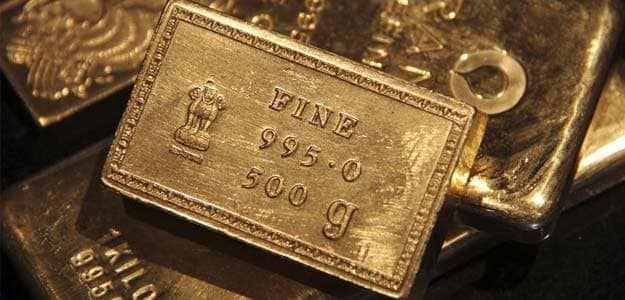
India is scrambling to crack down on a new gold smuggling tactic that it fears could accelerate a flood of illegal imports of the precious metal into the world's second-biggest buyer.
India -- whose appetite for gold is only rivalled by China -- last year imposed a record 10 per cent import duty and made it mandatory to export a fifth of all bullion imports, seeking to curb bullion demand that has blown out the trade deficit.
With the lure of big profits from avoiding duty, smugglers have come up with innovative ways to bring in gold.
In the latest smuggling case, a gold exporting firm attempted to use a tax-free special economic zone to try to bypass restrictions and sell to the local market.
The scam was uncovered after police stopped a car trying to take 25 gold bars, worth about $1 million, out of a tax-free special economic zone in Surat in June to sell to the domestic market, according to a government document seen by Reuters. The owner of the firm was arrested.
The new government of Narendra Modi had been expected to loosen the policies, but its first budget maintained the tough stance, which has resulted in an explosion of gold smuggling and cast doubt on how accurately official data reflects gold flows in the world's second-biggest buyer.
Government figures show that only 2.34 tonnes of smuggled gold was retrieved last year, while the World Gold Council estimated 200-250 tonnes of gold illegally entering India.
"Since the import restrictions are still in place, smuggling will remain rampant and that will distort total import figures," said Carsten Fritsch, an analyst with Commerzbank AG.
The June arrest was the first time authorities had seized gold being smuggled out of a special economic zone, according to a government source, and appears to reveal a more sophisticated scam to get gold into the local market.
"We had intelligence report and intercepted the car, with the manager of the firm in it. The manager said the gold was concealed by the proprietor of the firm," said another senior government official with direct knowledge of the case, adding that the gold was to be illegally sold in the domestic market.
"The authorities know that such things are happening and intelligence gathering has been strengthened," the source said.
The ministry of commerce, which is in charge of special economic zones, did not reply to requests for comment.
Fake Receipts
Illustrating the extent of smuggling, India's junior civil aviation minister said this week staff of the national carrier, Air India, had been found smuggling in gold in 13 instances in the last few years.
But special economic zones could be especially vulnerable since exporters do not pay duty to bring gold into India, and thus can make a huge profit by diverting supplies to the domestic market. There are 185 such zones in India.
Last year's restrictions on imports have curbed supply and pushed up domestic premiums -- the difference between local and global prices -- to a record $160 an ounce last December.
Indian gold imports plunged by a fifth last year to 825 tonnes though jewellery and investment demand rose 13 per cent.
One of the government sources said that others are likely to be using special economic zones to bring in gold.
"After all how would you know if somebody is taking out gold in their cars?"
To account for the disappearance of the gold, exporters are likely to be using either fake receipts or imitation copper jewellery, according to the official.
Some exporters also buy back supplies that they have sold into the market when premiums fall, thus making a profit off the premium arbitrage, said Sudheesh Nambiath, a senior analyst at Thomson Reuters GFMS in Mumbai.
"Policymakers are increasingly aware of such practices. So I wouldn't be surprised if we see further tightening of rules around exporters in tax-free zones," said Nambiath.
Copyright: Thomson Reuters 2014

-
Getting To Work Costs Women More | The Reason Why

It is not just about women paying more than men. It is about women paying much more in cities than in villages.
-
AI Bias In Investing Cannot Be Eliminated, But It Can Be Governed
Framing is a particularly important example as identical financial information presented in terms of gains rather than losses can lead an LLM to reach a different assessment.
-
Joining The Dots | Dark Skies, Steady Diya: Why Hope Holds This Diwali
With war, a weak rupee and foreign outflows weighing on sentiment, policymakers at the NDTV World Summit and market veterans at NDTV Profit Ignite: Diwali Edition offered the same advice: stay invested and filter out the noise.
-
The Curious Case of Equitas Small Finance Bank And A CEO Who Quit For Stock
PN Vasudevan believes persistent investor concerns over a perceived conflict of interest had become a governance overhang on Equitas Small Finance Bank's stock, even as the lender improved profitability and asset quality.
-
Talking Points This Week: AI Cash Burn, A Tiger Comeback And An India That Still Finds Its Own Path
India is not immune to higher oil or tighter global liquidity, yet its earnings base is broader, its domestic policy levers are still available.
-
Foreign Investors Own Half Of HDFC Bank and ICICI Bank. An LTCG Cut Could Matter Most Here
Foreign portfolio investors have US$115 billion parked in HDFC Bank, ICICI Bank. If the government cuts long-term capital gains tax, Jefferies says returning foreign money could land here first.
-
'Never Seen This Level Of Negativity': Sandeep Tandon Says The Next Rally May Be Closer Than You Think
Veteran investor Sandeep Tandon says foreign selling is easing, large-caps are due a comeback and mid-caps are crowded, while he turns positive on gold, power and pharma this Diwali.
-
Indians Stay With Family, Not In Hotels | The Reason Why
India still lacks enough clean, reliable and affordable hotels for budget-conscious travellers.
-
The Economic Imperative: Analysing The Material Driving Force Behind India-Canada Strategic Reset
This economic complementarity is further reinforced by deep institutional investment ties and talent mobility, which form the bedrock of the bilateral framework.
-
Medicine Pricing: Where Must Profit Stop?
India must confront excessive margins, hidden incentives and regulatory gaps that threaten the integrity of medicine.










