Gold Demand in India to Rise, Modi Seen Easing Import Curbs
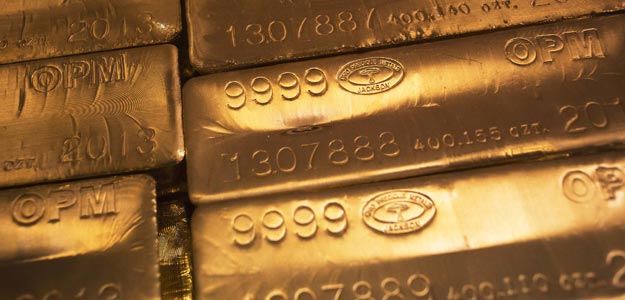
India's gold demand is likely to pick up in the second half of the year as curbs on bullion imports are expected to be eased by the country's new government, the World Gold Council (WGC) and other industry officials said on Tuesday.
Gold imports by India, the world's No. 2 bullion consumer after China, could double from current levels if the restrictions are eased, according to an industry estimate. This would help global prices that slumped 28 per cent last year - the first drop in 13 years - partly due to India's curbs.
Struggling with a ballooning trade deficit, India in 2013 imposed a record high duty of 10 per cent on overseas purchases of gold, the second-biggest expense in its import bill, and introduced a rule tying import quantities to export levels.
"The change (in gold policy) is inevitable because Modi seems to be pro-gold," said Albert Cheng, WGC's head of the far east region, referring to Narendra Modi who romped to a landslide victory in the recently concluded general elections in India. "It's just a matter of when he is going to do it."
Modi, who leads the pro-business Bharatiya Janata Party, has said any action on gold should take into account the interests of the public and traders, not just economics and policy.
Indian gold imports plunged by a fifth last year though jewellery and investment demand rose 13 per cent. The gap between supply and demand have sent premiums in the country to $100 an ounce above the global benchmark, causing a spurt in smuggling.
Gold demand in India fell by a fourth to 190.3 tonnes in the quarter to March due to the curbs, WGC said in its quarterly report, which also noted that demand in top buyer China fell from the previous year's record levels.
Sudheesh Nambiath, an analyst with metals consultancy GFMS, said there is likely to be an early review to the current policies on gold with the Bharatiya Janata Party (BJP) leading in the centre. GFMS is owned by Thomson Reuters.
"Our current expectation is that any policy review would allow monthly gold imports of an average of 50-60 tonnes a month and a reduction in import duty as well," said Nambiath, who was part of a four-member delegation to detail the current policies on gold to Modi in September.
This would address industry concerns while also keeping the trade deficit in check, he said.
Imports have been running at an average of 24.69 tonnes since July 2013, compared with an average of 78 tonnes before the then government started making adjustments, Nambiath said.
Somasundaram PR, WGC's head of Indian operations, reiterated the industry body's forecast for India's full-year gold demand, shrugging off the sharp drop in demand in the first quarter.
"We continue to hold 900-1,000 tonnes (of annual demand in India) as it is expected to pick up in the second half," Somasundaram said.
Timing of Change
While industry analysts are confident about Modi's stance on gold, they are unsure how soon he will relax the rules.
"We feel that removal of gold policy curbs won't happen in a hurry, and it will take another two months for further action," said Prithviraj Kothari, a director at India Bullion and Jewellers Association (IBJA).
Two months would put it around the same time India's full-year budget is due.
BJP leaders told the industry body in February that if the party came to power, it would review the gold policies in the first three months in power, another IBJA official had earlier told Reuters.
India's trade deficit has been falling in recent months, largely due to the drop in gold imports, and any step to ease the rules would be taken cautiously, some analysts have said.
"A possible rollback of the duty on bullion imports may not occur overnight, should it occur at all, but would more likely happen later this year," HSBC analysts said this month.
"An easing of the tariffs may provide a boost in demand for gold in India and would be price supportive, but we believe this would be a medium to longer-term scenario," they said.
Copyright: Thomson Reuters 2014

-
Indians Are Travelling, But Not Every Journey Is A Holiday | The Week In Whys

Pilgrims, patients and working women are the real travellers, and the system hasn't quite caught up with them.
-
Getting To Work Costs Women More | The Reason Why
It is not just about women paying more than men. It is about women paying much more in cities than in villages.
-
AI Bias In Investing Cannot Be Eliminated, But It Can Be Governed
Framing is a particularly important example as identical financial information presented in terms of gains rather than losses can lead an LLM to reach a different assessment.
-
Joining The Dots | Dark Skies, Steady Diya: Why Hope Holds This Diwali
With war, a weak rupee and foreign outflows weighing on sentiment, policymakers at the NDTV World Summit and market veterans at NDTV Profit Ignite: Diwali Edition offered the same advice: stay invested and filter out the noise.
-
The Curious Case of Equitas Small Finance Bank And A CEO Who Quit For Stock
PN Vasudevan believes persistent investor concerns over a perceived conflict of interest had become a governance overhang on Equitas Small Finance Bank's stock, even as the lender improved profitability and asset quality.
-
Talking Points This Week: AI Cash Burn, A Tiger Comeback And An India That Still Finds Its Own Path
India is not immune to higher oil or tighter global liquidity, yet its earnings base is broader, its domestic policy levers are still available.
-
Foreign Investors Own Half Of HDFC Bank and ICICI Bank. An LTCG Cut Could Matter Most Here
Foreign portfolio investors have US$115 billion parked in HDFC Bank, ICICI Bank. If the government cuts long-term capital gains tax, Jefferies says returning foreign money could land here first.
-
'Never Seen This Level Of Negativity': Sandeep Tandon Says The Next Rally May Be Closer Than You Think
Veteran investor Sandeep Tandon says foreign selling is easing, large-caps are due a comeback and mid-caps are crowded, while he turns positive on gold, power and pharma this Diwali.
-
Indians Stay With Family, Not In Hotels | The Reason Why
India still lacks enough clean, reliable and affordable hotels for budget-conscious travellers.
-
The Economic Imperative: Analysing The Material Driving Force Behind India-Canada Strategic Reset
This economic complementarity is further reinforced by deep institutional investment ties and talent mobility, which form the bedrock of the bilateral framework.










