Tribunal Issues Notice To Creditors, Regulator Over Go First Ticket Refunds
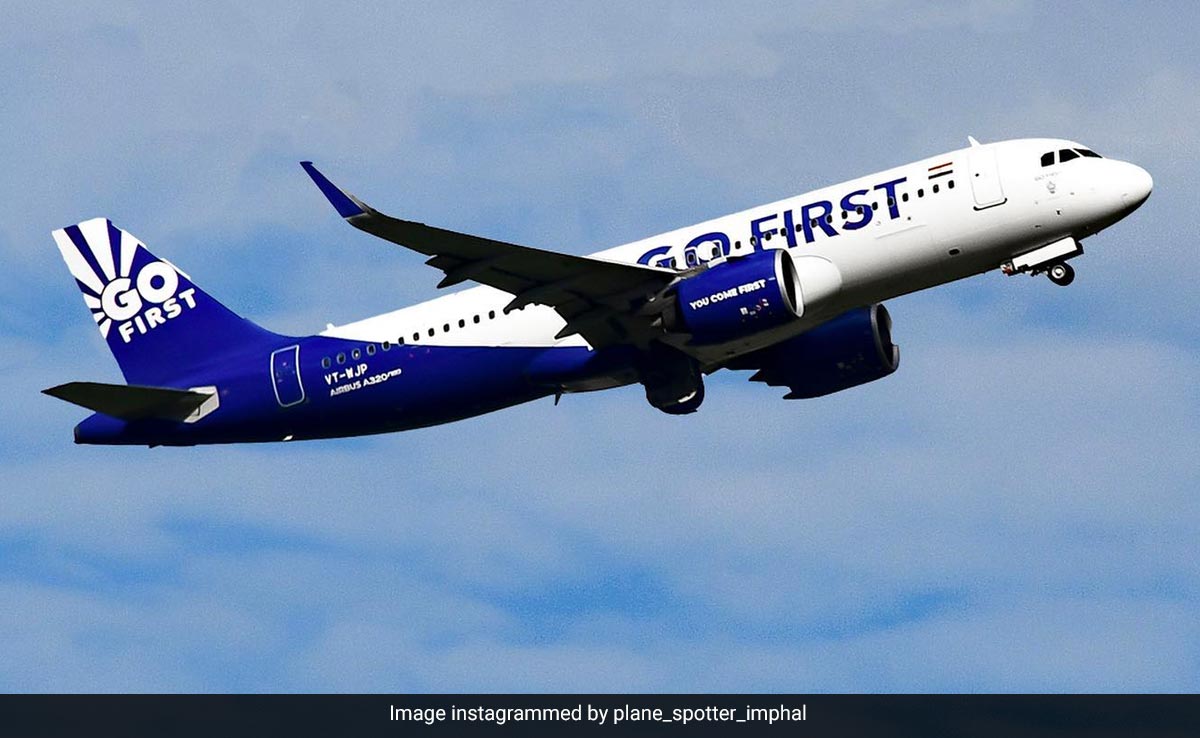
The National Company Law Tribunal (NCLT) on Monday issued notices to the Committee of Creditors of Go First and insolvency regulator IBBI over a plea to refund Rs 597.54 crore to around 15.5 lakh passengers who booked tickets for travel on and after May 3.
The resolution professional (RP) of crisis-ridden Go First, which suspended operations on May 3, has approached the NCLT to seek permission for refunding money to passengers, some of whom booked flights till July 10. Senior advocate Ramji Srinivasan representing RP said that this has been done as per the business plan to revive the grounded airline.
The NCLT bench comprising Mahendra Khandelwal and Rahul P Bhatnagar said that the feasibility and implementation of such a business plan should be "subject to suggestions of members of Committee of Creditors (CoC)".
The bench asked the Resolution Professional to take specific approval from the lenders over the refund of the amount.
Srinivasan said the CoC is aware of this, it has already envisaged the business plan and approved it. However, he sought time from the tribunal to check whether this particular refund plan has been approved by the CoC or not.
The tribunal said as plans keep on changing, it would be better if a specific resolution over payment for refund is taken. It also wanted to know whether anyone has filed an objection to this refund plan.
On this, Srinivasan said it is done in the public interest and suggested bringing the Insolvency and Bankruptcy Board of India (IBBI), which is a regulator into this issue.
Agreed by this the bench has issued notices to the CoC of Go First and IBBI directing them to file their replies and posted the matter for the next hearing on August 7.
"We issue notice to the CoC, IBBI and direct them to file their replies. We will hear the case further on August 07," said NCLT.
Go First stopped flying on May 3, 2023, and approached voluntarily for initiation of CIRP against it, as it was unable to fly due to technical difficulties faced by the non-availability of engines from Pratt & Whitney.
On May 10, the NCLT admitted the plea of Go First to initiate voluntary insolvency resolution proceedings.
If permitted by the insolvency tribunal, this would be a significant relief for those air passengers, whose money is stuck with the Go First after the initiation of the Corporate Insolvency Resolution Process (CIRP).
Earlier, several air passengers had approached NCLT directly by writing e-mail requests/phone calls for refunds of booked cancelled tickets.
On this, the NCLT issued an advisory on July 3, asking them to approach the RP to claim a refund as per the procedure of the Insolvency & Bankruptcy Code (IBC).
Last week, NCLT rejected the pleas of the lessors of aircraft and engines of Go First requesting to restrain the airline from commercial flying and held that aircraft are available for resumption of operations since aviation regulator DGCA has not deregistered them.
NCLT held that physical possession of the aircraft/engines would be "indisputably" with Go First and lessors cannot claim possession during the CIRP of the carrier.
The tribunal also declined the lessors' pleas for inspection of their leased aeroplanes and engines and strongly reiterated that it was the responsibility of the Resolution Professional to maintain them at the highest levels of efficiency/safety.
"The physical possession of the aircraft/engines is indisputable with the corporate debtor (Go First). Therefore, in terms of Section 14(1)(d), the applicants would not be within their rights to claim possession of these aircraft/engines," the NCLT bench said in its 29-page long order passed on the petitions filed by several lessors of Go First.
"The moratorium prohibits the recovery of the aircraft/engines by the lessors (applicants) from the corporate debtor," it added.
(Except for the headline, this story has not been edited by NDTV staff and is published from a syndicated feed.)

-
Extracting Value From Battery Scrap Could Be Challenging For India | The Reason Why

A discarded lithium-ion battery still contains valuable materials such as lithium, nickel and cobalt. These can be recovered and reused. When such batteries are crushed and shredded, they produce a dark powder called black mass.
-
One El Nino, India Can Handle. Two Could Break The Granary
India's grain stocks can absorb one bad year, but a second El Nino could drain the buffer in two to three years, economists say.
-
India's Troika Of Good Luck | Joining The Dots
As Jensen Huang's exit drags Nvidia down, a cooling AI trade and resilient earnings have revived investor interest in India. A likely RBI rate hike looms.
-
Talking Points This Week: Leadership Shock At Nvidia, Earnings Strength, And The Fog Over Hormuz
The Anthropic IPO pricing and first trading day, Nvidia's upcoming earnings, and any fresh signals from Iran will set the tone for the following week.
-
Signature Play: The Classic Cocktail Is Dead. Or Is It?
Classic cocktails are disappearing from India's cocktail menus. But they're still being ordered, taught to bartenders and borrowed from. So, who's really having the last drink?
-
A New Samvat Wishlist: Inclusive Prosperity And Human Development
India has strengthened its economic foundations through infrastructure, digital access and enterprise. Its next growth chapter must deepen productivity, create better livelihoods and widen participation in prosperity.
-
Love, Sex Aur Dhokha: The Audacious Plot To Spy On Jensen Huang
A Taipei dinner, a Singapore chip buyer and a suspected Chinese asset: inside the alleged spy operation that got close to NVIDIA's Jensen Huang.
-
Ten Things I Learnt This Samvat
Patience can be a trap. Cheap stocks can stay cheap. Leverage can wipe you out. What did Samvat 2082 teach us? Niraj Shah writes on 10 lessons from the year gone by.
-
Talking Points This Week: Tech Nerves, FII Buying, And A Faraway Banking Shock
The global markets are not shining this Diwali. The exception in the large markets is, India.
-
Midterm Rally Lasted A Day. The Hard Reality Of A Divided US May Last Two Years | Opinion
Between a contested AI boom, a debt ceiling that arrives in 2027 and a president with every incentive to act alone, the next two years may prove more volatile than the first day's rally suggests.









