Global Stocks Tumble as Donald Trump Imposes Tariff Plan on China, Bonds And Yen Gain
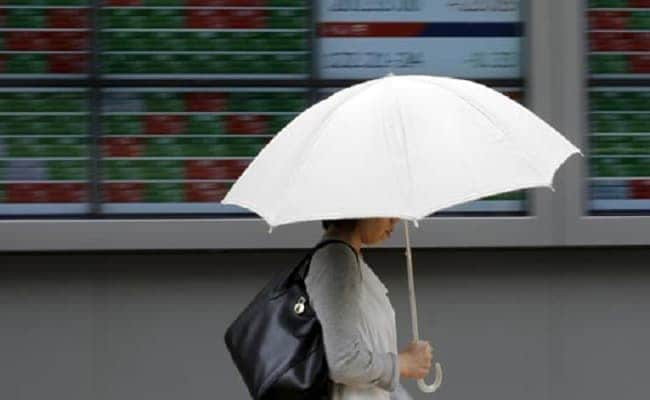
Tokyo: The rumblings of a global trade war sent shivers through stock and currency markets on Friday after U.S. President Donald Trump announced long-promised tariffs on Chinese goods and China retaliated with a pledge to fight to the end any such war.
Trump signed a presidential memorandum on Thursday that could impose tariffs on up to $60 billion of imports from China, although the measures have a 30-day consultation period.
Investors fear that the U.S. measures could escalate into a trade war, with potentially dire consequences for the global economy.
Beijing urged the United States on Friday to "pull back from the brink".
"China doesn't hope to be in a trade war, but is not afraid of engaging in one," the Chinese commerce ministry said in a statement. On Friday, China unveiled plans to impose tariffs on up to $3 billion of U.S. imports in retaliation against U.S. tariffs on Chinese steel and aluminium products.
MSCI's broadest index of Asia-Pacific shares outside Japan fell 2.1 percent as stocks across the region dropped.
Shanghai shares were down 3.2 percent.
"The economic impact on both China and the U.S. will be determined by what form the tariffs end up taking. The effects are likely to be felt more strongly in the U.S. and will increase both consumer and producer prices," wrote Hannah Anderson, global market strategist at J.P. Morgan Asset Management.
"The equity market will bear the brunt of the market reaction. Most impacted will be the U.S., Korea, and Taiwan as companies domiciled in these markets make up a significant portion of the global production chain of Chinese exports."
Australian stocks lost 2.0 percent and Japan's Nikkei dropped 3.5 percent. Hong Kong's Hang Seng was down nearly 3.0 percent, Taiwan shares slid 1.7 percent and South Korea's KOSPI retreated 2.2 percent.
"A possible trade war between the United States and China is especially serious for the South Korean economy as it could directly or indirectly affect the country's trade with them as well," said Seo Sang-young, an analyst at Kiwoom Securities.
Setting the downbeat tone in Asia, the Dow on Thursday shed 2.9 percent, the S&P 500 dropped 2.5 percent and the Nasdaq fell 2.4 percent.
As equities took a beating, the yen, often sought in times of market turmoil, rallied against the dollar.
The greenback fell roughly 0.5 percent to as low as 104.635 yen, its weakest since November 2016. The dollar was down more than 1 percent on the week.
"In the longer run, protectionist policies touted by the United States could be watered down, in turn limiting the negative effect on trade and the global economy," said Masafumi Yamamoto, chief forex strategist at Mizuho Securities in Tokyo, referring to the U.S. decision to exempt some countries from steel and aluminium tariffs.
"But until the United States makes such concessions, global stocks will be under pressure and the yen will appreciate, especially if China decides to confront the U.S. measures."
The euro was 0.3 percent higher at $1.2336 .
The dollar index against a basket of six major currencies slipped 0.3 percent to 89.605 . It has lost roughly 0.7 percent this week, weighed down by a steady decline in U.S. Treasury yields.
Yield on the benchmark 10-year Treasury fell 7.5 basis points overnight as bond prices rose on jitters gripping the broader financial markets.
The yield fell further on Friday to 2.792 percent, its lowest in six weeks.
The 10-year Japanese government bond (JGB) yield dipped to a four-month trough of 0.025 percent.
In commodities, oil prices recouped overnight losses after Saudi Arabia said that OPEC and Russian-led production curbs introduced in 2017 will need to be extended into 2019.
U.S. crude futures were up 1 percent at $64.92 per barrel after losing 1.3 percent on Thursday and Brent gained 0.85 percent to $69.50 per barrel.
Other commodities did not fare as well amid the trade war fears, with copper on the London Metal Exchange extending a big overnight drop and falling to a three-month low of $6,640.00 per tonne.
Iron ore futures on China's Dalian Commodity Exchange fell 0.5 percent.
(Except for the headline, this story has not been edited by NDTV staff and is published from a syndicated feed.)

-
Getting To Work Costs Women More | The Reason Why

It is not just about women paying more than men. It is about women paying much more in cities than in villages.
-
AI Bias In Investing Cannot Be Eliminated, But It Can Be Governed
Framing is a particularly important example as identical financial information presented in terms of gains rather than losses can lead an LLM to reach a different assessment.
-
Joining The Dots | Dark Skies, Steady Diya: Why Hope Holds This Diwali
With war, a weak rupee and foreign outflows weighing on sentiment, policymakers at the NDTV World Summit and market veterans at NDTV Profit Ignite: Diwali Edition offered the same advice: stay invested and filter out the noise.
-
The Curious Case of Equitas Small Finance Bank And A CEO Who Quit For Stock
PN Vasudevan believes persistent investor concerns over a perceived conflict of interest had become a governance overhang on Equitas Small Finance Bank's stock, even as the lender improved profitability and asset quality.
-
Talking Points This Week: AI Cash Burn, A Tiger Comeback And An India That Still Finds Its Own Path
India is not immune to higher oil or tighter global liquidity, yet its earnings base is broader, its domestic policy levers are still available.
-
Foreign Investors Own Half Of HDFC Bank and ICICI Bank. An LTCG Cut Could Matter Most Here
Foreign portfolio investors have US$115 billion parked in HDFC Bank, ICICI Bank. If the government cuts long-term capital gains tax, Jefferies says returning foreign money could land here first.
-
'Never Seen This Level Of Negativity': Sandeep Tandon Says The Next Rally May Be Closer Than You Think
Veteran investor Sandeep Tandon says foreign selling is easing, large-caps are due a comeback and mid-caps are crowded, while he turns positive on gold, power and pharma this Diwali.
-
Indians Stay With Family, Not In Hotels | The Reason Why
India still lacks enough clean, reliable and affordable hotels for budget-conscious travellers.
-
The Economic Imperative: Analysing The Material Driving Force Behind India-Canada Strategic Reset
This economic complementarity is further reinforced by deep institutional investment ties and talent mobility, which form the bedrock of the bilateral framework.
-
Medicine Pricing: Where Must Profit Stop?
India must confront excessive margins, hidden incentives and regulatory gaps that threaten the integrity of medicine.










