Global Stocks Slump, Dollar Reigns Supreme On Hot US Inflation Data
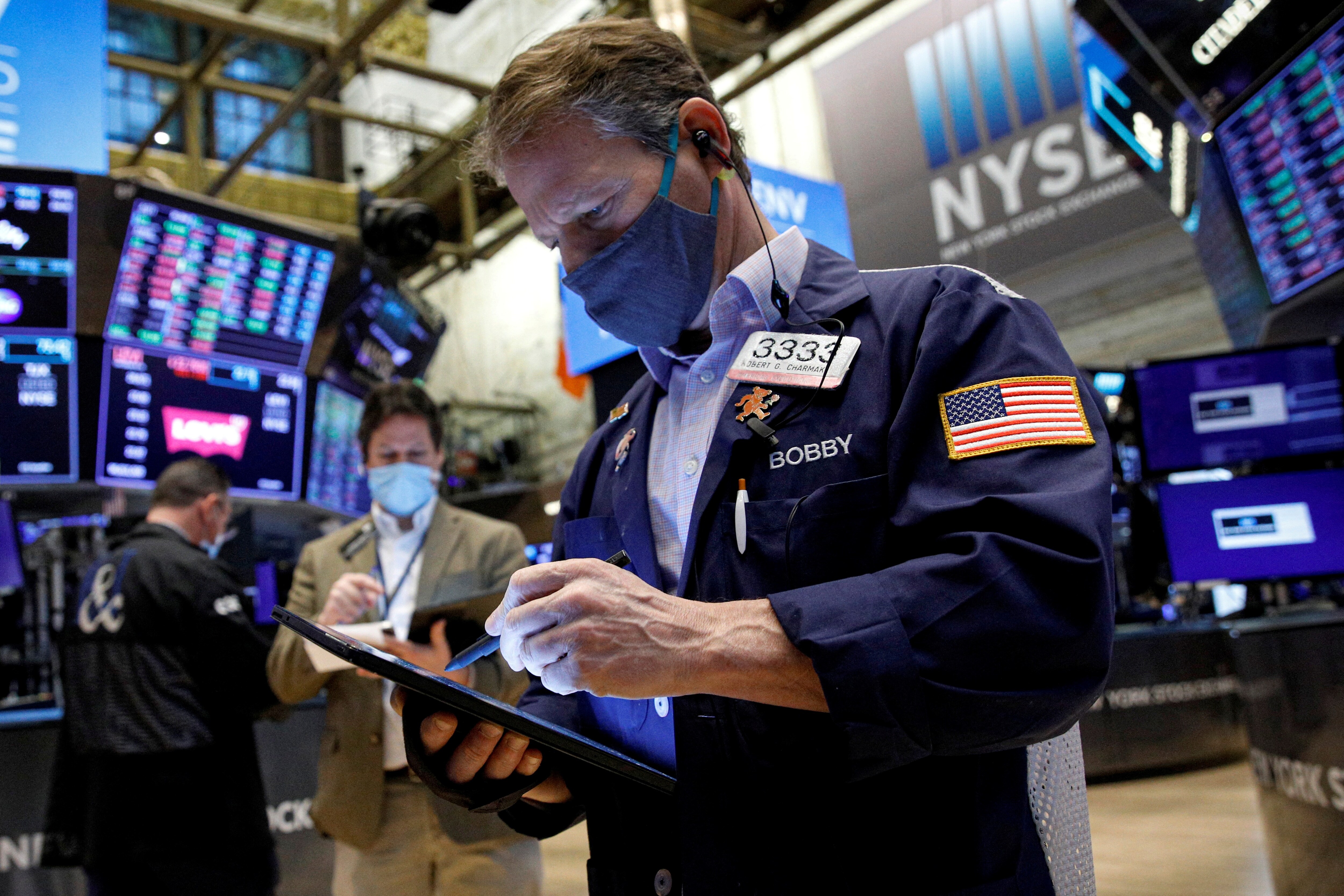
Global equity markets slumped and the dollar strengthened on Friday after a bigger-than-expected U.S. inflation spike in May raised concerns the Federal Reserve may tighten policy for too long and cause a sharp slowdown.
The U.S. consumer price index increased 8.6% last month, the largest year-on-year increase since December 1981, the Labor Department said. Economists polled by Reuters had expected CPI to rise 8.3% annually.
Many economists and market participants expected the data to show inflation had peaked, but gasoline prices hit a record high, the cost of food soared and rental prices surged.
"It was pretty hot. This report suggests that underlying inflation pressures remain quite strong," said Aichi Amemiya, senior U.S. economist at Nomura.
The dollar rose to a near four-week high against a basket of currencies, while U.S. Treasury prices tumbled and short- and intermediate-dated yields hit their highest levels in more than a decade. Two-year yields, which are highly sensitive to rate hikes, spiked to 3.065%, the highest since June 2008.
Stocks on Wall Street and in Europe fell more than 2% as investors feared central bank efforts to control inflation would be so harsh it would slow growth and squeeze corporate earnings.
The pan-European STOXX 600 index fell 2.69% and MSCI's gauge of global equity markets shed 2.79%.
On Wall Street, the Dow Jones Industrial Average fell 2.73%, the S&P 500 lost 2.91% and the Nasdaq Composite dropped 3.52%. The three indices posted their biggest weekly declines since January, tumbling roughly 5% each.
The S&P 500 is now down more than 18% from its Jan. 3 record closing peak, a drop that again puts it near to confirming a bear market as defined by a 20% drop on a closing-price basis.
The stronger-than-expected CPI data has changed the calculus for what the Fed does in September after "most assuredly" raising rates 50 basis points next week and in July, said Art Hogan, chief market strategist at National Securities.
Analysts at Barclays and Jefferies now expect the Fed to deliver its first 75 basis point increase in 28 years next week.
Fed funds futures traders expect the Fed's benchmark rate to increase to 3.69% next May, from 0.83% now.
The Fed still has a chance of engineering a softer landing as there's mounting evidence a slowdown is happening, said Rhys Williams, chief strategist at Spouting Rock Asset Management.
"At least in the goods economy, there are signs that demand is really slowing," Williams said. "Houses are on the market much longer, auto sales are not so hot and shipping rates have collapsed coming from Asia to here."
Japan Hints At Yen Intervention
Concerns also mounted about demand and growth in China, the world's second-largest economy, after Shanghai and Beijing imposed new COVID-19 lockdown restrictions.
The yen rose off 20-year lows after Japanese policymakers made rare comments about its weakness. Japan's government and central bank said they were concerned by recent sharp falls in the yen in a rare joint statement, the strongest warning to date that Tokyo could intervene to support the currency.
The yen has been plumbing 20-year lows against the dollar and seven-year troughs against the euro on expectations the BOJ will continue to lag other major central banks in exiting its stimulus policy.
The Japanese yen later weakened 0.05% at 134.41 per dollar.
The dollar index rose 0.852%, with the euro down 0.9% to $1.0519.
Overnight in Asia, MSCI's broadest index of Asia-Pacific shares outside Japan fell 0.9%.
Continued strong buying by foreign investors and cautious hopes of regulatory easing on tech firms lifted China stocks, despite lockdown alerts.
China's blue-chip CSI300 index was up 1.5%, while Hong Kong shares trimmed earlier losses to end off 0.2%.
Oil prices fell on concerns rising prices will force consumers to cut demand, and as China imposed new COVID-19 lockdown measures.
U.S. crude futures fell 84 cents to settle at $120.67 a barrel, and Brent settled down $1.06 at $122.01.
Gold prices rebounded strongly in volatile trade as focus turned to economic risks of elevated inflation.
U.S. gold futures settled up 1.2% to $1,875.50 an ounce.
(Except for the headline, this story has not been edited by NDTV staff and is published from a syndicated feed.)

-
Gold Is Rs 22,000 Cheaper Than A Month Ago. Should You Buy Amid The Wedding Season?

Gold's potential slide to $3,500 could save around Rs 4,700 per 10 grams, but a soft inflation print could just as easily push prices back up. One way to split the risk is to buy in parts, some now and the rest after the Fed's Dec. 9 decision.
-
AI Agents Are Gaining Power. Who Governs Them?
Artificial intelligence agents promise to transform productivity by moving machines from assisting decisions to executing them. But as organisations delegate greater authority to these AI-agents, they must first establish who controls that authority and who remains accountable when things go wrong.
-
Why Swapping Your Old Gold Can Trigger A Rs 5 Lakh Tax Bill, And How You Can Avoid It Legally
Swapping old gold for new is taxed as a sale and a fresh purchase. Getting your own gold remade can cut most of that bill, though it has its own costs.
-
The AI Trade is Done. The Real Opportunity for Investors Starts in 2027 | Unhedged Position
As pureplay AI stocks plunge and circular, capex-led financing unwinds, 2027 is set to be a year of reckoning for AI companies. Yet the bust clears the way for a better opportunity for investors in 2027 -- shifting the spotlight from AI builders to the companies using AI.
-
Leadership As Mission: Why The Age Of AI Demands More Human Leadership
Debjani Ghosh examines how AI is changing leadership, arguing that its success must be measured by its impact on people and the accountability of those guiding its use.
-
We May Need Another Tukaram Mundhe To Fight Air Pollution | The Reason Why
Developers may install basic measures such as sprinklers and green nets, resume work, and continue violating rules when this equipment stops working.
-
Extracting Value From Battery Scrap Could Be Challenging For India | The Reason Why
A discarded lithium-ion battery still contains valuable materials such as lithium, nickel and cobalt. These can be recovered and reused. When such batteries are crushed and shredded, they produce a dark powder called black mass.
-
One El Nino, India Can Handle. Two Could Break The Granary
India's grain stocks can absorb one bad year, but a second El Nino could drain the buffer in two to three years, economists say.
-
India's Troika Of Good Luck | Joining The Dots
As Jensen Huang's exit drags Nvidia down, a cooling AI trade and resilient earnings have revived investor interest in India. A likely RBI rate hike looms.
-
Talking Points This Week: Leadership Shock At Nvidia, Earnings Strength, And The Fog Over Hormuz
The Anthropic IPO pricing and first trading day, Nvidia's upcoming earnings, and any fresh signals from Iran will set the tone for the following week.









