Global Stocks Log Biggest Gain In A Month As Oil Price Rises
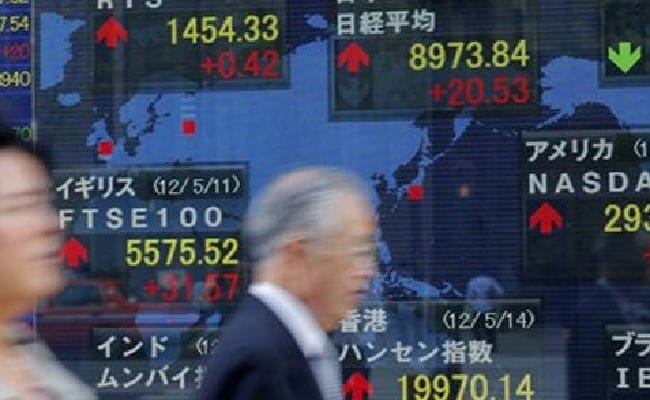
London: World shares had their biggest jump in over a month on Monday as a pact between Saudi Arabia and Russia sent oil prices surging and lacklustre US jobs figures pushed back Federal Reserve interest rate rise expectations.
European stocks touched an eight-month high as oil and mining firms cheered what at one point was a 5 per cent leap in crude prices.
Saudi Arabia and Russia, two of world's top oil producers, announced at a meeting of global leaders in China that they would start working together to stabilise the market, including limiting output.
"Freezing production is one of the preferred possibilities," Saudi Energy Minister Khalid al-Falih said speaking alongside Russian counterpart Alexander Novak. "But it does not have to happen specifically today."
Oil eventually halved its initial gains as traders noted the lack of immediate measures, but the buoyant mood elsewhere remained intact.
Bonds were in favour after US payrolls numbers on Friday had tamed Fed bulls, while emerging market stocks were gunning for their best day since July as they climbed 1.3 per cent.
"We don't expect the Fed to do anything until next year so that lays the ground for further advances," said TD Securities strategist Paul Fage.
Though the Fed reaction and oil price surge were the markets' main drivers, they were not the only factors in play.
The yen turned around its recent losing streak as the head of the Bank of Japan disappointed investors who had expected clearer signals that Tokyo's monetary policy would be eased further this month.
Though Bank of Japan Governor Haruhiko Kuroda signalled its already massive stimulus programme would continue, there was nothing explicit enough to suggest an expansion is imminent. Later Japan PM Shinzo Abe said he trusted Kuroda to "take the right steps".
The dollar dropped 0.6 per cent to 103.35 yen having gained more than 4 per cent against the Japanese currency in the last six days. The euro inched up to $1.1115.
Britain's sterling also did damage to the greenback. It hit a one-month high of 1.3360 as data showed the UK services industry bounced back strongly from a seven-year low hit after the vote to leave the European Union.
The Markit/CIPS Purchasing Managers' Index (PMI) jumped to 52.9 in August from July's 47.4. It was the biggest one-month gain in the survey's 20-year history and one which beat all forecasts in a Reuters poll.
"It remains too early to say whether August's upturn is a dead cat bounce or the start of a sustained post-shock recovery," IHS Markit economist Chris Williamson said.
"But there's plenty of anecdotal evidence to indicate that the initial shock of the June vote has begun to dissipate."
Hot oil
US markets were closed for a Labour Day public holiday meaning there was no trading on Wall Street.
Oil's rise was its the second bumper session in a row as the Saudi/Russia pact fanned speculation that major producers could strike a firmer deal in Algeria later this month.
Brent crude futures for November delivery were last up $1 per barrel at $47.70 a barrel having been as high as $49.40 and US crude for October delivery was up at $45.25 having been as high as $46.53 a barrel.
"Verbal intervention was again needed to trigger a recovery towards $50," senior ABN Amro economist Hans van Cleef said, referring to the Saudi and Russian comments.
In Asia overnight, MSCI's broadest index of Asia-Pacific shares outside Japan ended up 1.6 per cent, while Japan's Nikkei rose 0.7 per cent to its highest close since May 31.
Friday's US jobs report showed non-farm payrolls rose by 151,000 jobs in August after an upwardly revised 275,000 increase in July. Economists polled by Reuters had expected a rise of 180,000.
US Fed Funds futures prices indicated investors were now pricing in only around a 20 per cent chance of a September hike down from over 30 per cent before the jobs data. It remains at more than 60 per cent by the end of year.

-
Gold Is Rs 22,000 Cheaper Than A Month Ago. Should You Buy Amid The Wedding Season?

Gold's potential slide to $3,500 could save around Rs 4,700 per 10 grams, but a soft inflation print could just as easily push prices back up. One way to split the risk is to buy in parts, some now and the rest after the Fed's Dec. 9 decision.
-
AI Agents Are Gaining Power. Who Governs Them?
Artificial intelligence agents promise to transform productivity by moving machines from assisting decisions to executing them. But as organisations delegate greater authority to these AI-agents, they must first establish who controls that authority and who remains accountable when things go wrong.
-
Why Swapping Your Old Gold Can Trigger A Rs 5 Lakh Tax Bill, And How You Can Avoid It Legally
Swapping old gold for new is taxed as a sale and a fresh purchase. Getting your own gold remade can cut most of that bill, though it has its own costs.
-
The AI Trade is Done. The Real Opportunity for Investors Starts in 2027 | Unhedged Position
As pureplay AI stocks plunge and circular, capex-led financing unwinds, 2027 is set to be a year of reckoning for AI companies. Yet the bust clears the way for a better opportunity for investors in 2027 -- shifting the spotlight from AI builders to the companies using AI.
-
Leadership As Mission: Why The Age Of AI Demands More Human Leadership
Debjani Ghosh examines how AI is changing leadership, arguing that its success must be measured by its impact on people and the accountability of those guiding its use.
-
We May Need Another Tukaram Mundhe To Fight Air Pollution | The Reason Why
Developers may install basic measures such as sprinklers and green nets, resume work, and continue violating rules when this equipment stops working.
-
Extracting Value From Battery Scrap Could Be Challenging For India | The Reason Why
A discarded lithium-ion battery still contains valuable materials such as lithium, nickel and cobalt. These can be recovered and reused. When such batteries are crushed and shredded, they produce a dark powder called black mass.
-
One El Nino, India Can Handle. Two Could Break The Granary
India's grain stocks can absorb one bad year, but a second El Nino could drain the buffer in two to three years, economists say.
-
India's Troika Of Good Luck | Joining The Dots
As Jensen Huang's exit drags Nvidia down, a cooling AI trade and resilient earnings have revived investor interest in India. A likely RBI rate hike looms.
-
Talking Points This Week: Leadership Shock At Nvidia, Earnings Strength, And The Fog Over Hormuz
The Anthropic IPO pricing and first trading day, Nvidia's upcoming earnings, and any fresh signals from Iran will set the tone for the following week.









