Rice Supply Faces New Threat as Thailand Urges Crop Curbs
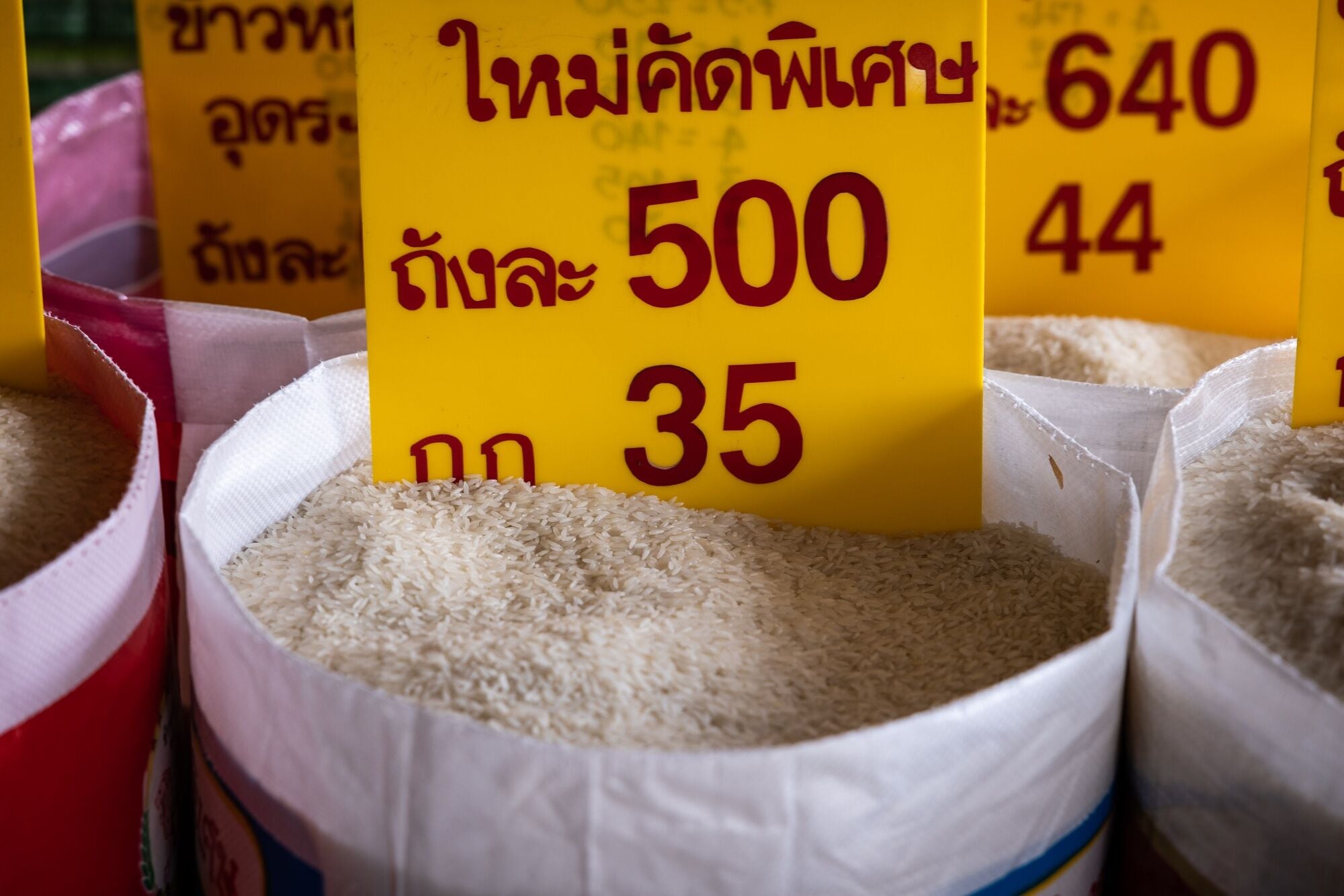
(Bloomberg) -- Thailand has urged farmers to reduce their rice planting to save water following poor rainfall, a move that poses a fresh threat to global supply after India banned some shipments of the grain.
Farmers in the key central region have already planted most of their rice but the government is encouraging a switch to other crops that need less water, according to a statement from Surasri Kidtimonton, the secretary-general of the Office of the National Water Resources.
Thailand, the world's second-biggest rice exporter, is seeing less rain as the nation braces for a potential drought next year with the onset of the El Niño weather pattern. Cumulative rainfall so far in the central region is about 40% below normal levels and the move to curb planting of the grain is to help conserve water for household consumption, according to Surasri.

Rice prices in Asia surged to the highest in more than three years last month after India — the world's biggest exporter — banned some of its shipments. The grain is essential to the diets of billions of people and further price gains would burden consumers with additional inflationary pressure.
“It's impossible to ask farmers to stop planting when prices are this good,” said Chookiat Ophaswongse, honorary president of the Thai Rice Exporters Association. “We're more concerned that intermittent rainfall between August to October will result in a lower rice output in the main harvest season.”
Thailand's central region was expected to account for almost 14% of total rice-growing area in 2023 and forecast to make up about 19% of the main paddy harvest in 2023/24, according to the Ministry of Agriculture. Water levels in major reservoirs in the area are at about 51% of capacity, said Surasri.
Read More: Rice Risks Hitting Decade-High as Indian Curbs Rock Market
The government previously warned that El Niño could lead to unusually low rainfall, and advised farmers to grow one crop this year instead of the usual two. However, any potential shortage from Thailand could be offset by higher shipments from Vietnam, which are likely to exceed its target for the year.
Vietnam exported 21% more rice in the first six months than a year earlier, with shipments increasing to the Philippines, China and Indonesia, according to the Customs Department. The nation says an increase in overseas sales won't affect its food security.
India is by far the world's biggest rice exporter, accounting for 40% of global trade, while Thailand and Vietnam make up 15% and around 14%, respectively, according to the US Department of Agriculture.
--With assistance from Patpicha Tanakasempipat.
(Updates with comment from Thai Rice Exporters Association in fifth paragraph.)
More stories like this are available on bloomberg.com
©2023 Bloomberg L.P.

-
Signature Play: The Classic Cocktail Is Dead. Or Is It?

Classic cocktails are disappearing from India's cocktail menus. But they're still being ordered, taught to bartenders and borrowed from. So, who's really having the last drink?
-
A New Samvat Wishlist: Inclusive Prosperity And Human Development
India has strengthened its economic foundations through infrastructure, digital access and enterprise. Its next growth chapter must deepen productivity, create better livelihoods and widen participation in prosperity.
-
Love, Sex Aur Dhokha: The Audacious Plot To Spy On Jensen Huang
A Taipei dinner, a Singapore chip buyer and a suspected Chinese asset: inside the alleged spy operation that got close to NVIDIA's Jensen Huang.
-
Ten Things I Learnt This Samvat
Patience can be a trap. Cheap stocks can stay cheap. Leverage can wipe you out. What did Samvat 2082 teach us? Niraj Shah writes on 10 lessons from the year gone by.
-
Talking Points This Week: Tech Nerves, FII Buying, And A Faraway Banking Shock
The global markets are not shining this Diwali. The exception in the large markets is, India.
-
Midterm Rally Lasted A Day. The Hard Reality Of A Divided US May Last Two Years | Opinion
Between a contested AI boom, a debt ceiling that arrives in 2027 and a president with every incentive to act alone, the next two years may prove more volatile than the first day's rally suggests.
-
Blue Wave Will Derail the AI Trade but Won't Dismantle the AI Era | Unhedged Position
The Democrats' sweep of the US Congress will see politics collide with economic forces both over the long and short term.
-
It's Time To Take The GST Council's Bet On Trust Global
Payment records can prove India's services exports, and clear, proportionate rules can bring foreign digital sellers into the tax net.
-
Opinion | India at 38: From Innovation Overperformer to Innovation Powerhouse
India now has 453 VC-backed deep science startups, 18 of them late-stage, after 117 percent growth since 2020. Laurus Labs, at USD 9.3 billion, is the most valuable deep science company in any middle-income economy outside China.









