Global Economy To Fall Into A Recession On Central Banks' Action: Report
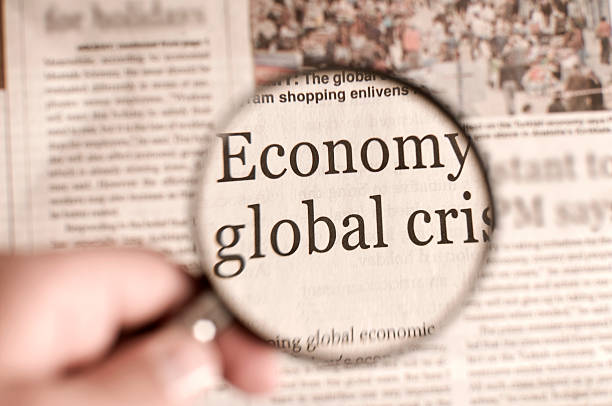
The global economy is approaching a recession as economists polled by Reuters once again cut growth forecasts for key economies while central banks keep raising interest rates to bring down persistently-high inflation.
One bright spot is that most major economies already in a recession or heading into one are starting with relatively low unemployment compared with previous downturns. Indeed the latest poll expects the smallest gap between growth rates and joblessness in at least four decades.
But while that might deaden the intensity of recessions - most respondents say it will be short and shallow in key economies - that may also keep inflation elevated for longer than most currently expect.
A majority of the top global central banks are over two-thirds of the way to the expected terminal interest rate, but with inflation still much higher than their mandates, the risk is those rate expectations are too low.
After being late to call the inflation problem, global central banks have spent most of this year frontloading rate hikes to catch up. Most economists and central banks are of the view there will be little work left to do next year.
Michael Every, global strategist at Rabobank, said "risk of a global recession" is what everyone's talking about and has become mainstream in forecasts. "I think that's pretty much a no-brainer when you look at the trend in all the key economies."
Looking at the low jobless rate is problematic, Every said, because it is a lagging indicator and "the longer it stays stronger the more central banks will feel that they can continue to hike rates."
Graphic: Reuters Poll - Economic Outlook Of Major Economies
Of the 22 central banks polled this time, only six were expected to hit their inflation targets by the end of next year. That was a downgrade from July surveys, where two-thirds of 18 were expected to hit their respective targets by then.
Analysts at Deutsche Bank wrote: "...history never repeats exactly, but since inflation forecasting has generally been so poor over the last 18 months, it's worth us asking what normally happens when inflation breaches these thresholds. The answer is that it's normally quite sticky."
In the meantime global equity and bond markets are in disarray while the US dollar is at a multi-decade peak in foreign exchange markets based on US rate expectations.
A strong 70 per cent majority of economists, 179 of 257, said chances of a sharp rise in unemployment over the coming year were low to very low, underscoring how widespread the view is among forecasters that it won't be a devastating recession.
Global growth is forecast to slow to 2.3 per cent in 2023 from an expected 2.9 per cent this year, followed by a rebound to 3.0 per cent in 2024, according to Reuters polls of economists covering 47 key economies taken September 26 - October 25.
Those were all downgrades from polls taken in July.
Over 70 per cent of economists, 173 of 242, said the cost of living crisis in the economies they cover would worsen over the next six months. The remaining 64 expected it to improve.
While the inflation cycle is global in nature, made worse by a sudden surge in energy prices after Russia invaded Ukraine on February 24, much will depend on how far the US Federal Reserve was likely to push rates higher.
The Fed is expected to go for a fourth consecutive 75 basis points interest rate hike on November 2, and economists say it shouldn't pause until inflation falls to around half its current level.
China, the world's second largest economy, was expected to grow 3.2 per cent in 2022, far below the official target of around 5.5 per cent and also well below pre-pandemic growth rates.
Excluding the meagre 2.2 per cent expansion after the initial COVID-19 hit in 2020, that would be the worst performance since 1976.
India's economy was also forecast to grow well below its potential over the next two years with medians showing 6.9 per cent growth in the 2022-23 fiscal year and 6.1 per cent next year.
The euro zone economy was expected to grow 3.0 per cent this year but flatline in 2023 before expanding 1.5 per cent in 2024.

-
Signature Play: The Classic Cocktail Is Dead. Or Is It?

Classic cocktails are disappearing from India's cocktail menus. But they're still being ordered, taught to bartenders and borrowed from. So, who's really having the last drink?
-
A New Samvat Wishlist: Inclusive Prosperity And Human Development
India has strengthened its economic foundations through infrastructure, digital access and enterprise. Its next growth chapter must deepen productivity, create better livelihoods and widen participation in prosperity.
-
Love, Sex Aur Dhokha: The Audacious Plot To Spy On Jensen Huang
A Taipei dinner, a Singapore chip buyer and a suspected Chinese asset: inside the alleged spy operation that got close to NVIDIA's Jensen Huang.
-
Ten Things I Learnt This Samvat
Patience can be a trap. Cheap stocks can stay cheap. Leverage can wipe you out. What did Samvat 2082 teach us? Niraj Shah writes on 10 lessons from the year gone by.
-
Talking Points This Week: Tech Nerves, FII Buying, And A Faraway Banking Shock
The global markets are not shining this Diwali. The exception in the large markets is, India.
-
Midterm Rally Lasted A Day. The Hard Reality Of A Divided US May Last Two Years | Opinion
Between a contested AI boom, a debt ceiling that arrives in 2027 and a president with every incentive to act alone, the next two years may prove more volatile than the first day's rally suggests.
-
Blue Wave Will Derail the AI Trade but Won't Dismantle the AI Era | Unhedged Position
The Democrats' sweep of the US Congress will see politics collide with economic forces both over the long and short term.
-
It's Time To Take The GST Council's Bet On Trust Global
Payment records can prove India's services exports, and clear, proportionate rules can bring foreign digital sellers into the tax net.
-
Opinion | India at 38: From Innovation Overperformer to Innovation Powerhouse
India now has 453 VC-backed deep science startups, 18 of them late-stage, after 117 percent growth since 2020. Laurus Labs, at USD 9.3 billion, is the most valuable deep science company in any middle-income economy outside China.









