Mayawati Ji, You Need Allies More Than They Need You
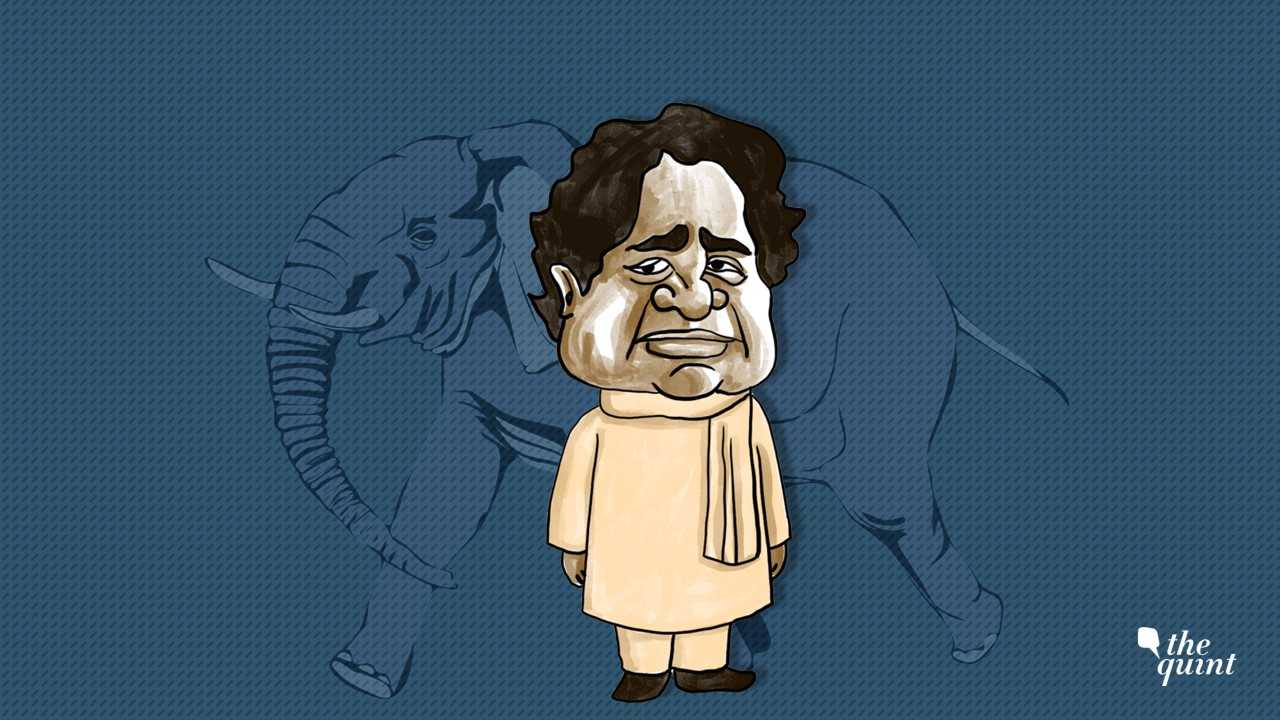
When asked why BSP chief Mayawati seems non-committal on an alliance, a political expert told me: Sab kuch loota ke hosh mein aaye to kya huwa? (What's the point of waking up after losing everything?)
But who is at risk of losing everything? Not Mayawati.
She carries the reputation of a strong leader, one who has the rare distinction of transferring votes to whichever party she allies with. Not many leaders can claim to have such a committed following.
She is considered to be the most prominent Dalit leader and we all know that Dalit votes are significant enough to alter political equations in almost all Lok Sabha constituencies.
It is, therefore, incumbent on Akhilesh Yadav's Samajwadi Party and the Congress to bring her on board. At least, so goes conventional wisdom.
I had no clue why the expert had said that about Mayawati but I brushed it aside as a casual remark. That is, till I mapped the relevant data of the last five elections – three Assembly and two Lok Sabha – that have taken place in politically significant Uttar Pradesh.
Since she has a strong base in Uttar Pradesh, her political stock is heavily dependent on how her party performs in the state. What comes across, loud and clear, is that she now presides over a party that is on a steep downward spiral.
There is no denying that the BSP chief is a Dalit icon. But a section of Dalits has begun to move away from her.
And, despite slogans like Sarvajan Hitay, Sarvajan Sukhay (for the benefit of all), her attempts to expand her base beyond Dalits have been, at best, a work in progress. She runs the risk of getting marginalised if she ignores what is obvious and does not make the right choice.
BSP's Performance in Last Two Elections Worse Than Congress' in UP
The BSP's performance in the 2014 Lok Sabha and the 2017 Assembly elections has been pretty dismal. In the Parliamentary elections, her party had its worst performance in the last 25 years.
What is worse, the BSP could establish a lead in a mere nine of the 403 Assembly segments – worse than the seemingly weak Congress, which had a lead in 15 segments.
Three years later, in the 2017 Assembly elections, the BSP's winning strike rate, at an abysmal five percent, was worse than the Congress' six and SP's 15. What is more, the vote share of BSP and the Congress, if adjusted to number of seats contested, was identical! We must, however, add here that the Congress had an alliance with SP in the elections.
While the dismal performance of the BSP in 2014 was considered a one-off event, a repeat down the line was a vindication of the growing view that her party faces an existential crisis. So, what has changed?
A Large Section of Dalits has Moved Away from Mayawati
CSDS data offers some clues. Ever since its inception, the BSP has been receiving a fair amount of Dalit votes in the country. It secured nearly 18 percent of all Dalit votes in the 1999 Lok Sabha elections and it peaked at 22 percent in 2004. But it fell sharply to just 14 percent in the 2014 Lok Sabha elections. That was the first clear indication that not all Dalits were voting for Mayawati.
More specifically, in Uttar Pradesh, while the BSP secured 48 percent of all non-Jatav votes in the 2012 Assembly elections, it could secure only 30 percent of such votes two years later, in the General Elections. The party's outreach programme has also failed to reap dividends, as it has been receiving less than 20 percent of votes from Muslims and people belonging to privileged castes.
This suggests that while there is a constant erosion in Mayawati's appeal amongst her core support group, consisting of Dalits, expected headway among others is yet to bear any fruit.
That is the reason why BSP's vote share in elections in Uttar Pradesh has been constantly falling.

It is, therefore, imperative that Mayawati redefines her politics. Coining new slogans does not seem to be working. Changing few office-bearers here and there has not helped either. What she needs the most is a set of allies who can take her message to the groups that have hitherto stayed away from her. It is alright to have tough posturing for a hard bargain when dealing with potential allies. But Mayawati should know that she cannot afford to miss the alliance bus now.
The General Elections next year are going to be a crucial test of her political revival. There is a real possibility of making a mark if she rides the alliance bus. Or else, she runs the risk of getting marginalised.

-
The Economic Imperative: Analysing The Material Driving Force Behind India-Canada Strategic Reset

This economic complementarity is further reinforced by deep institutional investment ties and talent mobility, which form the bedrock of the bilateral framework.
-
Medicine Pricing: Where Must Profit Stop?
India must confront excessive margins, hidden incentives and regulatory gaps that threaten the integrity of medicine.
-
Why Amazon And Flipkart Are Struggling To Beat Meesho In India's Smaller Cities
With 274 million users and lowest-cost logistics, Meesho is defending its value commerce crown against giants like Amazon and Flipkart.
-
High US Salaries, No Green Card Certainty: The Financial Calculation Facing Indian H-1B Families
The suspension of PERM processing at eight technology employers does not cancel existing H-1B visas. What it does is force a question many Indian families have been avoiding: is the US salary worth tying your career and family plans to one employer?
-
Swiggy vs Eternal: Food Delivery's Two Rivals Are No Longer In The Same Race
Eternal is building a private AI assistant, dark.ai. Swiggy is still working out how to make Instamart pay, with an operating loss of Rs 895 crore in the July-September quarter while Blinkit stayed profitable.
-
Where You Live Shapes How You Get To Work | The Reason Why
Two-wheelers are the most popular way to get to work in India, accounting for nearly 43% of workplace commutes.
-
Unhedged Position: Can India See An Indonesia-Style Time Correction?
The Nifty is trading below levels it first clocked in 2024. Is there, then, as I have suggested in the headline, potential that the current time correction drags on painfully for the next three-five, even ten years?
-
Navigating Friction And Energy Realities: An Analysis Of Marco Rubio's October Visit To India
Occurring at a critical juncture marked by stalled trade negotiations and escalating geopolitical pressures over global energy supplies, the visit offers a profound window into modern US-India relations.
-
India Exports Capital. Why Not Export Trusteeship?
The big question, then, is whether India can build an institution that global borrowers, investors, banks, and lawyers can trust, even without an Indian connection.
-
France's Economy & Politics Are In Crisis | The Reason Why
Let's look at how the French economy and politics evolved under Nicolas Sarkozy, Franois Hollande and Emmanuel Macron.










