Removal Of Corporate Social Spending Can Help Revive Growth: Bibek Debroy
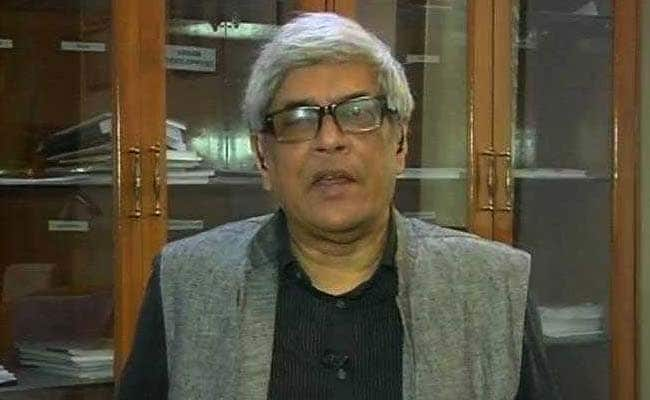
Removal of Corporate Social Responsibility spending and a three-rate Goods and Services Tax (GST) structure can help revive the economy and achieve 8 per cent growth, Bibek Debroy, the Chairman of the Economic Advisory Council to the Prime Minister, has said. In an article published in the Economic Times on Monday, Mr Debroy wrote: "If all exemptions are eliminated, compliance costs decline, and tax rates can drop significantly for both corporate tax and personal income tax. Without taking a revenue hit, surcharges and corporate social responsibility (CSR) can both be removed."
The comments come at a time economic growth in the country has shrunken to a nearly five-year low, the auto sector is struggling against low consumer demand and lakhs of estimated job cuts, and corporate earnings have been most disappointing in at least three years.
Many analysts expect data due later this month to show that economic growth in the quarter ended June 30 faltered even further.
In the article, titled "four options to revive the Indian economy", Mr Debroy said tough indirect tax rates are decided by the GST Council, the government does have a voice. "We need three rates - something like 6 per cent, 12 per cent and 18 per cent," he said.
On direct taxes, Mr Debroy said: "Exemptions and special treatment are antithetical to streamlining and simplification, and do not facilitate procedural easing."
"Essentially, exemption reduction is a red herring. For both personal income tax and corporate tax, they must be eliminated," Mr Debroy wrote.
The government is aiming to prepare a new Direct Tax Code to replace the existing Income Tax Act, 1961. The task force entrusted with the preparation of the tax code is due to submit its report to the Finance Ministry on Wednesday, August 16.
Acknowledging the need to limit public expenditure given the government's fiscal consolidation commitments, Mr Debroy said existing levels of public expenditure can be made more efficient by pruning the number of centrally sponsored schemes to not more than 10-15, as against 28 at present.
In a move that surprised many economists, the government in its Union Budget revised the fiscal deficit target to 3.3 per cent last month, from a downwardly revised 3.4 per cent in February. A tighter fiscal consolidation path means the government will have to earn more and spend less.
The 15th Finance Commission - whose recommendations will determine revenue sharing for the next five years - is slated to submit its report towards the end of the year. The recommendations will come into effect from April 1, 2020.
The existing package of central sector and centrally sponsored schemes ends on March 31, 2020.
Many economists have expressed concern over the government's ambitious target at a time the economy is facing a slowdown.
In its analysis of the full Budget 2019-20, credit ratings major Moody's has said that weak growth prospects for India will complicate the government's fiscal consolidation efforts, weighing on the sovereign credit quality.
Mr Debroy also advocated for privatisation of central public sector enterprises.
The Reserve Bank of India's six-member Monetary Policy Committee (MPC) earlier this month delivered its fourth cut in the repo rate to bring the key interest rate at a nine-year low of 5.4 per cent, underscoring its worries about the slowing growth.
Asia's third largest economy grew at a significantly slower-than-expected 5.8 per cent annual pace in the January-March quarter.

-
Talking Points This Week: Leadership Shock At Nvidia, Earnings Strength, And The Fog Over Hormuz

The Anthropic IPO pricing and first trading day, Nvidia's upcoming earnings, and any fresh signals from Iran will set the tone for the following week.
-
Signature Play: The Classic Cocktail Is Dead. Or Is It?
Classic cocktails are disappearing from India's cocktail menus. But they're still being ordered, taught to bartenders and borrowed from. So, who's really having the last drink?
-
A New Samvat Wishlist: Inclusive Prosperity And Human Development
India has strengthened its economic foundations through infrastructure, digital access and enterprise. Its next growth chapter must deepen productivity, create better livelihoods and widen participation in prosperity.
-
Love, Sex Aur Dhokha: The Audacious Plot To Spy On Jensen Huang
A Taipei dinner, a Singapore chip buyer and a suspected Chinese asset: inside the alleged spy operation that got close to NVIDIA's Jensen Huang.
-
Ten Things I Learnt This Samvat
Patience can be a trap. Cheap stocks can stay cheap. Leverage can wipe you out. What did Samvat 2082 teach us? Niraj Shah writes on 10 lessons from the year gone by.
-
Talking Points This Week: Tech Nerves, FII Buying, And A Faraway Banking Shock
The global markets are not shining this Diwali. The exception in the large markets is, India.
-
Midterm Rally Lasted A Day. The Hard Reality Of A Divided US May Last Two Years | Opinion
Between a contested AI boom, a debt ceiling that arrives in 2027 and a president with every incentive to act alone, the next two years may prove more volatile than the first day's rally suggests.
-
Blue Wave Will Derail the AI Trade but Won't Dismantle the AI Era | Unhedged Position
The Democrats' sweep of the US Congress will see politics collide with economic forces both over the long and short term.
-
It's Time To Take The GST Council's Bet On Trust Global
Payment records can prove India's services exports, and clear, proportionate rules can bring foreign digital sellers into the tax net.
-
Opinion | India at 38: From Innovation Overperformer to Innovation Powerhouse
India now has 453 VC-backed deep science startups, 18 of them late-stage, after 117 percent growth since 2020. Laurus Labs, at USD 9.3 billion, is the most valuable deep science company in any middle-income economy outside China.









