GDP At 7.3%, Not Reflecting The Impact Of PM Modi's Risky Notes Ban
India recorded 7.3 per cent economic growth in the September quarter, numbers that do not reflect the impact of Prime Minister Narendra Modi's sudden demonetization drive.
July-September will be the last quarter before the impact is felt from PM Modi's bold and risky move to yank 500- and 1,000-rupee notes from circulation on November 9.
"The move will weigh on GDP growth for a few quarters, dampening government revenues," warned credit ratings firm Moody's Investors Service. "The decline in economic activity will lower corporate sales volumes and cash flows."
Also Read: Expert Views On September Quarter GDP Growth Numbers
In the June quarter, economic growth was at 7.1 per cent, not as fast as the 7.9 per cent posted in the March quarter, but there were signs of recovered momentum, and experts say the rate could have gone higher had PM Modi not launched his attack on black money.
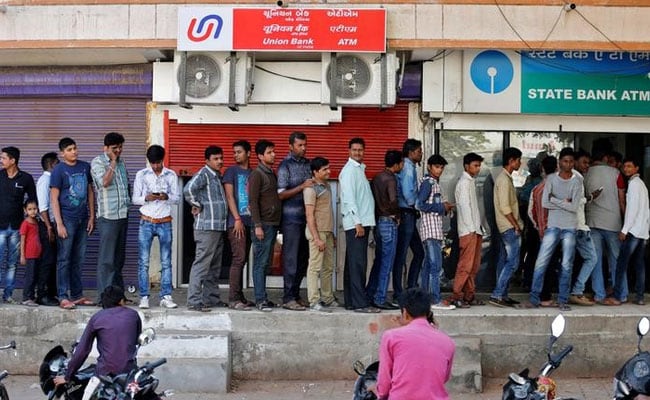
While the PM has been praised for his intentions, people are desperately in need of cash after 86 per cent of the country's banknotes were taken out of circulation overnight.
The most optimistic forecasts suggest that India will finish this fiscal year in March with a respectable, but slightly lower growth rate of 7.3 per cent.
But the most pessimistic forecast, from Mumbai-based brokerage Ambit Capital, for a precipitous drop to 3.5 per cent growth shows just how worried people are.
The better off may have more money to change, but for the mass of Indians living on the margins, the disruption and loss of earnings has caused real hardship.
Also Read: GDP Growth In Q2 Good; Uncertainty Remains For Second Half, Says Arvind Subramanian
PM Modi expects the cash situation to become normal by end-December, but critics say he is being over-optimistic.
Meantime, consumers are spending less, which is hurting small producers who, in turn, are being forced to scale back their activities.
As a consequence, supply chains at small, medium and even larger companies are breaking down. Trucks are stranded with no money for fuel, workers won't load goods for free, and distributors can't pay up. Wholesale markets in many cities are shut.
The cash crunch has jeopardised production of key commodities and hurt rural communities - just recovering after two years of drought - as farmers lack cash to buy seeds and fertiliser.
CMIE, an economic think tank, reckons the big banknote swap would cost at least $19 billion by the end of 2016 in foregone wages, lost business, and higher administrative expenses alone.
And despite the high economic growth rates seen over the past year-and-a-half, factories' capacity utilization ratio remains stuck near their lowest level since 2009.
"Given that the growth recovery has still not taken full hold, the impact of this demonetisation ... could delay the private corporate capex recovery," analysts at Morgan Stanley wrote in a note, adding that they don't expect that recovery to happen before 2018.
At least the potential for lower inflation holds out some hope that the Reserve Bank of India will extend its easing cycle with a quick interest rate cut.

-
We May Need Another Tukaram Mundhe To Fight Air Pollution | The Reason Why

Developers may install basic measures such as sprinklers and green nets, resume work, and continue violating rules when this equipment stops working.
-
Extracting Value From Battery Scrap Could Be Challenging For India | The Reason Why
A discarded lithium-ion battery still contains valuable materials such as lithium, nickel and cobalt. These can be recovered and reused. When such batteries are crushed and shredded, they produce a dark powder called black mass.
-
One El Nino, India Can Handle. Two Could Break The Granary
India's grain stocks can absorb one bad year, but a second El Nino could drain the buffer in two to three years, economists say.
-
India's Troika Of Good Luck | Joining The Dots
As Jensen Huang's exit drags Nvidia down, a cooling AI trade and resilient earnings have revived investor interest in India. A likely RBI rate hike looms.
-
Talking Points This Week: Leadership Shock At Nvidia, Earnings Strength, And The Fog Over Hormuz
The Anthropic IPO pricing and first trading day, Nvidia's upcoming earnings, and any fresh signals from Iran will set the tone for the following week.
-
Signature Play: The Classic Cocktail Is Dead. Or Is It?
Classic cocktails are disappearing from India's cocktail menus. But they're still being ordered, taught to bartenders and borrowed from. So, who's really having the last drink?
-
A New Samvat Wishlist: Inclusive Prosperity And Human Development
India has strengthened its economic foundations through infrastructure, digital access and enterprise. Its next growth chapter must deepen productivity, create better livelihoods and widen participation in prosperity.
-
Love, Sex Aur Dhokha: The Audacious Plot To Spy On Jensen Huang
A Taipei dinner, a Singapore chip buyer and a suspected Chinese asset: inside the alleged spy operation that got close to NVIDIA's Jensen Huang.
-
Ten Things I Learnt This Samvat
Patience can be a trap. Cheap stocks can stay cheap. Leverage can wipe you out. What did Samvat 2082 teach us? Niraj Shah writes on 10 lessons from the year gone by.
-
Talking Points This Week: Tech Nerves, FII Buying, And A Faraway Banking Shock
The global markets are not shining this Diwali. The exception in the large markets is, India.









