Garima Arora: How To Win Two Michelin Stars
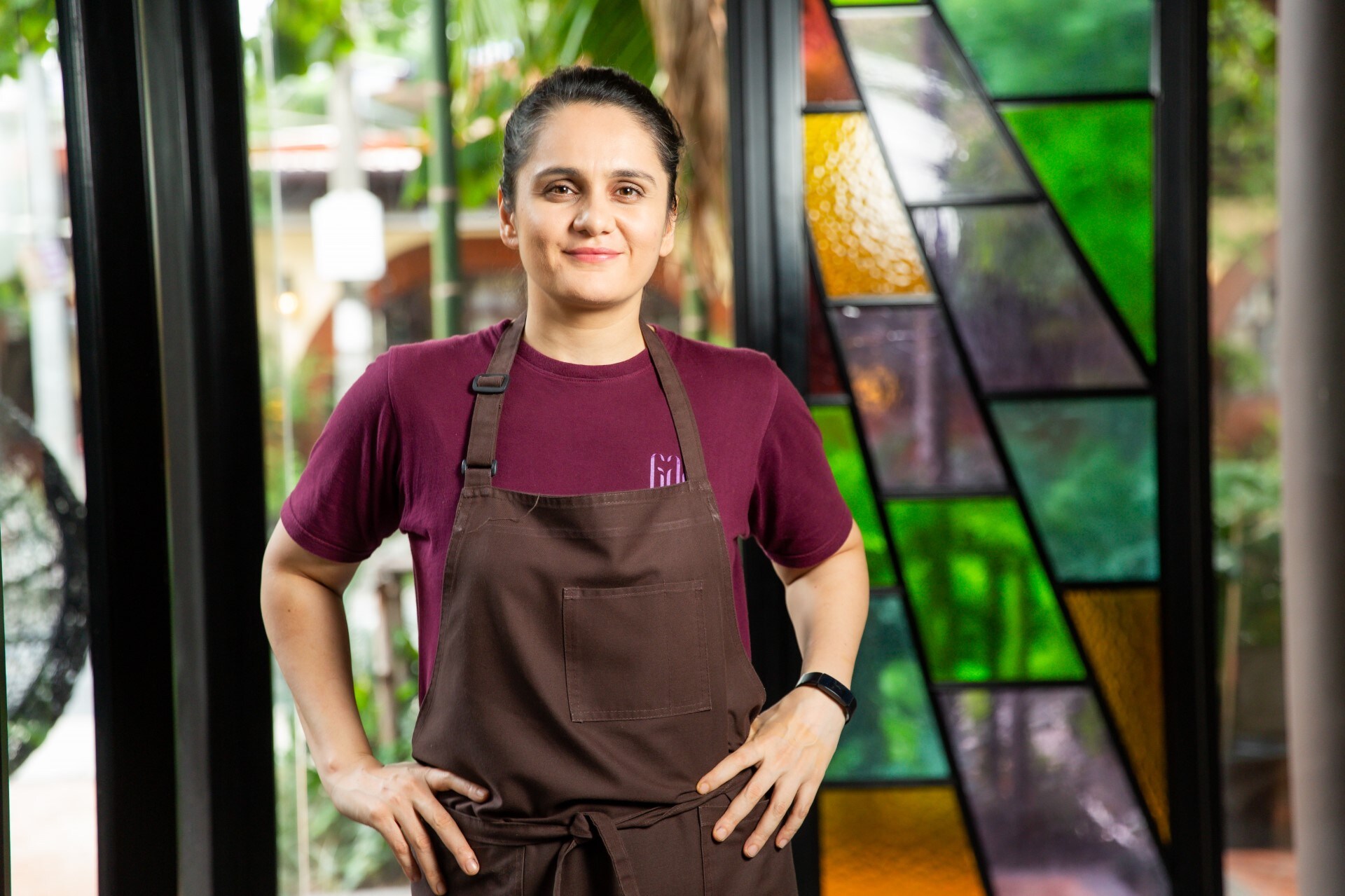
Garima Arora is brave enough to put a durian in the tandoor. She scoops out the meat, spices it with aamchur, chillies and salt, then places it back in its spiky home and sticks it in the tandoor. The durian loses its pungent smell, and only its butteriness remains. “It's our ode to how easy it is to draw umami from vegetarian food,” the award-winning chef says over a phone call.
Arora, the first Indian woman to be awarded a Michelin star in 2018 at 33, just became the first Indian woman to be awarded a second Michelin star. It's the holy grail of fine dining and one that influences eating out decisions across the world. Arora's is likely one of the few Michelin-starred restaurants where the main course is almost always vegetarian.
Gaa, her eponymous restaurant in Bangkok, is only the third Indian restaurant in the world to have two stars, according to The Indian Express. It's here that she applies traditional Indian techniques to locally sourced ingredients. Like putting south east Asia's favourite fruit in the tandoor or serving her version of desi staple, ghee rice, using the nutty suriyan rice grown specially for her restaurant that diners can't get enough of. Her ode to sev puri is the grilled wild maitake mushrooms served with smoked jaggery butter and caviar on crispy buckwheat.
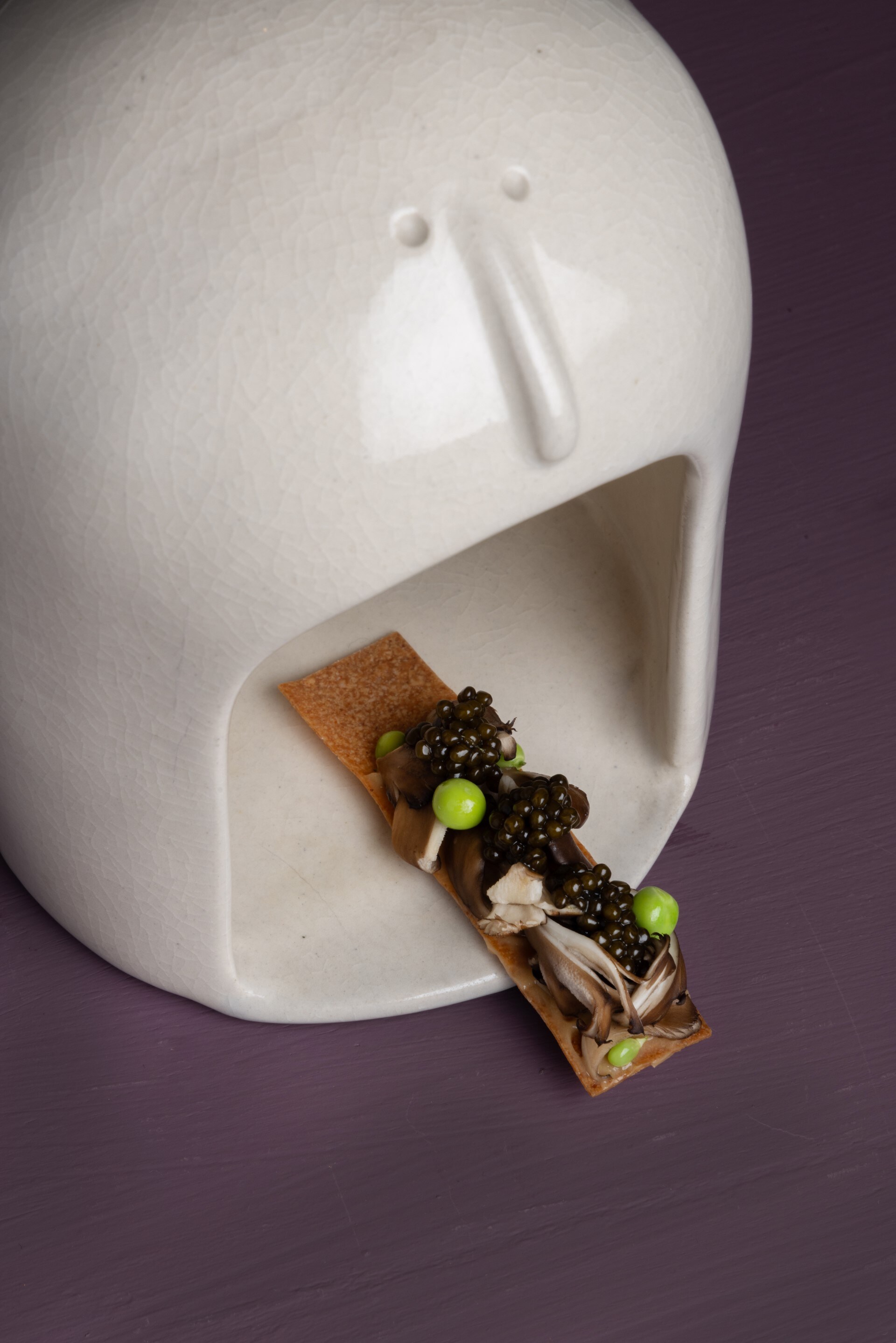
Garima Arora's sev puri is the grilled wild maitake mushrooms served with smoked jaggery butter and caviar on crispy buckwheat. (Photo: Garima Arora)
Arora, now 37, like many successful women, underplays her wins. When reporters flung the predictable ‘howdoesitfeel' the first time she won a star, she replied simply: “It feels good.” She has no game on social media, operates mostly behind the scenes, isn't easily affected by critics—she's the antithesis of the brash chefs who use rudeness and volume to drive their ratings higher on television.
Arora is a team player. When she received her second Michelin star, the restaurant posted a group photo of most of their 40 team members, and not just of their celebrity chef. “You can't just do it for yourself. You have to create a system where people around you thrive too,” Arora says. “It's my duty to make sure that people around me get what they want, too.”
Working with her means having the opportunity to grow. A former dishwasher is her bartender; an assistant restaurant manager is now a trained sommelier; and three of the chefs she mentored are ready to start their own restaurants.

Arora might even be the first woman to win a Michelin star in the same year she had a baby—though ironically it's also the year she understood that even for successful women like her, who eat healthy and lift weights, ‘having it all' is just urban legend.
She says her colleagues, many of whom have been with her since the beginning, know what she would do in any situation. “The star is a testament to my team,” she says. They're also the village that's helping raise her now seven-month-old son, whose favourite foods include idli, salmon and mushrooms.
Arora's son may be growing up with the flavours of Gaa, but her access to different foods was thanks to her experimental father who brought back mostly unheard of culinary ideas from his travels in the 1990s. She was 10 when she ate her first risotto, which her father recreated with south Indian matta rice. It tasted very different from khichdi and biryani, the rice-based dishes she knew. “That's how my palate grew,” she says. The men in her family weren't afraid of the kitchen; her maternal grandfather made a mean mutton curry.
During her stint at Noma in Denmark, considered among the best restaurants in the world, Arora, a journalist-turned-Cordon Bleu-graduate, learned how she could use fermentation beyond its standard Indian uses. “I started fermenting anything and everything possible,” she says. Her experiments with fermentation include mulberries, channa dal, pumpkin and garlic.
These days she's excited about her ice cream flavoured with mahua flowers, an ingredient found both in India and Thailand. She's using lots of mustard, everything from the oil to the leaves. And she's pairing Timur, the Szechuan pepper of the Himalayas, with clams.
View this post on InstagramArora moved from Copenhagen to Bangkok when Gaggan Anand, one of Asia's top rated chefs, asked her to be his head chef at a restaurant he was planning to open in Mumbai, Arora's city. That never happened, and Anand and his investors then suggested she open a restaurant in Bangkok, located metres from Anand's restaurant. In Covid she exited the partnership and moved Gaa to a new location in a 60-year-old Thai house.
Anand and Arora haven't met in years, and Arora mostly interacts with the new generation of chefs in Bangkok who, she says, have each other's back. “This generation believes you are not taking anything away from each other, you can grow together,” she says. “We look out for and respect each other.”
She's in a long-distance marriage with Rahul, a pilot, a relationship driven by mutual respect for each other's work. They met 16 years ago at the gym, even before she went to culinary school in Paris, and were married five years ago. “He loves to fly, I love to cook,” she says. "We can't ask the other to quit just to be together.”
Priya Ramani is a Bengaluru-based journalist and is on the editorial board of Article-14.com.
The views expressed here are those of the author and do not necessarily represent the views of BQ Prime or its editorial team.

-
One Battle After Another: India's Corporate Dynasties Battle For Control

2026 could go down as Corporate India's year of succession wars, governance battles and family fault lines.
-
Rs 50-Lakh Gold In Bank Locker, Rs 3 Lakh Of Protection: The Gap Most Families Don't Know About
The RBI ties a bank's liability to the annual locker rent and families who want to insure their jewellery face a separate question about how to prove what was inside.
-
The More Food Turns Into Fuel, The Harder It Is To Read Agricultural Markets | The Reason Why
A policy designed to reduce dependence on imported fuel can create new pressures elsewhere in the food economy.
-
Your iPhone Costs 12 Grams Of Gold, A Car About 100. What Does Your Life Weigh?
Measured in rupees, almost everything looks more expensive than it did a generation ago. Measured in grams of gold, a lot of it has become cheaper.
-
Gold Is Rs 22,000 Cheaper Than A Month Ago. Should You Buy Amid The Wedding Season?
Gold's potential slide to $3,500 could save around Rs 4,700 per 10 grams, but a soft inflation print could just as easily push prices back up. One way to split the risk is to buy in parts, some now and the rest after the Fed's Dec. 9 decision.
-
AI Agents Are Gaining Power. Who Governs Them?
Artificial intelligence agents promise to transform productivity by moving machines from assisting decisions to executing them. But as organisations delegate greater authority to these AI-agents, they must first establish who controls that authority and who remains accountable when things go wrong.
-
Why Swapping Your Old Gold Can Trigger A Rs 5 Lakh Tax Bill, And How You Can Avoid It Legally
Swapping old gold for new is taxed as a sale and a fresh purchase. Getting your own gold remade can cut most of that bill, though it has its own costs.
-
The AI Trade is Done. The Real Opportunity for Investors Starts in 2027 | Unhedged Position
As pureplay AI stocks plunge and circular, capex-led financing unwinds, 2027 is set to be a year of reckoning for AI companies. Yet the bust clears the way for a better opportunity for investors in 2027 -- shifting the spotlight from AI builders to the companies using AI.
-
Leadership As Mission: Why The Age Of AI Demands More Human Leadership
Debjani Ghosh examines how AI is changing leadership, arguing that its success must be measured by its impact on people and the accountability of those guiding its use.
-
We May Need Another Tukaram Mundhe To Fight Air Pollution | The Reason Why
Developers may install basic measures such as sprinklers and green nets, resume work, and continue violating rules when this equipment stops working.









