G7's Oil Price Cap Sanctions To Have Little Impact On Russian Revenue
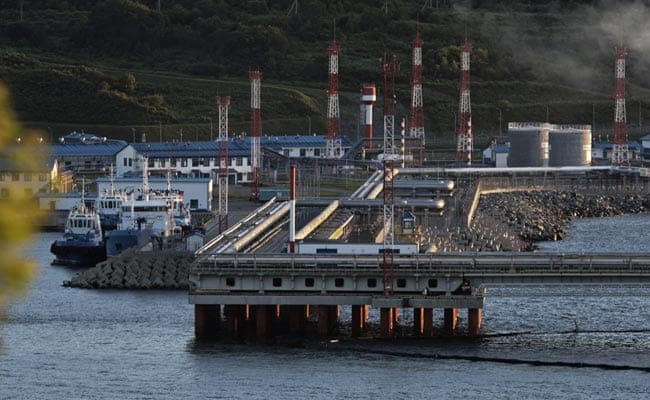
The Group of Seven (G7) nations' proposed price cap of $65-$70 a barrel on Russian oil would have little immediate impact on Moscow's revenues, as it is broadly in line with what Asian buyers are already paying, five industry sources with direct knowledge of the purchases said on Wednesday.
The goal of the price cap is to deprive Russian President Vladimir Putin of revenue to fund the military offensive in Ukraine, without causing major disruption to global oil markets that would drive energy prices higher.
Oil and gas exports are forecast to account for 42% of Russia's revenues this year at 11.7 trillion roubles ($196 billion), according to the country's finance ministry, up from 36% or 9.1 trillion roubles ($152 billion) in 2021.
The G7, including the United States, as well as the whole of the European Union and Australia, are planning to implement the price cap on sea-borne exports of Russian oil on Dec. 5.
India has emerged as the second-largest single buyer after China of Russian oil since the conflict began in February. Indian refiners have taken the place of refiners in countries that have imposed sanctions on Russian crude imports, or have steered clear of Russian crude to avoid negative publicity.
Some Indian refiners are paying the equivalent to a discount of around $25 to $35 a barrel to international benchmark Brent crude for Russian Urals crude, two sources said. Urals is Russia's main export crude.
With Brent trading at around $85 a barrel on Wednesday, that would imply a price of $50-$60 a barrel of Urals, which is below the cap.
That would indicate Western shippers and insurers living in countries that have imposed sanctions on Russia would be able to provide services to cover shipments of Russian crude without fear of being sanctioned.
It also means that Russia would not need to make good on its threat to stop supplying buyers that adhered to the price cap - because the market is below that cap anyway.
The U.S. Treasury guidance published on Tuesday said the cap will be placed on what are known as Free on Board (FOB) prices, which do not include the cost of insurance and shipping. That would be the price that the crude would be sold at if a buyer went and picked it up from a Russian terminal.
Indian refiners typically pay for crude to be delivered to them. That price includes insurance and freight.
Even for delivered Urals crude, India is paying $15-$20 a barrel below Brent, one source said. That means even the delivered cargoes are about the same level as the price cap.
Urals is trading to other buyers at a similar discount of $30-$35 to dated Brent, trading sources said. Oil produced by the sanctioned state oil firm Rosneft is at the lower end and non-Rosneft slightly higher.
The U.S. Treasury guidance does not allow buyers in countries that have imposed sanctions on Russian crude imports, such as in the United States and the European Union, to buy Russian oil even under the price cap.
($1 = 59.8000 roubles)
(Except for the headline, this story has not been edited by NDTV staff and is published from a syndicated feed.)

-
We May Need Another Tukaram Mundhe To Fight Air Pollution | The Reason Why

Developers may install basic measures such as sprinklers and green nets, resume work, and continue violating rules when this equipment stops working.
-
Extracting Value From Battery Scrap Could Be Challenging For India | The Reason Why
A discarded lithium-ion battery still contains valuable materials such as lithium, nickel and cobalt. These can be recovered and reused. When such batteries are crushed and shredded, they produce a dark powder called black mass.
-
One El Nino, India Can Handle. Two Could Break The Granary
India's grain stocks can absorb one bad year, but a second El Nino could drain the buffer in two to three years, economists say.
-
India's Troika Of Good Luck | Joining The Dots
As Jensen Huang's exit drags Nvidia down, a cooling AI trade and resilient earnings have revived investor interest in India. A likely RBI rate hike looms.
-
Talking Points This Week: Leadership Shock At Nvidia, Earnings Strength, And The Fog Over Hormuz
The Anthropic IPO pricing and first trading day, Nvidia's upcoming earnings, and any fresh signals from Iran will set the tone for the following week.
-
Signature Play: The Classic Cocktail Is Dead. Or Is It?
Classic cocktails are disappearing from India's cocktail menus. But they're still being ordered, taught to bartenders and borrowed from. So, who's really having the last drink?
-
A New Samvat Wishlist: Inclusive Prosperity And Human Development
India has strengthened its economic foundations through infrastructure, digital access and enterprise. Its next growth chapter must deepen productivity, create better livelihoods and widen participation in prosperity.
-
Love, Sex Aur Dhokha: The Audacious Plot To Spy On Jensen Huang
A Taipei dinner, a Singapore chip buyer and a suspected Chinese asset: inside the alleged spy operation that got close to NVIDIA's Jensen Huang.
-
Ten Things I Learnt This Samvat
Patience can be a trap. Cheap stocks can stay cheap. Leverage can wipe you out. What did Samvat 2082 teach us? Niraj Shah writes on 10 lessons from the year gone by.
-
Talking Points This Week: Tech Nerves, FII Buying, And A Faraway Banking Shock
The global markets are not shining this Diwali. The exception in the large markets is, India.









