G20 Summit 2023: What Is The India-Middle East-Europe Economic Corridor?
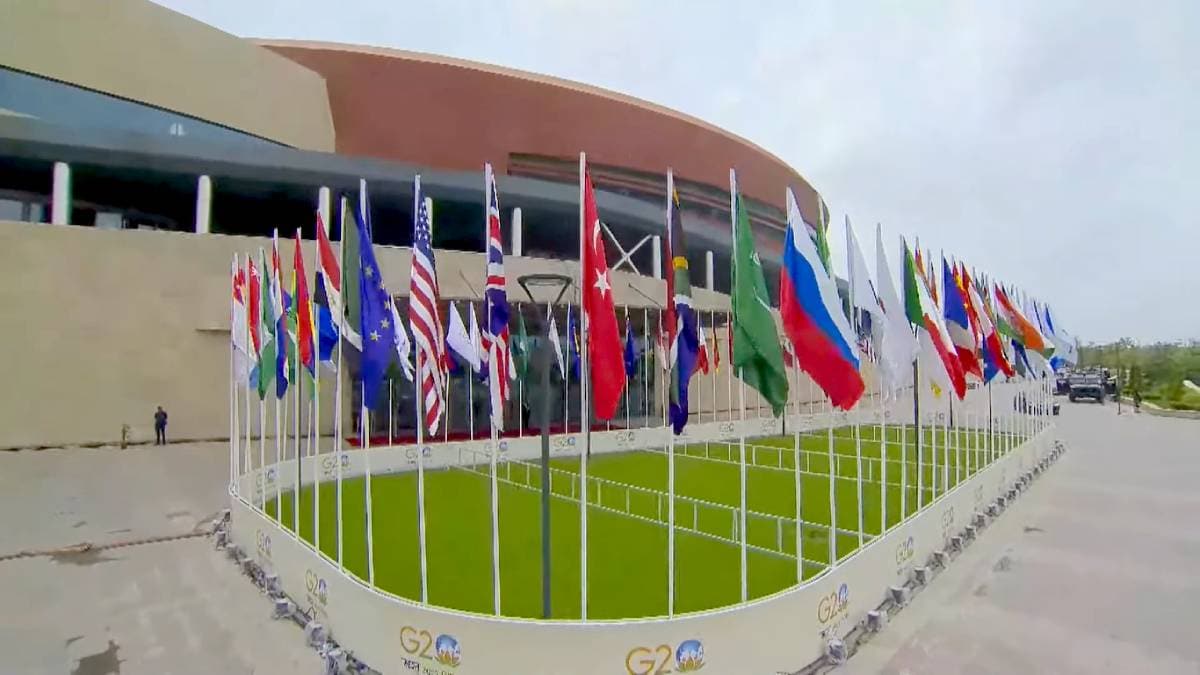
Prime Minister Narendra Modi on Saturday announced the launch of the historic India-Middle East-Europe mega economic corridor.
“We all have reached an important and historic partnership. In the coming times, it will be a major medium of economic integration between India, West Asia and Europe,” he said
US President Joe Biden called the launch of the India-Middle East 'a real big deal', it'll be a 'game-changing regional investment' and one will be hearing the phrase economic corridor more often in the coming decade.
What Is The Deal?
In a bid to stimulate economic development through enhanced connectivity and economic integration, India, along with other members of the G20, has entered into a historic memorandum of understanding (MoU) to develop an India-Middle East-Europe economic corridor.
The proposed corridor will comprise of two separate corridors, the eastern corridor and the norther corridor. The former will connect India to the Arabian Gulf and the latter will connect the Arabian Gulf to Europe.

Who Are The Members?
Apart from India, the other participants will include Saudi Arabia, UAE, France, Germany, Italy, USA and the European Union.

It's Purpose
The arrangement will include a railway route that, upon completion, will provide a reliable and cost-effective cross-border ship-to-rail transit network to supplement existing maritime and road transport routes. This will enable goods and services to transit to, from, and between India, the UAE, Saudi Arabia, Jordan, Israel, and Europe.
Along the railway track, the members want to lay a cable for energy and digital connectivity, as well as a pipe for clean hydrogen export.
This corridor will safeguard regional supply chains, boost trade accessibility, and enable a greater emphasis on environmental, social, and governance consequences.
It will be designed to increase efficiencies, save costs, promote economic cohesion, create jobs, and reduce greenhouse gas emissions, leading to a radical integration of Asia, Europe, and the Middle East.
On Saturday, the US Deputy national security adviser Jonathan Finer said that the corridor “fills a damaging global gap and enables greater prosperity and better connectivity for key regions around the world”.
Finer added that the project will allow the countries involved to play a key role in the “global connective tissue of commerce, of digital communications, of energy.”

What Are The Timelines For Its Implementation?
As per the MoU, the members intend to meet within the next sixty days to develop and commit to an action plan with relevant timetables.
However, although the memorandum sets forth political commitments of its participants, it does not create any rights or obligations under international law, which means that the members are not necessarily bound by it.


-
The Economic Imperative: Analysing The Material Driving Force Behind India-Canada Strategic Reset

This economic complementarity is further reinforced by deep institutional investment ties and talent mobility, which form the bedrock of the bilateral framework.
-
Medicine Pricing: Where Must Profit Stop?
India must confront excessive margins, hidden incentives and regulatory gaps that threaten the integrity of medicine.
-
Why Amazon And Flipkart Are Struggling To Beat Meesho In India's Smaller Cities
With 274 million users and lowest-cost logistics, Meesho is defending its value commerce crown against giants like Amazon and Flipkart.
-
High US Salaries, No Green Card Certainty: The Financial Calculation Facing Indian H-1B Families
The suspension of PERM processing at eight technology employers does not cancel existing H-1B visas. What it does is force a question many Indian families have been avoiding: is the US salary worth tying your career and family plans to one employer?
-
Swiggy vs Eternal: Food Delivery's Two Rivals Are No Longer In The Same Race
Eternal is building a private AI assistant, dark.ai. Swiggy is still working out how to make Instamart pay, with an operating loss of Rs 895 crore in the July-September quarter while Blinkit stayed profitable.
-
Where You Live Shapes How You Get To Work | The Reason Why
Two-wheelers are the most popular way to get to work in India, accounting for nearly 43% of workplace commutes.
-
Unhedged Position: Can India See An Indonesia-Style Time Correction?
The Nifty is trading below levels it first clocked in 2024. Is there, then, as I have suggested in the headline, potential that the current time correction drags on painfully for the next three-five, even ten years?
-
Navigating Friction And Energy Realities: An Analysis Of Marco Rubio's October Visit To India
Occurring at a critical juncture marked by stalled trade negotiations and escalating geopolitical pressures over global energy supplies, the visit offers a profound window into modern US-India relations.
-
India Exports Capital. Why Not Export Trusteeship?
The big question, then, is whether India can build an institution that global borrowers, investors, banks, and lawyers can trust, even without an Indian connection.
-
France's Economy & Politics Are In Crisis | The Reason Why
Let's look at how the French economy and politics evolved under Nicolas Sarkozy, Franois Hollande and Emmanuel Macron.










