From Banks And NBFCs To State Governments, RBI Steps In With Relief
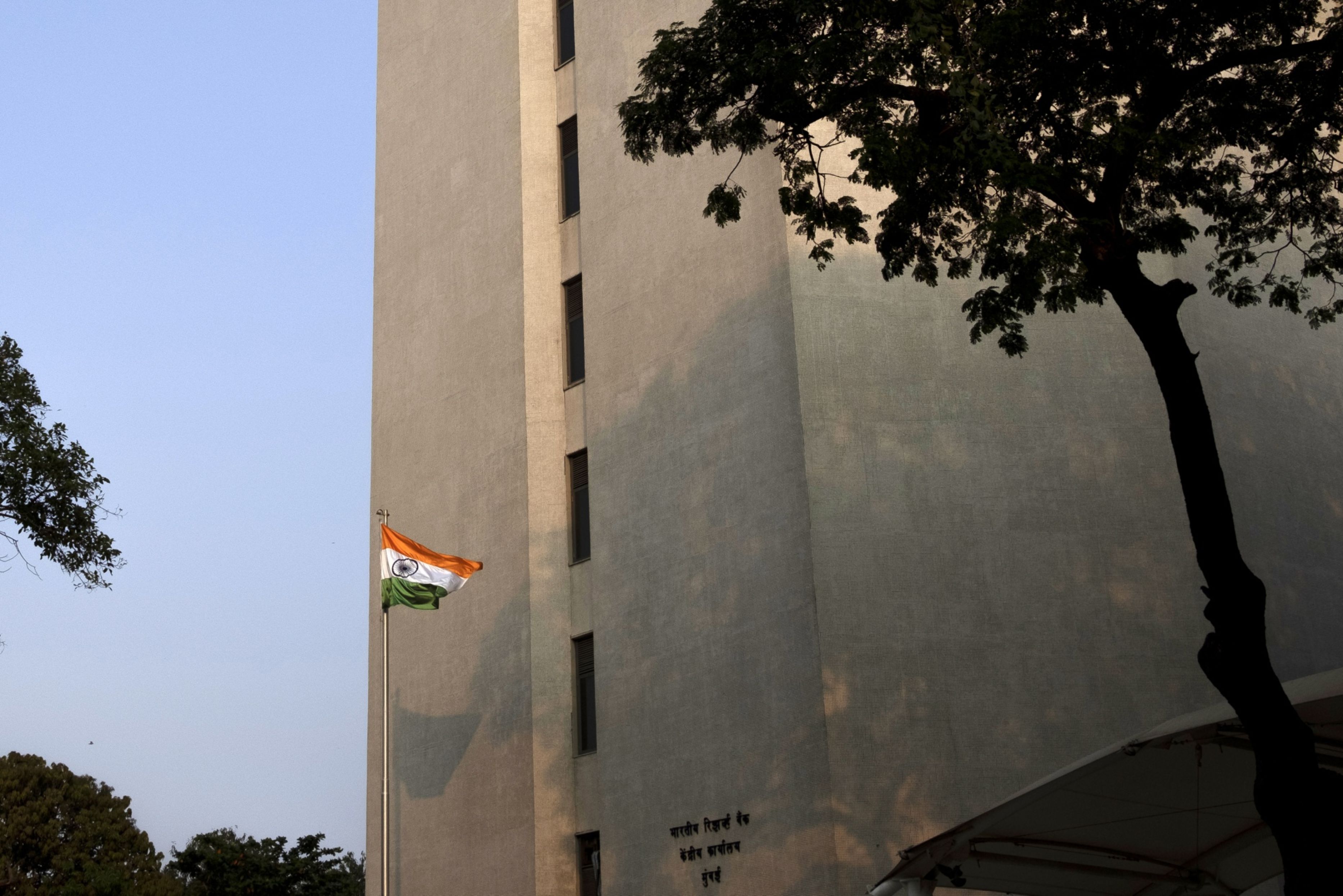
The Reserve Bank of India on Friday announced a host of further measures to support the economy and the financial system. The measures range from relief for banks in classifying bad loans to liquidity support for non-bank lenders and increased emergency funding for state governments.
In a statement, RBI Governor Shaktikanta Das said further measures were being announced to maintain adequate liquidity in the system, facilitate and incentivise bank credit flows and enable orderly functioning of financial markets.
The measures announced include:
LIQUIDITY
- In order to encourage banks to deploy surplus funds, the reverse repo rate has been cut by 25 basis points to 3.75 percent from 4 percent.
- The ‘ways and means advances' limit for states has been increased by 60 percent to about Rs 67,028 crore. This increased limit will be available till Sept 30, 2020. This will prevent a rush of market borrowings from states.
- A second round of targeted long-term repo operations of Rs 50,000 crore will be conducted to “begin with” to ensure that microfinance lenders and NBFCs are well lubricated.
- All-India financial institutions, such as Nabard, Sidbi and NHB, will be provided a special refinance facility of Rs 50,000 crore at the repo rate. This can then be further used for refinancing by non-bank lenders.
BANKING SECTOR
- The moratorium period of three months will be excluded from the 90-day period for non-performing asset classification. This will mean that starting March 1, an account can remain in default for 180 days before it is classified as a non performing asset.
- Banks will be required to make additional provisions of 10 percent for the accounts under standstill to ensure an adequate buffer is available with lender if bad loans surge at the end of that 180-day period.
- The RBI has also provided for an extension of resolution timeline by 90 days over and above the 210 days provided so far. As a result, banks will now have 300 days to finalise a resolution plan for a stressed account.
- In the case of loans given by NBFCs to commercial real estate, the ‘Date of Commencement of Commercial Operations' can be extended by one year without attracting a downgrade in asset classification. This relief was already available to banks and is being extended to NBFCs and HFCs now.
- To preserve capital, the RBI has said that scheduled commercial banks cannot announce any dividend payouts from profits of the financial year ending March 2020. This will be reviewed after Sept. 30, 2020.
- The liquidity coverage ratio has also been brought down from 100 percent to 80 percent with immediate effect. This provides banks some liquidity relief as they needs to hold a lower proportion of ‘highly liquid assets'. The RBI hopes this measure will free up space for bank lending.
The measures were announced against the backdrop of macroeconomic conditions, which Das said, have deteriorated precipitously.
Against this backdrop and based on our continuing assessment of the macroeconomic situation and financial market conditions, we propose to take further measures to maintain adequate liquidity in the system and its constituents in the face of Covid-19 related dislocations; facilitate and incentivise bank credit flows; ease financial stress; and enable the normal functioning of markets.Shaktikanta Das, Governor, RBI
De Facto Rate Cut & More To Come
The measures announced by the RBI are now the second set of emergency announcements intended to support the economy as it braces for the impact of Covid-19.
While the RBI has not put out a growth projection for the year, the IMF forecasts that the Indian economy will grow at 1.9 percent in 2020-21.
With growth declining and inflation in check, monetary policy is likely to remain accommodative.
On March 27, the RBI had announced a 75-basis-point cut in the policy repo rate to 4.4 percent. While the repo rate, at which the RBI infuses liquidity, is the policy rate, markets tend to use the reverse repo rate as the benchmark during times of surplus liquidity. This is because the reverse repo rate is the rate at which the RBI absorbs liquidity.
By announcing a 25-basis-point cut in the reverse repo rate, the RBI has de facto brought down effective rates further.
It has also signaled room for further rate action.
Detailing the macroeconomic scenario, the RBI governor said that “inflation could recede even further, barring supply disruption shocks and may even settle well below the target of 4 percent by the second half of 2020-21.”
Such an outlook would make policy space available to address the intensification of risks to growth and financial stability brought on by Covid-19. This space needs to be used effectively and in time. The RBI will monitor the evolving situation continuously and use all its instruments to address the daunting challenges posed by the pandemic.Shaktikanta Das, Governor, RBI
Das added that the overarching objective is to keep the financial system and financial markets sound, liquid and smoothly functioning so that finance keeps flowing to all stakeholders, especially those that are disadvantaged and vulnerable.
“Eventually, we shall cure; and we shall endure,” the governor said.

-
Indians Are Travelling, But Not Every Journey Is A Holiday | The Week In Whys

Pilgrims, patients and working women are the real travellers, and the system hasn't quite caught up with them.
-
Getting To Work Costs Women More | The Reason Why
It is not just about women paying more than men. It is about women paying much more in cities than in villages.
-
AI Bias In Investing Cannot Be Eliminated, But It Can Be Governed
Framing is a particularly important example as identical financial information presented in terms of gains rather than losses can lead an LLM to reach a different assessment.
-
Joining The Dots | Dark Skies, Steady Diya: Why Hope Holds This Diwali
With war, a weak rupee and foreign outflows weighing on sentiment, policymakers at the NDTV World Summit and market veterans at NDTV Profit Ignite: Diwali Edition offered the same advice: stay invested and filter out the noise.
-
The Curious Case of Equitas Small Finance Bank And A CEO Who Quit For Stock
PN Vasudevan believes persistent investor concerns over a perceived conflict of interest had become a governance overhang on Equitas Small Finance Bank's stock, even as the lender improved profitability and asset quality.
-
Talking Points This Week: AI Cash Burn, A Tiger Comeback And An India That Still Finds Its Own Path
India is not immune to higher oil or tighter global liquidity, yet its earnings base is broader, its domestic policy levers are still available.
-
Foreign Investors Own Half Of HDFC Bank and ICICI Bank. An LTCG Cut Could Matter Most Here
Foreign portfolio investors have US$115 billion parked in HDFC Bank, ICICI Bank. If the government cuts long-term capital gains tax, Jefferies says returning foreign money could land here first.
-
'Never Seen This Level Of Negativity': Sandeep Tandon Says The Next Rally May Be Closer Than You Think
Veteran investor Sandeep Tandon says foreign selling is easing, large-caps are due a comeback and mid-caps are crowded, while he turns positive on gold, power and pharma this Diwali.
-
Indians Stay With Family, Not In Hotels | The Reason Why
India still lacks enough clean, reliable and affordable hotels for budget-conscious travellers.
-
The Economic Imperative: Analysing The Material Driving Force Behind India-Canada Strategic Reset
This economic complementarity is further reinforced by deep institutional investment ties and talent mobility, which form the bedrock of the bilateral framework.










