Franklin Templeton, Citadel Warn Against Bond Market’s Optimism
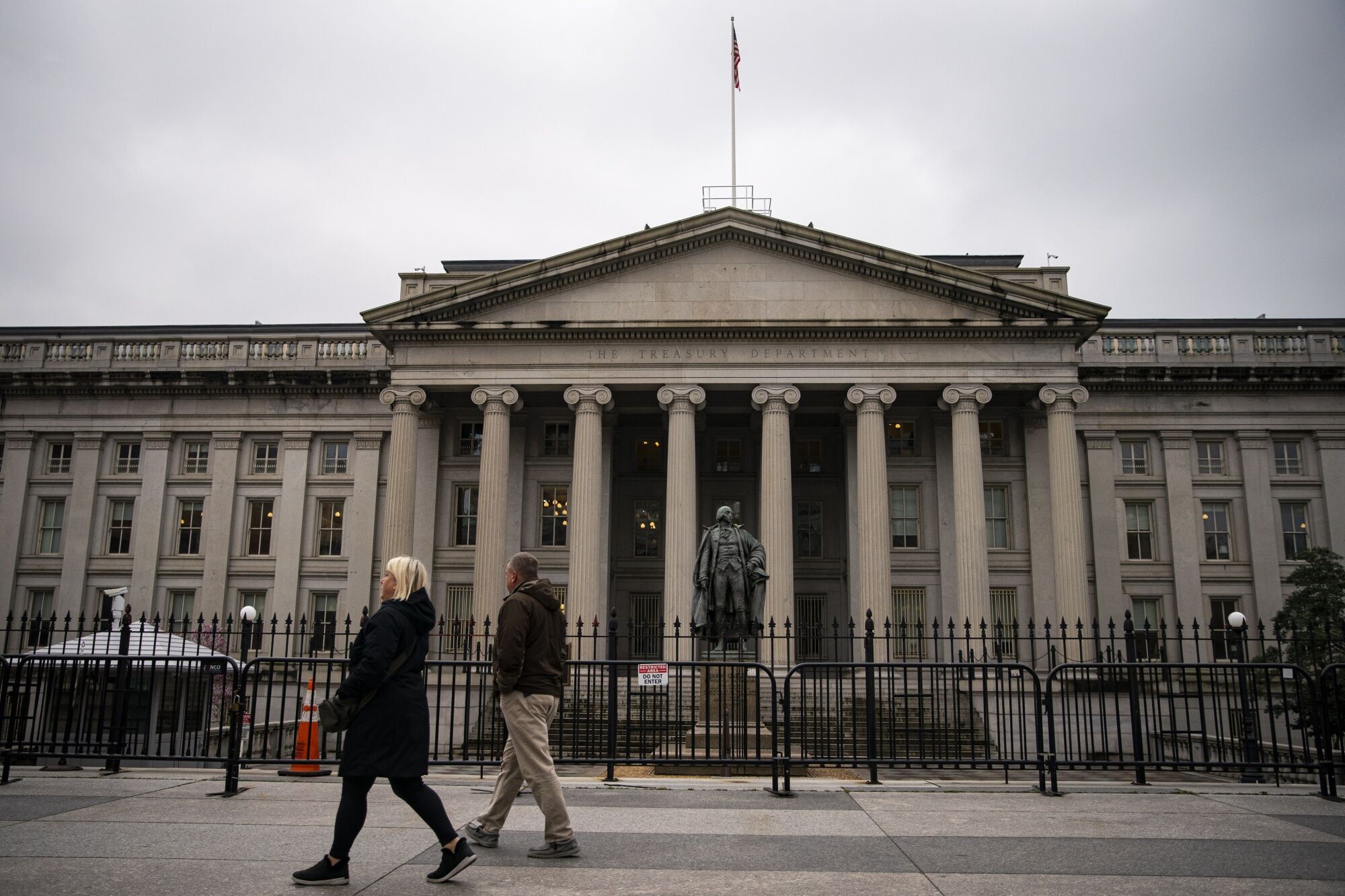
(Bloomberg) -- A growing chorus of investors is cautioning against prematurely declaring that the US bond market's brutal rout is finally over for good.
Treasuries are extending the biggest rally since March after the Federal Reserve held interest rates steady for a second straight meeting Wednesday. The decision reinforced speculation that the central bank is finished with its most-aggressive monetary policy tightening since the early 1980s.
But with Fed Chair Jerome Powell leaving the door open to further interest-rate hikes, some are warning that yields could re-test recent highs if the economy continues to expand at a surprisingly swift pace.
Hedge fund K2 Asset Management is predicting that benchmark 10-year Treasury yields will rise back to 5%, while Franklin Templeton says they could peak at 5.25% — a level last seen in 2007. At Citadel Securities, global head of rates trading Michael de Pass says the Treasury market remains “very much dependent on the data,” leaving the risk that the market's euphoric mood could change. And Barclays Plc co-head of global markets Stephen Dainton said it is “very unlikely” the Fed is done tightening policy.
“During his press conference Fed-chair Powell broadly confirmed the Fed's hiking bias,” Joost van Leenders, a senior investment strategist at Van Lanschot Kempen, wrote in a note to clients. “The economy has been very resilient to rate hikes and the Fed has only just managed to get tighter financial conditions.”
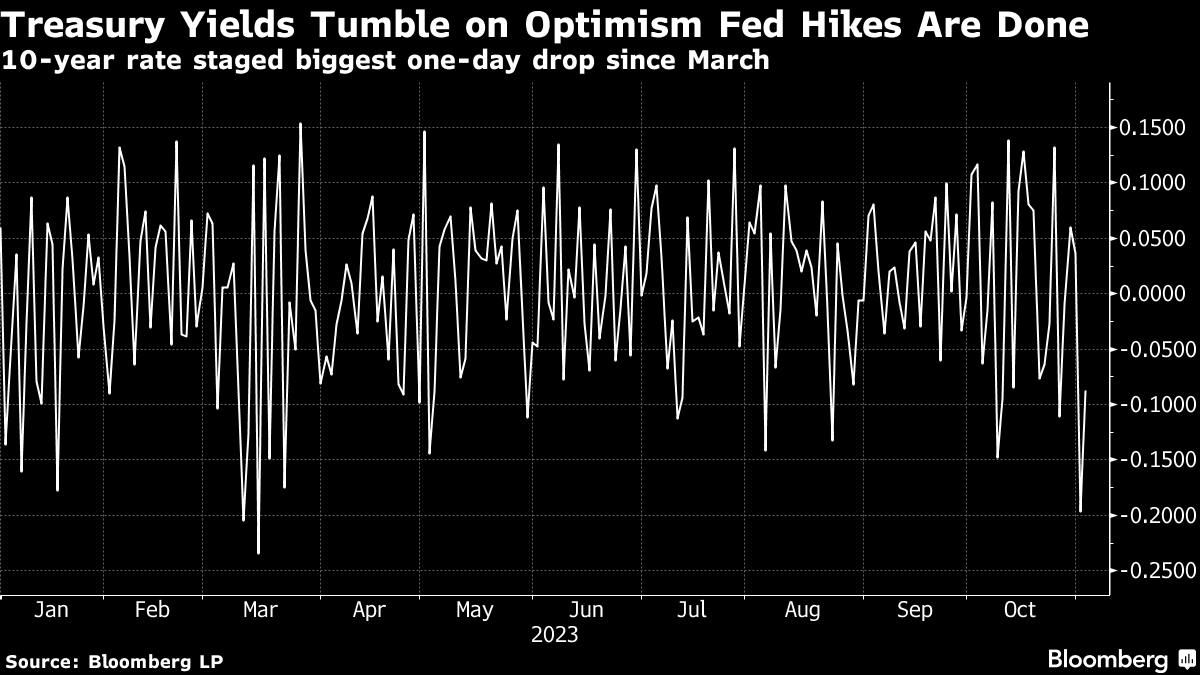
The views underscore how hesitant investors are to call a bottom to the US bond market as it heads for a third straight annual loss, marking the worst downturn in decades. Efforts to do so have been repeatedly upended by the resilience of the economy, which has left the Fed telegraphing that rates are likely to stay high as inflation remains the predominant risk.
Of course, there's still a strong consensus that the worst of the losses are in the past. The Bloomberg Markets Live Pulse survey conducted after the Fed meeting found that nearly 90% of respondents think the 10-year yield has already peaked or won't rise over 5.5%. It's around 4.66% Thursday, so even a rise to that level would pale in comparison to the more than 4-percentage-point jump since 2020.
But Treasuries are also facing pressure from a massive surge of debt issuance to cover the federal budget deficit, even though the announcement of a slightly smaller than expected auction schedule Wednesday set off the current rally. At the same time, the Fed's message that interest rates may remain elevated means that traders could be premature in pricing in cuts by mid-2024.
“Markets may test 5% again and even higher because the debt issuance story hasn't gone away, the inflation outlook and a resilient US economy,” George Boubouras, head of research at K2, said in an interview in Singapore. “There needs to be more demand destruction before the Fed will cut rates.”
Powell repeatedly said the committee was moving “carefully,” a wording that often has signaled a low likelihood of any immediate change in policy. He also acknowledged risks to the outlook have become more two-sided as the tightening campaign nears its end.
Bank of America Corp. strategists including Mark Cabana said in a note to clients that the Fed's tack has made the next move a difficult call, but they're sticking with expectations that it will enact another quarter-point hike in December. That contrasts with swaps traders who are pricing in just 24% odds of such a move.
“We continue to believe investors should nibble on duration with 10-year rates near 5%, but refrain from a more constructive duration stance until economic data moderates or risk assets reflect clearer negative feedback from high rates,” according to Cabana.
--With assistance from Haslinda Amin, Tania Chen and Alice Atkins.
More stories like this are available on bloomberg.com
©2023 Bloomberg L.P.

-
Talking Points This Week: Leadership Shock At Nvidia, Earnings Strength, And The Fog Over Hormuz

The Anthropic IPO pricing and first trading day, Nvidia's upcoming earnings, and any fresh signals from Iran will set the tone for the following week.
-
Signature Play: The Classic Cocktail Is Dead. Or Is It?
Classic cocktails are disappearing from India's cocktail menus. But they're still being ordered, taught to bartenders and borrowed from. So, who's really having the last drink?
-
A New Samvat Wishlist: Inclusive Prosperity And Human Development
India has strengthened its economic foundations through infrastructure, digital access and enterprise. Its next growth chapter must deepen productivity, create better livelihoods and widen participation in prosperity.
-
Love, Sex Aur Dhokha: The Audacious Plot To Spy On Jensen Huang
A Taipei dinner, a Singapore chip buyer and a suspected Chinese asset: inside the alleged spy operation that got close to NVIDIA's Jensen Huang.
-
Ten Things I Learnt This Samvat
Patience can be a trap. Cheap stocks can stay cheap. Leverage can wipe you out. What did Samvat 2082 teach us? Niraj Shah writes on 10 lessons from the year gone by.
-
Talking Points This Week: Tech Nerves, FII Buying, And A Faraway Banking Shock
The global markets are not shining this Diwali. The exception in the large markets is, India.
-
Midterm Rally Lasted A Day. The Hard Reality Of A Divided US May Last Two Years | Opinion
Between a contested AI boom, a debt ceiling that arrives in 2027 and a president with every incentive to act alone, the next two years may prove more volatile than the first day's rally suggests.
-
Blue Wave Will Derail the AI Trade but Won't Dismantle the AI Era | Unhedged Position
The Democrats' sweep of the US Congress will see politics collide with economic forces both over the long and short term.
-
It's Time To Take The GST Council's Bet On Trust Global
Payment records can prove India's services exports, and clear, proportionate rules can bring foreign digital sellers into the tax net.
-
Opinion | India at 38: From Innovation Overperformer to Innovation Powerhouse
India now has 453 VC-backed deep science startups, 18 of them late-stage, after 117 percent growth since 2020. Laurus Labs, at USD 9.3 billion, is the most valuable deep science company in any middle-income economy outside China.









