Bad Bank Not Only Necessary But Unavoidable: Former RBI Governor D Subbarao
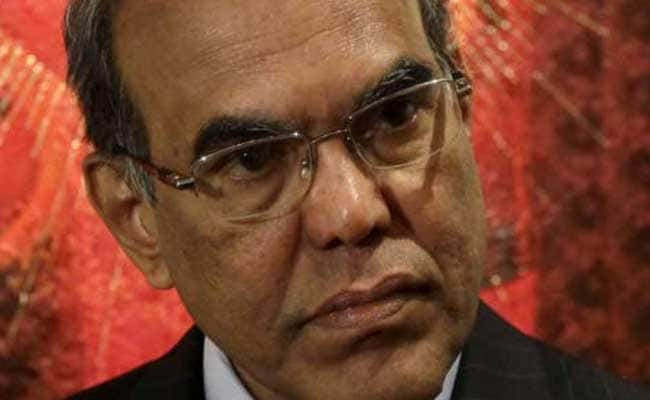
Former Reserve Bank of India Governor D Subbarao made a strong case for setting up a bad bank saying it is "not just necessary but unavoidable" in the present circumstances when non-performing assets (NPAs) are likely to balloon and much of the resolution will have to take place outside the Insolvency and Bankruptcy Code framework.
Even the Economic Survey 2017 had proposed this idea, suggesting the creation of a bad bank called Public Sector Asset Rehabilitation Agency (PARA) to help tide over the problem of stressed assets. "The standard advantage of a bad bank is that the entity taking a decision on the sale price is different from the entity accepting that price. Conflict of interest and corruption are avoided, and importantly, are seen to be avoided," he said in an interview to news agency Press Trust of India.
"There are some successful models of bad banks with carefully designed carrots and sticks. Danaharta of Malaysia, for example, is a good model to study in designing our own bad bank," Mr Subbarao said.
The former RBI Governor noted that non-performing assets (NPAs) will balloon with the economy contracting by at least five per cent this fiscal year. Also, according to the RBI's Financial Stability Report, gross NPAs of banks may rise to 12.5 per cent by March 2021 under a baseline scenario, from 8.5 per cent in March 2020.
"The bankruptcy framework is already overloaded and it simply will be unable to deal with this huge additional burden. It is important, therefore, indeed more than ever before, that much of the resolution takes place outside the Insolvency and Bankruptcy Code (IBC) framework," he said.
The economy was already decelerating before the coronavirus crisis hit the country. Growth in its real gross domestic product (GDP) had moderated from 7.0 per cent in 2017-18 to 6.1 per cent in 2018-19, and 4.2 per cent in 2019-20.
The projections for the current year by various global and domestic agencies indicate a sharp contraction in the economy, ranging from 3.2 per cent to 9.5 per cent.
Earlier, Mr Subbarao said, he had some reservations about a bad bank, but he is veering towards the idea in view of recent experience. "First, I believed the bankruptcy framework will put resolution on track and help clean up the system," he elaborated.
Mr Subbarao admitted that he also had concerns about the capital structure of the bank.
"Where will the funding come from? If capital has to come from the public sector banks (PSBs), the problems that bogged down their chiefs from taking bold decisions - fear of retribution - will persist," he said.
"If it's got to come from the private sector, there will be issues of crony capitalism. If it's got to be from the government, the question is: wouldn't the government be better off using that money to capitalise individual banks, which, at any rate in theory, looks more efficient?"

-
Extracting Value From Battery Scrap Could Be Challenging For India | The Reason Why

A discarded lithium-ion battery still contains valuable materials such as lithium, nickel and cobalt. These can be recovered and reused. When such batteries are crushed and shredded, they produce a dark powder called black mass.
-
One El Nino, India Can Handle. Two Could Break The Granary
India's grain stocks can absorb one bad year, but a second El Nino could drain the buffer in two to three years, economists say.
-
India's Troika Of Good Luck | Joining The Dots
As Jensen Huang's exit drags Nvidia down, a cooling AI trade and resilient earnings have revived investor interest in India. A likely RBI rate hike looms.
-
Talking Points This Week: Leadership Shock At Nvidia, Earnings Strength, And The Fog Over Hormuz
The Anthropic IPO pricing and first trading day, Nvidia's upcoming earnings, and any fresh signals from Iran will set the tone for the following week.
-
Signature Play: The Classic Cocktail Is Dead. Or Is It?
Classic cocktails are disappearing from India's cocktail menus. But they're still being ordered, taught to bartenders and borrowed from. So, who's really having the last drink?
-
A New Samvat Wishlist: Inclusive Prosperity And Human Development
India has strengthened its economic foundations through infrastructure, digital access and enterprise. Its next growth chapter must deepen productivity, create better livelihoods and widen participation in prosperity.
-
Love, Sex Aur Dhokha: The Audacious Plot To Spy On Jensen Huang
A Taipei dinner, a Singapore chip buyer and a suspected Chinese asset: inside the alleged spy operation that got close to NVIDIA's Jensen Huang.
-
Ten Things I Learnt This Samvat
Patience can be a trap. Cheap stocks can stay cheap. Leverage can wipe you out. What did Samvat 2082 teach us? Niraj Shah writes on 10 lessons from the year gone by.
-
Talking Points This Week: Tech Nerves, FII Buying, And A Faraway Banking Shock
The global markets are not shining this Diwali. The exception in the large markets is, India.
-
Midterm Rally Lasted A Day. The Hard Reality Of A Divided US May Last Two Years | Opinion
Between a contested AI boom, a debt ceiling that arrives in 2027 and a president with every incentive to act alone, the next two years may prove more volatile than the first day's rally suggests.









