Good News For India - Foreigners' Last-Minute Dash For LIC IPO
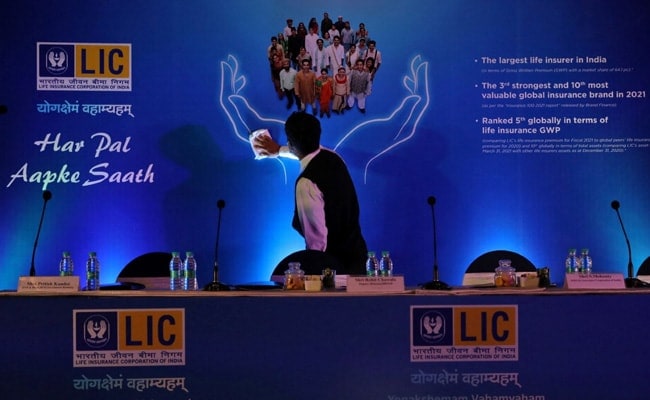
Foreign institutional investors stepped up their bids for India's biggest share sale in the last hours before the close of subscription on Monday, shunning currency risks and global market uncertainties.
Overseas investors put in orders for 61% of the shares set aside for institutional buyers in the $2.7 billion initial public offering of Life Insurance Corporation of India, according to data from the exchanges. The portion was oversubscribed nearly three times by the end of the bidding. The issue opened on May 4 and received bids through the weekend.
While the anchor portion of the IPO also drew in sovereign funds from Norway and Singapore, most of the shares still went to domestic mutual funds.
“This shows that the capacity of our domestic investors and markets has gone up considerably,” Tuhin Kanta Pandey, secretary at the divestment department in the finance ministry, said at a briefing in New Delhi. “We can run our capital markets without being dependent on foreigners, though they are also welcome.”
Dubbed India's “Aramco moment” in reference to Gulf oil giant Saudi Arabian Oil Co.'s $29.4 billion listing in 2019 -- the world's largest -- the float of LIC has ended up resembling the Aramco IPO not just in scale but in its reliance on domestic investors after some foreign buyers deemed it too expensive.
LIC has been seeking to drum up interest with newspaper advertisements since the start of the year, seeking to take advantage of a retail investment boom in India.
India's government had cut the fundraising of the IPO by about 60% as the war in Ukraine roiled markets, denting risk appetite, while rising U.S. interest rates are putting foreign investors off emerging market stocks. It also cut the valuation it is seeking for the country's oldest insurer, which would be worth Rs 6 lakh crore ($77 billion) at the top of the price range.
“LIC is not only the largest insurance company but also the largest local investor in India. In a way its a proxy for the country's growth,” said Jigar Shah, a Mumbai-based strategist with Kim Eng Securities Pvt. “The IPO was priced very wisely, making it attractive for investors, otherwise it would be difficult to get such response given market turbulence globally.”
Locals Pile In
While foreign investors picked up pace only on the last day, retail buyers have been piling in since the issue opened for subscription. Policyholders placed bids for over six times the shares reserved for them, while the employee portion received orders for four times the amount available, stock exchange data showed. Retail investors and policyholders will receive discounts on the offer price.
Overall, the IPO has received orders for nearly three times the shares on offer. The tranche for non-institutional investors, which includes corporates, was bid nearly three times.
Still, the international investor interest pales in comparison to some of last year's Indian IPOs. One97 Communications Ltd., which operates digital payments firm Paytm, drew in the likes of BlackRock Inc., Canada Pension Plan Investment Board and Teacher Retirement System of Texas, among many others, for its Rs 18,300 crore share sale last year. Food delivery platform Zomato Ltd. was similarly popular among foreign investors.
However, those buyers have been left nursing losses as enthusiasm over India's tech boom waned after some flops. Paytm sank 27% on its debut and is now trading 74% below its offer price. Zomato had a strong debut last summer but has since lost 20% in value.
Investors have also had concerns about LIC's ability to keep market share as private insurers like HDFC Life Insurance Co. and SBI Life Insurance Co. expand. The private sector has been on an aggressive expansion spree during the pandemic, growing new individual policy premiums while LIC struggles.

-
Getting To Work Costs Women More | The Reason Why

It is not just about women paying more than men. It is about women paying much more in cities than in villages.
-
AI Bias In Investing Cannot Be Eliminated, But It Can Be Governed
Framing is a particularly important example as identical financial information presented in terms of gains rather than losses can lead an LLM to reach a different assessment.
-
Joining The Dots | Dark Skies, Steady Diya: Why Hope Holds This Diwali
With war, a weak rupee and foreign outflows weighing on sentiment, policymakers at the NDTV World Summit and market veterans at NDTV Profit Ignite: Diwali Edition offered the same advice: stay invested and filter out the noise.
-
The Curious Case of Equitas Small Finance Bank And A CEO Who Quit For Stock
PN Vasudevan believes persistent investor concerns over a perceived conflict of interest had become a governance overhang on Equitas Small Finance Bank's stock, even as the lender improved profitability and asset quality.
-
Talking Points This Week: AI Cash Burn, A Tiger Comeback And An India That Still Finds Its Own Path
India is not immune to higher oil or tighter global liquidity, yet its earnings base is broader, its domestic policy levers are still available.
-
Foreign Investors Own Half Of HDFC Bank and ICICI Bank. An LTCG Cut Could Matter Most Here
Foreign portfolio investors have US$115 billion parked in HDFC Bank, ICICI Bank. If the government cuts long-term capital gains tax, Jefferies says returning foreign money could land here first.
-
'Never Seen This Level Of Negativity': Sandeep Tandon Says The Next Rally May Be Closer Than You Think
Veteran investor Sandeep Tandon says foreign selling is easing, large-caps are due a comeback and mid-caps are crowded, while he turns positive on gold, power and pharma this Diwali.
-
Indians Stay With Family, Not In Hotels | The Reason Why
India still lacks enough clean, reliable and affordable hotels for budget-conscious travellers.
-
The Economic Imperative: Analysing The Material Driving Force Behind India-Canada Strategic Reset
This economic complementarity is further reinforced by deep institutional investment ties and talent mobility, which form the bedrock of the bilateral framework.
-
Medicine Pricing: Where Must Profit Stop?
India must confront excessive margins, hidden incentives and regulatory gaps that threaten the integrity of medicine.










