For First Time, India Not Being Blamed For Collapse Of WTO Talks, Says Suresh Prabhu
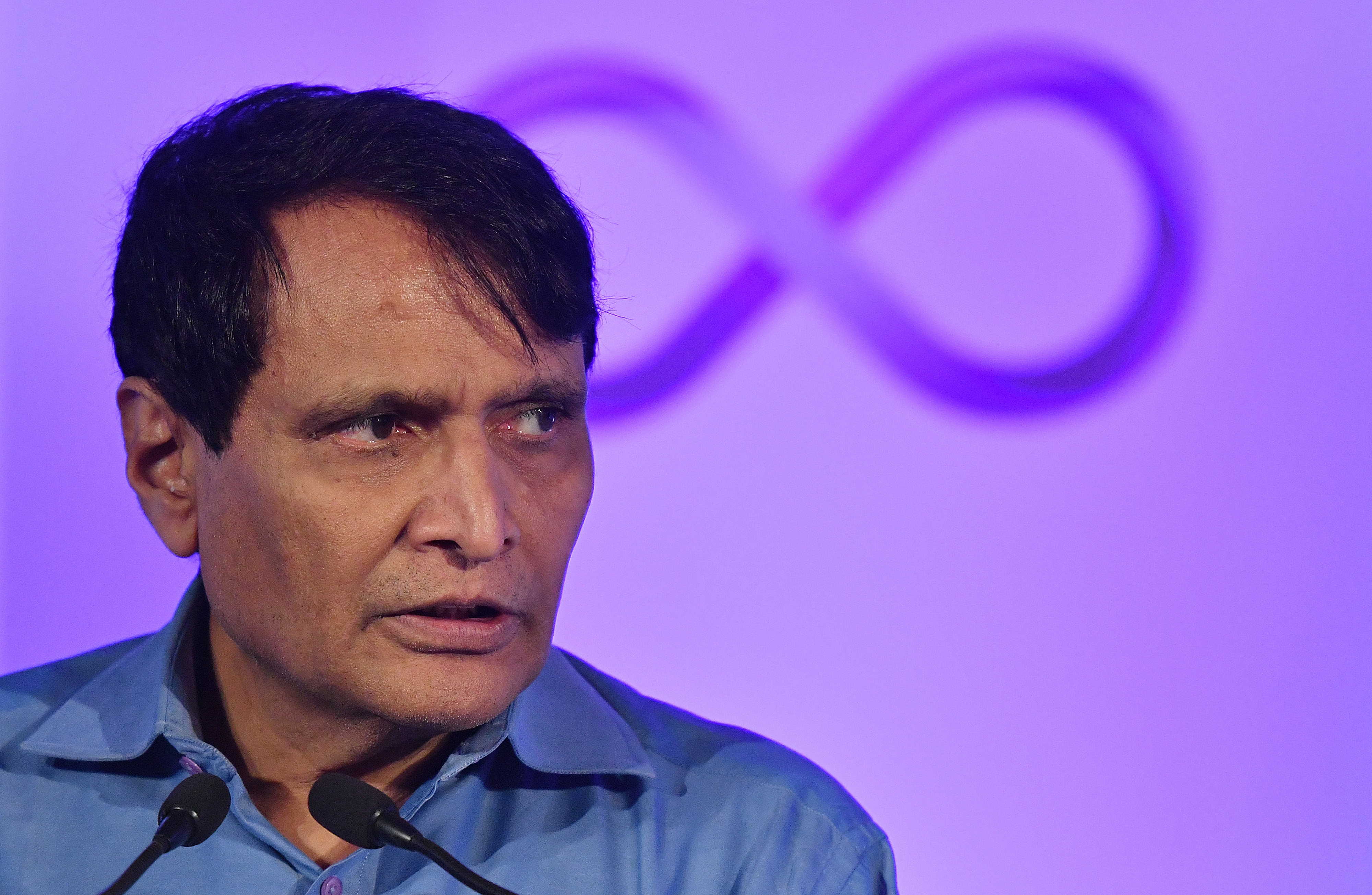
Commerce and Industry Minister Suresh Prabhu said this was probably the first time in recent history that India was not being blamed for the collapse of talks at the ministerial meeting of the World Trade Organization.
“We came here with an open mind” but things did not move because of the adamant attitude of some members, Prabhu told reporters. The talks at the 11th ministerial conference of the WTO collapsed with the U.S. going back on the commitment made by it along with other member countries to find a permanent solution to the public food stockpile issue.
Following the breakdown of talks, there was no ministerial declaration at the end of the conference, though chair and Argentinean Minister Susana Malcorra made a statement highlighting the developments.
“This is (for the) first time that India is not being blamed...we are definitely not going back as villains,” Prabhu said, adding the country has not lost anything but gained a lot, especially in terms of the goodwill of the developing nations.
Also Read: India ‘Deeply Disappointed' Over Developments On Food Security Issue At WTO
At previous ministerial meetings, India was often blamed for adopting an uncompromising and stern attitude which thwarted attempts of member nations to reach consensus on key issues.
The minister said that during the course of the 11th ministerial conference, he had over two dozen bilateral meetings during which he explained the position of India as well the developing nations on different issues.
Observing that trade negotiations are always difficult, the minister said “we knew that nothing was going to happen because of the way the U.S. administrating was moving... questioning the efficiency of the global trading system.”
As regards the food security issue, the minister said that India was keen to have a permanent solution which ought to have been better than the 'Peace Clause' and led the battle for it. However, talks reached a dead end after Assistant U.S. Trade Representative Sharon Bomer Lauritsen in a small group meeting said that permanent solution to the food stockholding issue was not acceptable to America.
The minister said that U.S. objections were not directed against India but some other country, probably China.
Under the global trade norms, a WTO member country's food subsidy bill should not breach the limit of 10 percent of the value of production based on the reference price of 1986-88.
Apprehending that full implementation of food security programme may result in breach of the WTO cap, India has been seeking amendments in the formula to calculate the food subsidy cap.
Also Read: Solve The Indo-American Food Fight And Save The WTO Farm
As an interim measure, the WTO members at the Bali ministerial meeting in December 2013 had agreed to put in place a mechanism popularly called the Peace Clause and had committed to negotiate an agreement for permanent solution at the 11th ministerial meeting at Buenos Aires. However, as no agreement was reached at MC 11, the Peace Clause will continue and also the existing mandate to find a permanent solution.
During the ministerial, Prabhu said, India continued to press for reduction of farm subsidies by the developed countries and resisted inclusion of new issues on the negotiating table lest it should dilute the commitment to complete the existing agenda.
The minister further said there is life after Buenos Aires and the WTO will continue to thrive as a transparent multilateral trading organisation for the good of the world.

-
Getting To Work Costs Women More | The Reason Why

It is not just about women paying more than men. It is about women paying much more in cities than in villages.
-
AI Bias In Investing Cannot Be Eliminated, But It Can Be Governed
Framing is a particularly important example as identical financial information presented in terms of gains rather than losses can lead an LLM to reach a different assessment.
-
Joining The Dots | Dark Skies, Steady Diya: Why Hope Holds This Diwali
With war, a weak rupee and foreign outflows weighing on sentiment, policymakers at the NDTV World Summit and market veterans at NDTV Profit Ignite: Diwali Edition offered the same advice: stay invested and filter out the noise.
-
The Curious Case of Equitas Small Finance Bank And A CEO Who Quit For Stock
PN Vasudevan believes persistent investor concerns over a perceived conflict of interest had become a governance overhang on Equitas Small Finance Bank's stock, even as the lender improved profitability and asset quality.
-
Talking Points This Week: AI Cash Burn, A Tiger Comeback And An India That Still Finds Its Own Path
India is not immune to higher oil or tighter global liquidity, yet its earnings base is broader, its domestic policy levers are still available.
-
Foreign Investors Own Half Of HDFC Bank and ICICI Bank. An LTCG Cut Could Matter Most Here
Foreign portfolio investors have US$115 billion parked in HDFC Bank, ICICI Bank. If the government cuts long-term capital gains tax, Jefferies says returning foreign money could land here first.
-
'Never Seen This Level Of Negativity': Sandeep Tandon Says The Next Rally May Be Closer Than You Think
Veteran investor Sandeep Tandon says foreign selling is easing, large-caps are due a comeback and mid-caps are crowded, while he turns positive on gold, power and pharma this Diwali.
-
Indians Stay With Family, Not In Hotels | The Reason Why
India still lacks enough clean, reliable and affordable hotels for budget-conscious travellers.
-
The Economic Imperative: Analysing The Material Driving Force Behind India-Canada Strategic Reset
This economic complementarity is further reinforced by deep institutional investment ties and talent mobility, which form the bedrock of the bilateral framework.
-
Medicine Pricing: Where Must Profit Stop?
India must confront excessive margins, hidden incentives and regulatory gaps that threaten the integrity of medicine.










