Swiggy, Zomato To Pay 5% GST From Today Amid New Norms
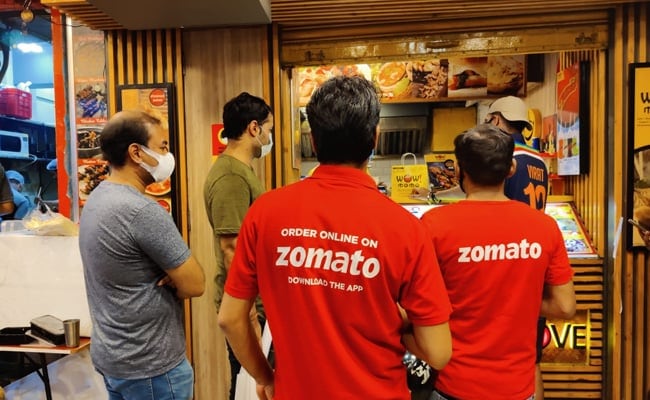
Food aggregators like Swiggy and Zomato will have to collect and deposit tax at five per cent rate beginning Saturday, a move which will widen the tax base as food vendors who are currently outside the GST threshold will become liable to GST when provided through these online platforms.
Currently, restaurants registered under GST are collecting and depositing the tax. Also, cab aggregators like Uber and Ola will have to collect five per cent Goods and Services Tax (GST) for booking two and three-wheeler vehicles effective January 1. Also, footwear irrespective of prices will attract 12 per cent tax from Saturday.
These are among the many changes in the GST regime that have come into effect in this new year 2022. Also to tackle evasion, the GST law has been amended to state that the input tax credit will now be available only once the credit is appearing in GSTR 2B (purchase return) of the tax payer. Five per cent provisional credit, earlier allowed in GST rules, will not be permitted post January 1, 2022.
EY India Tax Partner Bipin Sapra said, "this change will have an immediate impact on working capital of tax payers who are currently availing credit of 105 per cent of matched credit. The change will also mandate industry to validate that the procurements are made from genuine and compliant vendors."
The other anti-evasion measures which would come into effect from the new year include mandatory Aadhaar authentication for claiming GST refund, blocking of the facility of GSTR-1 filing in cases where the business has not paid taxes and filed GSTR-3B in the immediate previous month.
Currently, the law restricts filing of return for outward supplies or GSTR-1 in case a business fails to file GSTR-3B of preceding two months.
While businesses file GSTR-1 of a particular month by the 11th day of the subsequent month, GSTR-3B, through which businesses pay taxes, is filed in a staggered manner between 20th-24th day of the succeeding month.
Also, the GST law has been amended to allow GST officers to visit premises to recover tax dues without any prior show-cause notice, in cases where taxes paid in GSTR-3B is lower based on suppressed sales volume, as compared to supply details given in GSTR-1.
Sapra said while the amendment is likely to curb the malpractice of passing of input tax credit through declaring in GSTR-1 without paying taxes in GSTR 3B, genuine differences in GSTR-1 and GSTR 3B like carry forward of unadjusted credit notes are likely to face unnecessary scrutiny.
The move is intended to curb the menace of fake billing whereby sellers would show higher sales in GSTR-1 to enable purchasers to claim input tax credit (ITC), but report suppressed sales in GSTR-3B to lower GST liability.
Nexdigm Executive Director (Indirect Tax) Saket Patawari said e-commerce operators are now liable to pay GST in place of the restaurants and the tax base of government may increase due to above as these operator will be liable to GST even for unregistered restaurants.
"E-com operators may be asked to obtain registration in each State where restaurants are located even if they don't have presence and undertake all the regular GST compliances even if they don't have any infrastructure in the State. It may become a challenge to handle audits and investigations in all the states esp. for start ups and new E-com operators," Patawari added.
Sapra further said that this amendment will also widen the tax base as food vendors who are currently outside the GST threshold will become liable to GST when provided through these online platforms. Thus, making procurement from these platforms more costlier.
"Given that restaurants sometimes supply goods along with restaurant services, an invoice may have multiple payments by multiple people and hence would involve complexity of operations. This practice of laying burden on E-Commerce operators for supplies made through them is putting additional burden on a platform which is just facilitating the supply," Sapra added.

-
Signature Play: The Classic Cocktail Is Dead. Or Is It?

Classic cocktails are disappearing from India's cocktail menus. But they're still being ordered, taught to bartenders and borrowed from. So, who's really having the last drink?
-
A New Samvat Wishlist: Inclusive Prosperity And Human Development
India has strengthened its economic foundations through infrastructure, digital access and enterprise. Its next growth chapter must deepen productivity, create better livelihoods and widen participation in prosperity.
-
Love, Sex Aur Dhokha: The Audacious Plot To Spy On Jensen Huang
A Taipei dinner, a Singapore chip buyer and a suspected Chinese asset: inside the alleged spy operation that got close to NVIDIA's Jensen Huang.
-
Ten Things I Learnt This Samvat
Patience can be a trap. Cheap stocks can stay cheap. Leverage can wipe you out. What did Samvat 2082 teach us? Niraj Shah writes on 10 lessons from the year gone by.
-
Talking Points This Week: Tech Nerves, FII Buying, And A Faraway Banking Shock
The global markets are not shining this Diwali. The exception in the large markets is, India.
-
Midterm Rally Lasted A Day. The Hard Reality Of A Divided US May Last Two Years | Opinion
Between a contested AI boom, a debt ceiling that arrives in 2027 and a president with every incentive to act alone, the next two years may prove more volatile than the first day's rally suggests.
-
Blue Wave Will Derail the AI Trade but Won't Dismantle the AI Era | Unhedged Position
The Democrats' sweep of the US Congress will see politics collide with economic forces both over the long and short term.
-
It's Time To Take The GST Council's Bet On Trust Global
Payment records can prove India's services exports, and clear, proportionate rules can bring foreign digital sellers into the tax net.
-
Opinion | India at 38: From Innovation Overperformer to Innovation Powerhouse
India now has 453 VC-backed deep science startups, 18 of them late-stage, after 117 percent growth since 2020. Laurus Labs, at USD 9.3 billion, is the most valuable deep science company in any middle-income economy outside China.









