Flipkart's Fearless Delivery Men. They're Called 'Wishmasters'
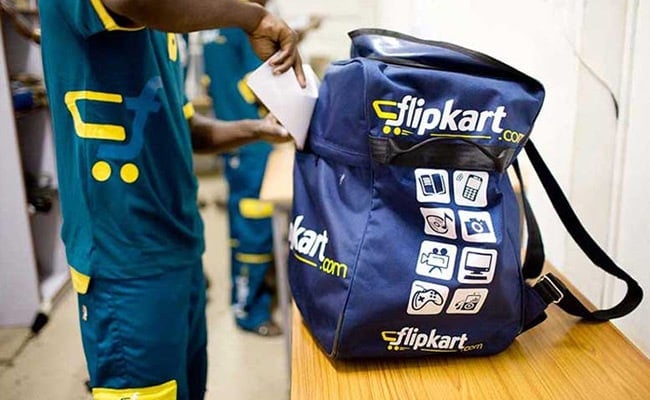
Abdul Saleem heaves a 55-pound bag crammed with foot massagers, jeans, kitchen tools and sports shoes onto his shoulders. It's late October, just days before the annual shopping frenzy that coincides with the Diwali festival of lights. As he does every morning six days a week, Saleem straps on a helmet, straddles his Honda scooter and accelerates onto Bangalore's gridlocked streets.
Saleem delivers packages for Flipkart Online Services Pvt, India's largest and most valuable e-commerce company. He and thousands of fellow deliverymen are foot soldiers in a hard-fought battle pitting Flipkart against domestic rival Snapdeal.com and U.S. leviathan Amazon.com Inc., all tussling for dominance in a market that Morgan Stanley expects to explode more than ten-fold to $137 billion by 2020 from $11 billion in 2013. Flipkart is clinging to a narrow lead as Amazon pours billions of dollars into India.
Around the world, online merchants are keen to close the so-called last mile as they compete to deliver packages in a day or less. In the U.S. and other developed markets, purchases are typically delivered by truck, and there's talk of using drones to get the job done. In the chaotic cities of India and other emerging markets, companies do whatever it takes to get packages to customer-by foot, bicycle, even boat.
For the most part, they rely on people like Saleem, who has been weaving his scooter around Bangalore since closing a money-losing scrap metal business two years ago. During the Diwali shopping rush, Flipkart's army of 20,000 deliverymen carried as many as 800,000 packages a day. Without deliverymen risking their lives to get the products to the front door, sales growth at Flipkart, Snapdeal and Amazon would grind to a halt-much like Bangalore traffic.
"Who would want to brave the rush at the market when everything comes to the door?"
Saleem's title is Wishmaster. It's a nod to his dual role as a kind of deliveryman-customer rep. Saleem almost always deals directly with shoppers because many belong to extended families where someone is almost invariably home. Sometimes they're happy to see him. Other times, he finds them pacing impatiently outside awaiting their retail fix. Bangaloreans and other urban Indians have become just as addicted to online shopping as their counterparts in New York, London or Hong Kong and are known to order multiple times a day-even if it's a 250-rupee ($3.70) kitchen knife they could buy easily from a local shop. "Who would want to brave the rush at the market when everything comes to the door?" Saleem asks.
At 6 a.m. on this sun-drenched Wednesday, Saleem is now standing amid thousands of packages sorted into neat rows in a teeming distribution center on a busy thoroughfare in Bangalore's upscale JP Nagar residential neighborhood. On the walls are posters forbidding Wishmasters from sporting gelled hair, ripped jeans, open-toed footwear, moustaches that cover the upper lip and more than two rings on their fingers. Those who violate the code get a warning and a grooming kit. Wearing a orange-trimmed blue polo company shirt with blue jeans and well-worn black shoes, Saleem at 33 is the second-oldest deliveryman at the center.
The assembled Wishmasters huddle, their manager recapping a zero-tolerance policy on misbehaving with women, talking rudely to customers and stealing goods or cash; reports of deliverymen dropping off bricks instead of iPhones and assaulting ladies home alone have cast a pall over the industry. Then the manager entreats them to drive safely. The 59 men-it's an all-male crew because going door-to-door is considered unsafe for women-throw back tiny cups of sweet milky coffee from a steel dispenser near a sign that reads "Do not Spit" and hit the road.
Saleem has 36 packages to deliver, a relatively easy day. His first stop is a two-story home in a quiet lane where the man of the house is dusting a Volkswagen at the gate. He's a pediatrician at a nearby hospital and the package is for his daughter, a 26-year-old software engineer with IT outsourcer, Infosys. "This customer gets several packages daily from Jabong," says Saleem, referring to Flipkart's fashion store. "She returns many of them too." Saleem knows the buying habits of people on each of his customary routes as well as Flipkart's algorithms and bots. "This customer bought a smartphone three months ago and it looks like he has just bought another one," he says at his next halt.
For many young men who migrate from small towns and villages into the big cities, whizzing around on a motorcycle in uniform with an ID card lanyard around the neck is coveted blue-collar work. Eager for a change, Saleem responded to Flipkart's job ad in the newspaper. "It's a fixed income and comes at the end of every month," he says. Saleem earns 13,800 rupees (just over $200), a median salary for a coveted job that pays about as well as working at one of the country's many call centers.
Flipkart and its rivals, already spending heavily on discounts and setting up warehousing and payments infrastructure, are also being forced to pay up for experienced deliverymen. It's harder than you might think to find people who possess a smattering of English (a common denominator in a nation with dozens of local languages), have a driving license, can use phone navigation and process credit-card payments. Poaching from pizza chains and courier companies is rampant, says Vir Kashyap, co-founder and chief operating officer at Babajob, India's largest blue-collar job website. Companies were forced to raise wages for delivery personnel 15 percent last year. Online retailers are willing to boost pay because they understand that employees like Saleem are "their only touch point with the customer," he says. "They are taking these roles very seriously."
It's dangerous work. More than 146,000 people were killed in road crashes in the country last year. Delivery men also brave sweltering heat and rain, breathing the polluted air as they dodge erratic drivers, potholes, vending carts, street dogs and the occasional stray cow. All the while carrying loads the size of a small refrigerator. On this particular day, Saleem's scooter drives into streets too narrow for a car to enter. As three-wheel auto-rickshaws and recklessly piloted buses roar past, he leans on his horn every few seconds. Just days earlier, a new deliveryman was knocked off his motorcycle. Saleem, who says he maintains a sedate 25 miles per hour, has had several close calls. (He pays for his own insurance.)
Many recruits bail while being trained, says Girish Jetty, a trainer at the JP Nagar center. "They complain that they can't ride while balancing their bag." Others quit after a few months saying the routes are difficult. Technology constantly tracks the deliverymen as they go about their routes and can tell if someone has claimed to stop by a home when they haven't. The pressure is relentless.
Saleem stops at 11 a.m. to grab his first meal of the day-coffee and masala dose, a crispy rice and lentil pancake stuffed with a spicy potato filling. Barely has he begun eating than his mobile phone starts ringing. It's the third time this customer has called. Saleem talks as he eats, then gets jumpy. "My customer, he wants the delivery right now," he says. Saleem downs his coffee and paces the aisle of the crowded south Indian breakfast joint as the bill is paid. When Saleem arrives, the customer is visibly surly. He needs his package and is late for work.
From then on, Saleem snakes through chaotic lanes, stopping for drop-offs at apartment buildings, homes and offices. At one office, four co-workers have ordered the same item but only two are there to receive them. Saleem trudges down the stairs with the two packages which he will have to bring back the following day. He once against counts the cash-still the most popular way of settling a bill in a nation where credit cards remain scarce and most customers have yet to sign up for digital payments.
At the next stop, an apartment housing bank employees, Saleem is faced with a choice that confronts him several times a day. Does he lug the bag up five flights of stairs or risk leaving it on the scooter? Theft is a constant concern; in the northern Uttar Pradesh, delivery men have been robbed of cash and goods at gunpoint. Saleem hoists the bag on his shoulder and begins hiking up the stairs.
Santosh B.C., a nursing officer at a large government hospital nearby, is pacing outside his home to receive his shopping. "I bought a smartphone for my wife, it was her birthday yesterday." His wife is hooked on buying clothes, cookware and electronics, Santosh says. "Why not? It saves time and there are so many discount offers," he says, adding, "The shops are all empty."
Thanks to repeat shoppers, Saleem plods to many of the same homes daily. "Some people shop so much." He himself is careful with his money and so far has only bought toys for his toddlers and two smartphones, including the Motorola he uses for his work. "Because shipping is free, people order small things that are available in the neighborhood shop."
It is well past 3 p.m. and one of the last deliveries is at the home of Shagufta Hurmath, an effervescent 28-year-old homemaker with a ready giggle. "This is my fifth package today, it's make-up," Hurmath says as she signs for her shopping, flicking back her styled hair and adjusting her dupatta, the fabric drape typically worn over the salwar kameez. "A sixth package is on the way," she confesses. In October alone Hurmath has bought cookware, a hair straightener, shoes, cosmetics, baby products, lingerie and an LED TV. "It is so addictive, I ask all my friends to check out the bargains online," she says. She finishes up her daily chores around the house and settles down to shop. "I surf the shopping sites in all my free time."
As he winds down, Saleem has a weary smile on his face. Before he closes the day and treks home for lunch, he will return to base, account for the returns and undelivered packages and deposit the cash received. Saleem doesn't plan to deliver packages forever-he wants to be a manager one day-but he's happy to be part of a retail revolution that's transforming and modernizing India. "I like to see the smile light up on people's faces," he says. "They are so excited to open their packages and look inside."
© 2016 Bloomberg L.P
(Except for the headline, this story has not been edited by NDTV staff and is published from a syndicated feed.)

-
AI Bias In Investing Cannot Be Eliminated, But It Can Be Governed

Framing is a particularly important example as identical financial information presented in terms of gains rather than losses can lead an LLM to reach a different assessment.
-
Joining The Dots | Dark Skies, Steady Diya: Why Hope Holds This Diwali
With war, a weak rupee and foreign outflows weighing on sentiment, policymakers at the NDTV World Summit and market veterans at NDTV Profit Ignite: Diwali Edition offered the same advice: stay invested and filter out the noise.
-
The Curious Case of Equitas Small Finance Bank And A CEO Who Quit For Stock
PN Vasudevan believes persistent investor concerns over a perceived conflict of interest had become a governance overhang on Equitas Small Finance Bank's stock, even as the lender improved profitability and asset quality.
-
Talking Points This Week: AI Cash Burn, A Tiger Comeback And An India That Still Finds Its Own Path
India is not immune to higher oil or tighter global liquidity, yet its earnings base is broader, its domestic policy levers are still available.
-
Foreign Investors Own Half Of HDFC Bank and ICICI Bank. An LTCG Cut Could Matter Most Here
Foreign portfolio investors have US$115 billion parked in HDFC Bank, ICICI Bank. If the government cuts long-term capital gains tax, Jefferies says returning foreign money could land here first.
-
'Never Seen This Level Of Negativity': Sandeep Tandon Says The Next Rally May Be Closer Than You Think
Veteran investor Sandeep Tandon says foreign selling is easing, large-caps are due a comeback and mid-caps are crowded, while he turns positive on gold, power and pharma this Diwali.
-
Indians Stay With Family, Not In Hotels | The Reason Why
India still lacks enough clean, reliable and affordable hotels for budget-conscious travellers.
-
The Economic Imperative: Analysing The Material Driving Force Behind India-Canada Strategic Reset
This economic complementarity is further reinforced by deep institutional investment ties and talent mobility, which form the bedrock of the bilateral framework.
-
Medicine Pricing: Where Must Profit Stop?
India must confront excessive margins, hidden incentives and regulatory gaps that threaten the integrity of medicine.
-
Why Amazon And Flipkart Are Struggling To Beat Meesho In India's Smaller Cities
With 274 million users and lowest-cost logistics, Meesho is defending its value commerce crown against giants like Amazon and Flipkart.










