Flipkart-Walmart $16 Billion Deal: A Challenge 'Delivered' To Walmart As Its Shares Slide
The day when Walmart bought 77% stake in India's largest e-commerce company Flipkart for nearly $16 billion, the Walmart shares fell nearly 4%. At 9.30 pm (IST), the Walmart stock was trading at $82.28, 4.04% lower against the previous trading session's closing rate. The share fall brings to light the doubts that the market watchers have over the deal's sustainability. The experts are somewhat divided over the financial prudence of the mega deal that is likely to transform the e-commerce landscape of India. Walmart had cautioned that the deal might weigh on its fiscal 2019 earnings by 25-30 cents per share and 60 cents in the following fiscal.
Some opine that the deal is likely to off Walmart a strong headway in the Indian e-commerce industry via Flipkart that posted exorbitant revenue to the tune of $3 billion in 2017, seemingly large enough to make it compete head-on with the world leader Amazon in the Indian market. At the same time, the critics of the deal believe that Walmart may not be able to make good of the acquisition as there is barely any precedent of Walmart doing well in businesses outside its home country of America.
Steven Roorda, portfolio manager with Minnesota-based Stonebridge Capital Advisors was quoted by Thomson Reuters as saying that one wouldn't know for the next five to 10 years as to whether the mega deal would turn out to be successful strategically and financially. Mr Roorda also said that Walmart has a poor track record operating outside North America.
Though the major investor SoftBank, and co-founder Sachin Bansal are biding adieu to Flipkart following the deal, some of the shareholders including China's Tencent Holdings Ltd, Tiger Global Management and Microsoft Corp will continue to hold their respective stakes. However, the control and management will, undoubtedly, will be passed on to Walmart by the virtue of its majority stake of 77% stake in the largest e-commerce company of India.
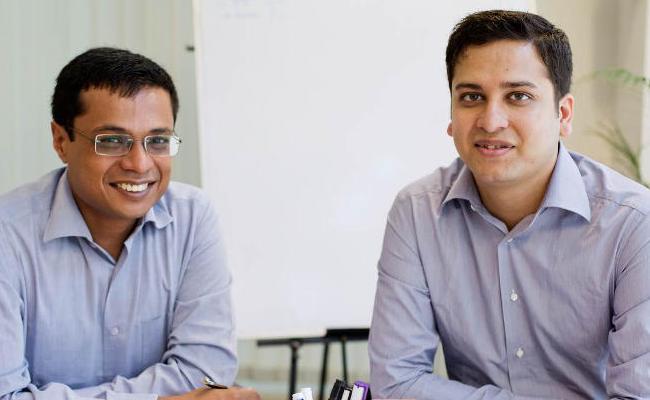
The deal will leave both the Bansals (Sachin and Binny) with deep pockets of $1 billion each since both hold a 5% stake in the company that they had jointly founded in 2007 from a two-bedroom first floor of Koramangala-based Bungalow.
It is noteworthy that the valuation of Flipkart is not a bolt from the blue since the e-commerce giant has been valued at $16 billion in 2015, a valuation that made Bansal duo's stake amounting to $1 billion each, since both held a 7.5% stake each then. However, the firm's valuation dipped later, so much so that it was valued at $12 billion in 2017.
During the 11-year journey, Flipkart crossed numerous milestones.
It made its humble beginnings in 2007 when it launched the books, followed by the launch of music, movies and mobiles in 2010, the same year it started cash on delivery (popularly known as the COD). Two years later, the e-commerce company forayed into lifestyle and fashion portfolio.
In 2014, Flipkart became a unicorn as it got a billion dollar funding and acquired Myntra, a fashion e-tailer. The year 2016 turned out to be a good year for the Flipkart app as well as for the website. The app was the first Indian one to cross 50 million users and overall, the user base crossed 100 million customers.
Notwithstanding these ups and downs, the 9th of May was arguably an epochal day in the history of company when it sold a controlling stake (77%) to Walmart for $16 billion, showing the door to an important co-founder and a large investor.
(With agency inputs)

-
Why Swapping Your Old Gold Can Trigger A Rs 5 Lakh Tax Bill, And How You Can Avoid It Legally

Swapping old gold for new is taxed as a sale and a fresh purchase. Getting your own gold remade can cut most of that bill, though it has its own costs.
-
The AI Trade is Done. The Real Opportunity for Investors Starts in 2027 | Unhedged Position
As pureplay AI stocks plunge and circular, capex-led financing unwinds, 2027 is set to be a year of reckoning for AI companies. Yet the bust clears the way for a better opportunity for investors in 2027 -- shifting the spotlight from AI builders to the companies using AI.
-
Leadership As Mission: Why The Age Of AI Demands More Human Leadership
Debjani Ghosh examines how AI is changing leadership, arguing that its success must be measured by its impact on people and the accountability of those guiding its use.
-
We May Need Another Tukaram Mundhe To Fight Air Pollution | The Reason Why
Developers may install basic measures such as sprinklers and green nets, resume work, and continue violating rules when this equipment stops working.
-
Extracting Value From Battery Scrap Could Be Challenging For India | The Reason Why
A discarded lithium-ion battery still contains valuable materials such as lithium, nickel and cobalt. These can be recovered and reused. When such batteries are crushed and shredded, they produce a dark powder called black mass.
-
One El Nino, India Can Handle. Two Could Break The Granary
India's grain stocks can absorb one bad year, but a second El Nino could drain the buffer in two to three years, economists say.
-
India's Troika Of Good Luck | Joining The Dots
As Jensen Huang's exit drags Nvidia down, a cooling AI trade and resilient earnings have revived investor interest in India. A likely RBI rate hike looms.
-
Talking Points This Week: Leadership Shock At Nvidia, Earnings Strength, And The Fog Over Hormuz
The Anthropic IPO pricing and first trading day, Nvidia's upcoming earnings, and any fresh signals from Iran will set the tone for the following week.
-
Signature Play: The Classic Cocktail Is Dead. Or Is It?
Classic cocktails are disappearing from India's cocktail menus. But they're still being ordered, taught to bartenders and borrowed from. So, who's really having the last drink?
-
A New Samvat Wishlist: Inclusive Prosperity And Human Development
India has strengthened its economic foundations through infrastructure, digital access and enterprise. Its next growth chapter must deepen productivity, create better livelihoods and widen participation in prosperity.









