Flipkart Vs Amazon: E-Commerce War To Be Reshaped By Private Label Brands
Mumbai: For Lalit Bisht, buying Roadster jeans and T-shirts off Myntra, Flipkart's fashion operation, is a no brainer. It may take a week to deliver clothes to Bisht's small hometown in Uttarakhand, but the wait is worth it.
"The fit is perfect and price is just about right. It's a value-for-money brand," said 32-year-old Bisht, a government worker who lives in Haldwani, which had a population of just over 3,60,000 at the time of the last census in 2011. It is a place where options for good quality, affordable apparel are mostly lacking.

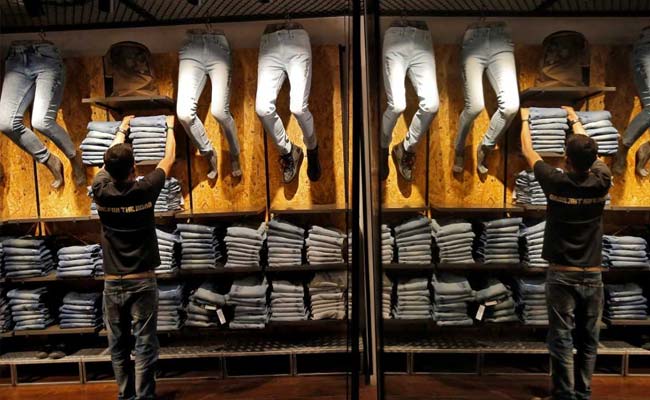
(A customer poses with a virtual reality headset as she browses through a catalouge of products inside a Roadster store in Bengaluru, May 28, 2018)
Bisht's purchases of at least 20 Roadster items from Myntra are symptomatic of the appeal of private label brands for tens of millions of aspirational Indian shoppers looking for low-cost alternatives for everything from clothes to smartphones. These are people who may want to look hip and cool but can rarely afford to splurge on the big global brandnames.
And with Walmart now taking on Amazon Inc in India with its $16 billion purchase of the homegrown online retailer Flipkart, India's e-commerce wars are likely to pivot more toward private label brands.
Up until now, the battle has more often been fought through flash sales of discounted electronics but the losses in that game are unsustainably large.
Both Flipkart and Amazon have been burning through cash to offer those discounts and a bigger push into private labels could help them make money as they control the pricing, marketing and supply chain of these brands, say analysts.
With nearly 500 million Indians using the internet in 2018 and many just dipping their toes into online shopping, private labels will woo price-sensitive customers and create loyalty and higher margins, say retail analysts.
For example, Roadster jeans for women on Myntra that start at Rs 389 ($5.73), could lure many more buyers than the cheapest Levi's for women that begin at about Rs 1,999 ($29.47) on the denim brand's Indian website.
Billion brand
Last year, Flipkart launched its private brand Billion which sells everything from T-shirts to air conditioners. It also owns electronics brand MarQ and furniture label Perfect Homes. Myntra's private brand portfolio, which comprises 13 labels, is profitable.
Amazon too has been slowly pushing into private labels in India. Its portfolio includes its global AmazonBasics brand that sells everything from headphones to stationery; Solimo for dry fruits and bed sheets, women's ethnic-wear brand Myx, men's clothing brand Symbol, and a low-cost smartphone brand 10.or.
"The role of private brands for us is to fill in specific need gaps that are not being serviced," Amazon India head Amit Agarwal told Reuters in an interview last month. "We'll keep looking for these opportunities."
And although Amazon says making money in India is years away, Arun Sirdeshmukh, the head of its fashion business in India, told Reuters last month that private brands will help it embark on "a overall long-term profitability journey".
One supplier, who asked not to be named, said retailers typically price the shoes he sells at three or four times the factory gate cost, indicating how much potential there is for the private brands to price competitively and still make a profit.
Others see opportunities for Flipkart and Amazon to take some of these Indian private label brands overseas.
Following the deal, Flipkart's co-founder Binny Bansal said a lot of the private brands it has created will be very popular with the Indian diaspora in the countries where Walmart operates. "That's something we'll be looking at," he said.
Sources familiar with Walmart's plans say private labels will be a key focus for the Bentonville, Arkansas-based retailer in India, an e-commerce market forecast by Morgan Stanley to grow to an annual $200 billion in a decade.
Walmart's fashion brands, with clothes priced from $5 to $30 an item, could also be a hit with Indian shoppers, including labels like women's apparel brands Time and Tru, men's clothing brand George and kids label Wonder Nation, say analysts.
"The US private label for Walmart has always been an entry price, it tends to be at the lower end of the pricing spectrum, I think that's how it will probably work in India as well," said Neil Saunders, managing director of consultancy GlobalData Retail.
Road to profit
Bengaluru-based Flipkart, founded in 2007 by two former Amazon employees, has grown to become India's top e-commerce firm, thanks, in part, to the exclusive launches of electronics with deep discounts.
Flash sales of smartphones or TVs, typically exclusive to one online retailer, create hype around a brand and help move inventory, but hit profitability - making them a bad long-term bet, analysts warn.
Flipkart reported a net loss of Rs 8,771 crore in the year to March 2017. Amazon's international operating loss grew 29 per cent to $622 million in the first quarter, partly due to its expansion push in India, where it has pledged a $5 billion investment.
Sources say Walmart could expedite Flipkart's push into private brands and help develop new brands to differentiate and counter Amazon, whose Prime loyalty programme is growing faster in India than in any other part of the world.
($1 = Rs 67.8300)

-
One El Nino, India Can Handle. Two Could Break The Granary

India's grain stocks can absorb one bad year, but a second El Nino could drain the buffer in two to three years, economists say.
-
India's Troika Of Good Luck | Joining The Dots
As Jensen Huang's exit drags Nvidia down, a cooling AI trade and resilient earnings have revived investor interest in India. A likely RBI rate hike looms.
-
Talking Points This Week: Leadership Shock At Nvidia, Earnings Strength, And The Fog Over Hormuz
The Anthropic IPO pricing and first trading day, Nvidia's upcoming earnings, and any fresh signals from Iran will set the tone for the following week.
-
Signature Play: The Classic Cocktail Is Dead. Or Is It?
Classic cocktails are disappearing from India's cocktail menus. But they're still being ordered, taught to bartenders and borrowed from. So, who's really having the last drink?
-
A New Samvat Wishlist: Inclusive Prosperity And Human Development
India has strengthened its economic foundations through infrastructure, digital access and enterprise. Its next growth chapter must deepen productivity, create better livelihoods and widen participation in prosperity.
-
Love, Sex Aur Dhokha: The Audacious Plot To Spy On Jensen Huang
A Taipei dinner, a Singapore chip buyer and a suspected Chinese asset: inside the alleged spy operation that got close to NVIDIA's Jensen Huang.
-
Ten Things I Learnt This Samvat
Patience can be a trap. Cheap stocks can stay cheap. Leverage can wipe you out. What did Samvat 2082 teach us? Niraj Shah writes on 10 lessons from the year gone by.
-
Talking Points This Week: Tech Nerves, FII Buying, And A Faraway Banking Shock
The global markets are not shining this Diwali. The exception in the large markets is, India.
-
Midterm Rally Lasted A Day. The Hard Reality Of A Divided US May Last Two Years | Opinion
Between a contested AI boom, a debt ceiling that arrives in 2027 and a president with every incentive to act alone, the next two years may prove more volatile than the first day's rally suggests.
-
Blue Wave Will Derail the AI Trade but Won't Dismantle the AI Era | Unhedged Position
The Democrats' sweep of the US Congress will see politics collide with economic forces both over the long and short term.









