Flipkart Acquires Myntra in India's Biggest E-Commerce Deal
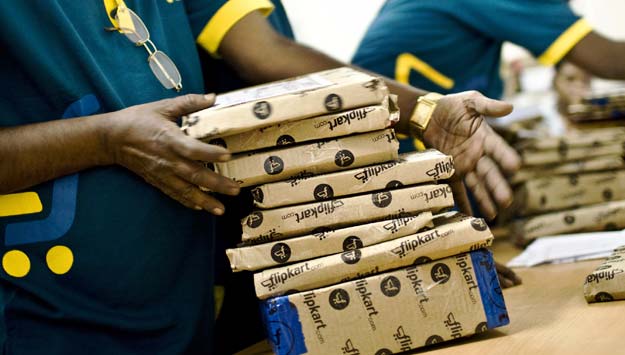
Flipkart, India's largest online retailer, acquired fashion portal Myntra on Thursday and said it would invest $100 million (nearly Rs 600 crore), in the fashion business.
"It's a 100 per cent acquisition and going forward we have big plans in this segment," said Sachin Bansal, co-founder of Bangalore-based Flipkart.
Financial details of the deal were not disclosed, but Reuters citing a source said the transaction was valued at close to $300 million, or nearly Rs 1,800 crore.
The deal gives Flipkart a stronger hold in the fast-growing online fashion business in India. Bangalore-based Flipkart, set up by two ex-Amazon employees in 2007, has sought to grow its presence in this segment, where Myntra is the market leader.
Myntra will continue to operate as a separate entity with its co-founder and CEO Mukesh Bansal joining Flipkart board and heading the fashion business.
"It was very essential to keep Myntra a separate entity and preserve its culture. I'm here for the long haul and we will continue to grow in the market," Mukesh Bansal said.
Bangalore-based Myntra was established by four IIT alumni - Mukesh Bansal, Ashutosh Lawania, Imran Khan and Vineet Saxena - in February 2007.
Tiger Global Management and Accel Partners are investors in both Flipkart and Myntra. E-Commerce companies like Flipkart & Myntra are, on an average, growing at 40-45 per cent annually.
The deal comes at a time when domestic online retailers are gearing up for tough competition after Amazon, the world's biggest online retailer, last year slashed prices and rolled out next-day delivery in a bid to win market share in India's fast-growing e-commerce industry.
The Indian e-commerce market was worth $13 billion, or nearly Rs 75,000 crore, in 2013, according to a joint report by KPMG and the Internet and Mobile Association of India, with online travel accounting for over 70 per cent of consumer e-commerce transactions last year.
Online sales of retail goods totaled $1.6 billion, or nearly Rs 10,000 crore, in 2013, according to research firm Forrester, and are expected to reach $76 billion, or nearly Rs 4.5 lakh crore, by 2021, according to consultancy Technopak. ($1=Rs 59)

-
One El Nino, India Can Handle. Two Could Break The Granary

India's grain stocks can absorb one bad year, but a second El Nino could drain the buffer in two to three years, economists say.
-
India's Troika Of Good Luck | Joining The Dots
As Jensen Huang's exit drags Nvidia down, a cooling AI trade and resilient earnings have revived investor interest in India. A likely RBI rate hike looms.
-
Talking Points This Week: Leadership Shock At Nvidia, Earnings Strength, And The Fog Over Hormuz
The Anthropic IPO pricing and first trading day, Nvidia's upcoming earnings, and any fresh signals from Iran will set the tone for the following week.
-
Signature Play: The Classic Cocktail Is Dead. Or Is It?
Classic cocktails are disappearing from India's cocktail menus. But they're still being ordered, taught to bartenders and borrowed from. So, who's really having the last drink?
-
A New Samvat Wishlist: Inclusive Prosperity And Human Development
India has strengthened its economic foundations through infrastructure, digital access and enterprise. Its next growth chapter must deepen productivity, create better livelihoods and widen participation in prosperity.
-
Love, Sex Aur Dhokha: The Audacious Plot To Spy On Jensen Huang
A Taipei dinner, a Singapore chip buyer and a suspected Chinese asset: inside the alleged spy operation that got close to NVIDIA's Jensen Huang.
-
Ten Things I Learnt This Samvat
Patience can be a trap. Cheap stocks can stay cheap. Leverage can wipe you out. What did Samvat 2082 teach us? Niraj Shah writes on 10 lessons from the year gone by.
-
Talking Points This Week: Tech Nerves, FII Buying, And A Faraway Banking Shock
The global markets are not shining this Diwali. The exception in the large markets is, India.
-
Midterm Rally Lasted A Day. The Hard Reality Of A Divided US May Last Two Years | Opinion
Between a contested AI boom, a debt ceiling that arrives in 2027 and a president with every incentive to act alone, the next two years may prove more volatile than the first day's rally suggests.
-
Blue Wave Will Derail the AI Trade but Won't Dismantle the AI Era | Unhedged Position
The Democrats' sweep of the US Congress will see politics collide with economic forces both over the long and short term.









