Flipkart: 11-Year Journey From An Online Bookstore To $16 Billion Deal With Walmart
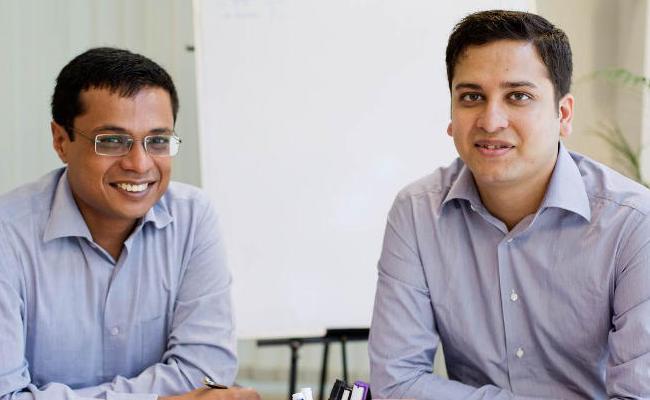
New Delhi: From selling books online to striking a jaw-dropping $16 billion deal with the world's largest retailer Walmart, all within 11 years, Flipkart has given India its big startup success story -- the one which is likely to be quoted by starry-eyed entrepreneurs for years to come. Former employees of US e-commerce giant Amazon, Sachin Bansal and Binny Bansal had met in 2005 at IIT-Delhi. Flipkart was launched in October 2007.
The idea was simple. Consumers could shop online and get books delivered to their doorstep. Flipkart registered 20 shipments in the year of its debut.
It wasn't an easy road as Internet penetration was abysmally low and e-commerce, unheard of. Bricks and mortar retailers were not threatened and many dismissed e-tailing as a foreign concept saying that Indians want to touch and feel' whatever they buy.
Today, Indian e-commerce industry is already close to $30 billion in size and analysts expect this to zoom to $200 billion by 2026.
The growth of the sector was comfortably in sync with the meteoric rise of Flipkart.
From a modest two-bedroom apartment in Koramangala, the Bengaluru-headquarted company now has multiple offices across the country. A bulk of its operations are run out of a plush campus in the city that is spread over 1 lakh sq ft and houses 6,800 employees.
It was almost two years after starting business that Flipkart got its first full-time employee in Ambur Iyyappa, who went on to become a millionaire, thanks to the ESOPs. The headcount was rapidly scaled to 150 that year.
In October the same year, Accel Partners came on board as an investor and pumped in $1 million. A few months later, US hedge fund Tiger Global bought into the vision and Flipkart received a funding of $10 million.
A number of funding rounds later, Flipkart raised $1.4 billion from Tencent, eBay and Microsoft, followed by $2.5 billion investment by SoftBank Vision Fund last year.
The year 2010 was an important one for Flipkart with the company shipping among other things, electronics and mobile phones. This category now makes up for a significant portion of the sales for the online platform.
It was also the year when Flipkart pioneered 'Cash on Delivery' in India, which changed the course of online retail in the country as consumers now paid for items only after receiving them, adding a layer of comfort to online shopping. Flipkart launched its logistics unit, eKart to smoothen deliveries.
In 2016, Flipkart achieved the milestone of 100 million registered customers and saw Sachin and Binny earning a spot among TIME magazine's list of 100 most influential people.
The company made its first acquisition with WeRead and since then, it has acquired a number of companies including Letsbuy, FX Mart, fashion e-tail player Myntra and UPI-based payments startup PhonePe. It also bought majority stake in companies like Jeeves and ngpay.
At the beginning of last year, Kalyan Krishnamurthy was named as the new CEO, moving Binny Bansal to the role of Group CEO. Reports suggested that Tiger Global wanted better control of the organisation and hence, the decision.
Bansals' e-commerce bet finally has paid off big time and set the 2018 M&A counters ringing with US retailer Walmart buying about 77 per cent stake in Flipkart for $16 billion.
(This story has not been edited by NDTV staff and is auto-generated from a syndicated feed.)

-
Why Swapping Your Old Gold Can Trigger A Rs 5 Lakh Tax Bill, And How You Can Avoid It Legally

Swapping old gold for new is taxed as a sale and a fresh purchase. Getting your own gold remade can cut most of that bill, though it has its own costs.
-
The AI Trade is Done. The Real Opportunity for Investors Starts in 2027 | Unhedged Position
As pureplay AI stocks plunge and circular, capex-led financing unwinds, 2027 is set to be a year of reckoning for AI companies. Yet the bust clears the way for a better opportunity for investors in 2027 -- shifting the spotlight from AI builders to the companies using AI.
-
Leadership As Mission: Why The Age Of AI Demands More Human Leadership
Debjani Ghosh examines how AI is changing leadership, arguing that its success must be measured by its impact on people and the accountability of those guiding its use.
-
We May Need Another Tukaram Mundhe To Fight Air Pollution | The Reason Why
Developers may install basic measures such as sprinklers and green nets, resume work, and continue violating rules when this equipment stops working.
-
Extracting Value From Battery Scrap Could Be Challenging For India | The Reason Why
A discarded lithium-ion battery still contains valuable materials such as lithium, nickel and cobalt. These can be recovered and reused. When such batteries are crushed and shredded, they produce a dark powder called black mass.
-
One El Nino, India Can Handle. Two Could Break The Granary
India's grain stocks can absorb one bad year, but a second El Nino could drain the buffer in two to three years, economists say.
-
India's Troika Of Good Luck | Joining The Dots
As Jensen Huang's exit drags Nvidia down, a cooling AI trade and resilient earnings have revived investor interest in India. A likely RBI rate hike looms.
-
Talking Points This Week: Leadership Shock At Nvidia, Earnings Strength, And The Fog Over Hormuz
The Anthropic IPO pricing and first trading day, Nvidia's upcoming earnings, and any fresh signals from Iran will set the tone for the following week.
-
Signature Play: The Classic Cocktail Is Dead. Or Is It?
Classic cocktails are disappearing from India's cocktail menus. But they're still being ordered, taught to bartenders and borrowed from. So, who's really having the last drink?
-
A New Samvat Wishlist: Inclusive Prosperity And Human Development
India has strengthened its economic foundations through infrastructure, digital access and enterprise. Its next growth chapter must deepen productivity, create better livelihoods and widen participation in prosperity.









